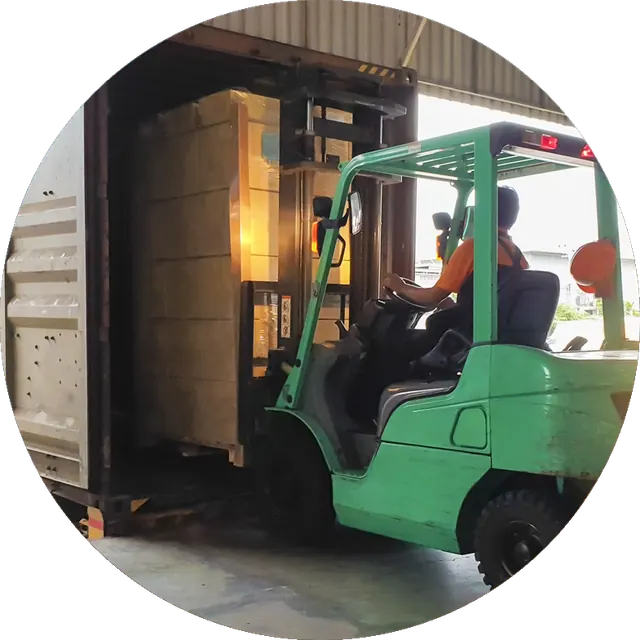
Warehousing runs through the night. Sleep keeps the floor moving.
Distribution centres run night and rotating shifts with repetitive picking, packing and forklift work. Fatigue raises the risk of forklift and vehicle incidents, injuries and picking errors.
Wholesale distribution - grocery and pharmaceutical
Regulation
Who regulates it, and what they expect
Warehousing and distribution has no fatigue or hours regime of its own in Ireland. There is no warehouse productivity-quota law of the kind some US states have introduced, and the driving-hours rules do not reach your site: those bind mobile road-transport workers, not the people picking, packing and loading. Your staff sit squarely inside the Organisation of Working Time Act - rest between shifts, breaks, a weekly rest day and a 48-hour average week with no individual opt-out - which is a real constraint on overnight and peak-season rosters, and fatigue is a foreseeable hazard for risk assessment.
Regulated by
HSA
Logos identify the regulator and don’t imply endorsement.
Who regulates it
No warehousing-specific regulator exists in Ireland - employers answer to the same bodies as any other employer: the Health and Safety Authority for safety matters, and the Workplace Relations Commission for working-hours, rest-break and discrimination complaints. The safety regulator publishes general guidance relevant to warehouse work, on manual handling and forklift safety, but it's not a distinct warehousing framework.
Your obligations
Warehousing and distribution employers in Ireland follow the same general rules as any other employer - no more, no less. That means keeping staff safe, assessing workplace risks including fatigue (especially where shifts run overnight or extend during busy periods), keeping a written safety plan current, and following Ireland's standard working-hours rules: at least 11 hours' rest between shifts, proper in-shift breaks, one full day off a week, and an average 48-hour working week that can't be opted out of. General safety guidance on manual handling and forklift operation also applies.
Consequences
There is no warehousing-specific fatigue offence. A fatigue-contributed incident - a manual-handling injury, a forklift or loading-bay collision - is investigated and prosecuted as a general safety-duty failure, and the question is whether the risk was foreseeable, whether it was assessed, and what controls were in place. Working-time and rest-break complaints are decided separately by the Workplace Relations Commission, and are largely determined by the employer's own records: tight rotations and mandatory peak-season overtime are exactly where those complaints arise, and incomplete records are what lose them.
Penalties
Safety, Health and Welfare at Work Act 2005 penalties, unchanged since 2010, current in 2026: summary conviction up to €5,000 and 12 months in prison; indictment up to €3,000,000 and two years, plus the regulator's costs. Working-time breaches carry Workplace Relations Commission awards of up to two years' pay. Ireland has no no-fault workers' compensation - claims are fault-based, via the Injuries Resolution Board - and employers' liability insurance is not compulsory.
On the record
No Irish court, coroner, investigator or regulator has published a finding linking fatigue to an incident in warehousing. The duty to manage fatigue still sits within the general duties of the Safety, Health and Welfare at Work Act 2005.
Sources: Health and Safety Authority industry-sector guidance; Organisation of Working Time Act 1997; prior research on Ireland's warehousing sector covering SIPTU, IBEC, An Post and Amazon Ireland; Ireland's road-transport working-time rules (S.I. No. 36/2012).
Fatigue-critical roles
Where fatigue matters most in warehousing & distribution
The roles where a fatigued worker is most likely to cause serious harm, the tasks that carry the risk, and why fatigue builds up in them.
Role
Risk
High-risk tasks
Why fatigue builds
HGV driver (store delivery)Rules
Regulatory designation
Driver in scope of Reg (EC) 561/2006; mobile worker (S.I. 36/2012); Driver CPC (S.I. 359/2008)
Hours and rest
Reg 561/2006: 9 h driving (10 h twice weekly), 45 min after 4.5 h, 11 h daily rest; S.I. 36/2012: 48 h avg, 10 h if night work
Critical risk
Overnight linehaul between DCs and early-morning store deliveries, reversing into store docks, manual unloading at the end of a long shift
Overnight runs, early starts (03:00-05:00), multi-drop schedules
Forklift / reach truck driverRules
Regulatory designation
None specific - training duty (SHWWA s 10; GA Regs 2007 work equipment); night worker (OWTA 1997 s 16) - health assessment, GA Regs 2007 reg 157
Hours and rest
OWTA 1997: 48 h avg (no opt-out), 11 h daily rest; night worker avg 8 h in 24 (s 16)
High risk
High-bay reach truck and order-picker work at height overnight, loading trailers at docks, travelling in aisles shared with pickers
Night and rotating shifts in DCs running 24/7, peak-season overtime, rate-based targets
Warehouse operativeRules
Regulatory designation
Night worker (OWTA 1997 s 16) - health assessment, GA Regs 2007 reg 157
Hours and rest
OWTA 1997: 48 h avg (no opt-out), 11 h daily rest; night worker avg 8 h in 24 (s 16)
High risk
Pick-to-light and voice picking at rate, team lifts, working beside powered pallet jacks and conveyors overnight
Fixed nights or rotating shifts, algorithmic rate targets, peak-season overtime, long commutes
Yard shunterRules
Regulatory designation
Night worker (OWTA 1997 s 16) - health assessment, GA Regs 2007 reg 157
Hours and rest
OWTA 1997: 48 h avg (no opt-out), 11 h daily rest; night worker avg 8 h in 24 (s 16)
High risk
Coupling and uncoupling trailers, reversing to docks in the dark, trailer creep and drive-away incidents at the dock edge, loading at speed
Night and weekend shifts, continuous short shunts, time pressure from linehaul departures
Maintenance technicianRules
Regulatory designation
Night worker (OWTA 1997 s 16) - health assessment, GA Regs 2007 reg 157
Hours and rest
OWTA 1997: 48 h avg (no opt-out), 11 h daily rest; night worker avg 8 h in 24 (s 16)
High risk
Clearing faults inside AS/RS, sorter and conveyor systems under lock-out overnight, working at height on mezzanines, electrical fault-finding
Night cover so automation runs 24/7, call-outs and peak-season overtime
How the suite fits
How each product connects to your obligations
Grades describe how strongly a product connects to an obligation. None discharges an obligation, and none carries a compliance warranty.
Sleepfit
Supports a named obligation
Regulation 157 of the General Application Regulations 2007 requires you to offer night workers a free health assessment before assignment and at regular intervals. Sleepfit supports it for your warehouse shift crews. It screens; diagnosis stays with your clinicians.
For your warehouse shift crews, Fatiguefit4Duty supports your duties under ss 8 and 19 of the Safety, Health and Welfare at Work Act 2005. No Irish rule names a start-of-duty check. A fitness-for-duty check, not a fitness-for-duty decision - the duty call stays with you.
Awareness eLearning supplies fatigue and sleep content with a completion record for your warehouse shift crews, supporting the general training duty in s 8(2)(g) and s 10 of the Safety, Health and Welfare at Work Act 2005. Your training programme stays yours.
Was It Fatigue? supports your review of incidents involving your warehouse shift crews and of your s 19 risk assessment. Irish accident reporting rules require notification to the HSA, not a fatigue assessment. A structured judgement aid, not a determination of cause.
No Irish workplace rule reaches sleep in new-parent households. SleepWellBaby is offered to the working parents among your warehouse shift crews as a wellbeing benefit, not as a step any Irish regulation requires.
Regulation 157 of the General Application Regulations 2007 requires a free health assessment for your night warehouse crews; Sleepfit screening supports it. Fatiguefit4Duty adds a pre-shift check and Awareness eLearning trains under SHWW Act 2005 s 10. Shift worker is the lighter option.
See what sleep and fatigue mean for your warehousing & distribution workforce.
Tell us roughly how many people you employ. Your snapshot models how many are likely sleeping poorly and what it costs, from published research for warehousing & distribution. Then choose who you’d cover, and we’ll take you to the right next step.