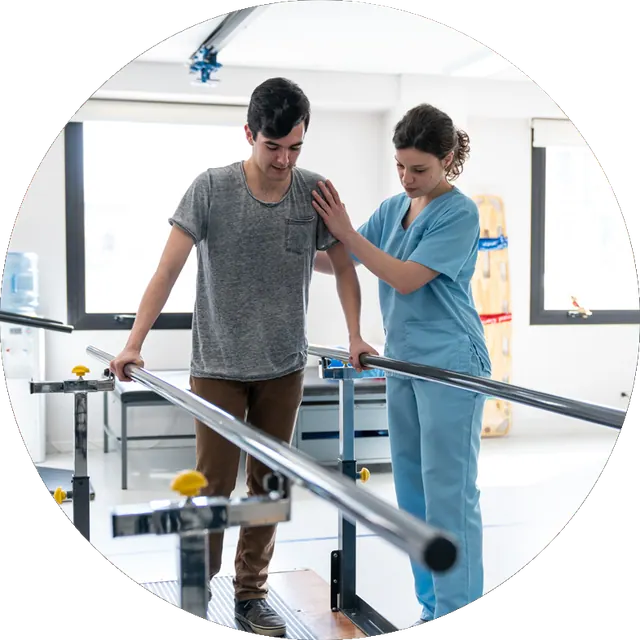
Supporting other people’s health starts with your own sleep.
Mostly daytime clinic work with heavy caseloads and emotional load; after-hours and crisis on-call add broken sleep. Poor sleep feeds burnout and turnover more than acute safety risk.
Regulatory change that affects how you manage fatigue in mental health & allied health: what has changed in the last 12 months, and what is on the way.
Recent changeFrom 9 July 2026
Applies across industries in New Zealand
The Health and Safety at Work Amendment Act 2026 became law on 9 July 2026. Your duties do not change until most of it commences on 1 April 2027, so use the lead time to evidence fatigue as a serious-harm risk.
Upcoming changeExpected from 1 April 2027Within 12 months
From 1 April 2027 HSWA centres on 'critical risks'. Fatigue is not on the Schedule 1A list, so it counts only where it is likely to cause death or notifiable harm. Firms under 20 workers manage critical risks only; following an approved code is deemed compliance; officer duties become governance-level.
Regulatory changes checked as at 1 October 2026.
Regulation
Who regulates it, and what they expect
Allied health has no statute of its own on hours or fatigue. What it has is a national collective agreement: Health New Zealand's agreement with the PSA for allied, public health, scientific and technical staff caps an ordinary duty at 10 hours, bars requiring more than 12 consecutive hours where the normal shift is 8 or 10 hours, guarantees at least 9 continuous hours between duties and 12 after a 10-hour duty, allows no more than 5 consecutive duties before a day off, requires rosters 4 weeks in advance, and obliges the employer to design rosters so shift-work fatigue is minimised. Private clinics outside it rely on general safety law.
Regulated by
WorkSafe
Logos identify the regulator and don’t imply endorsement.
Who regulates it
Allied health staff employed by Health New Zealand sit under the general regulators - WorkSafe for safety, the Employment Relations Authority for their agreements, the Human Rights Commission, ACC for injury - plus an extra layer: national collective agreements between Health New Zealand and the Public Service Association setting enforceable shift-length and rest rules. Registration boards oversee competence, not hours.
Your obligations
Where the Health New Zealand agreement for allied, public health, scientific and technical staff applies, an ordinary duty is capped at 10 hours and no one may be required to work more than 12 consecutive hours where their normal shift is 8 or 10 hours. There must be at least 9 continuous hours between duties, and 12 after a 10-hour duty, or the work counts as continuous and is paid at overtime rates. No more than 5 consecutive duties before a day off, rosters notified 4 weeks ahead, and rosters must be built so shift-work fatigue is minimised.
Consequences
If an employer breaches the specific shift-length or rest-break rules in the collective agreement, staff and their union can pursue this through New Zealand's employment dispute system, which can order compensation and require the employer to fix its rostering practices - sitting on top of, not instead of, the usual safety-law consequences if a fatigue-related incident happens. Because these are union-negotiated protections, the union can raise a pattern of non-compliance on behalf of the whole workforce, not just one employee at a time - a stronger enforcement lever than exists in most other industries.
Penalties
Breaching the agreement's rostering rules produces employment penalties, set per breach and per affected employee rather than as one headline fine. The figures that carry weight are under the Health and Safety at Work Act 2015: up to $3m for an organisation at the top tier, $1.5m in the middle, $500,000 for a plain duty breach, and $600,000, $300,000 or $100,000 for a director or manager. Reparation to the victim is assessed first and added on top of the fine.
On the record
No New Zealand court, coroner, investigator or regulator has published a finding linking fatigue to an incident in allied health. The duty to manage fatigue still sits within the primary duty of care under the Health and Safety at Work Act 2015.
Sources: Health New Zealand / PSA Allied, Public Health, Scientific and Technical Collective Agreement; Health New Zealand / PSA Mental Health and Public Health Nursing Collective Agreement; Health Practitioners Competence Assurance Act 2003; Health and Safety at Work Act 2015.
Fatigue-critical roles
Where fatigue matters most in mental health & allied health
The roles where a fatigued worker is most likely to cause serious harm, the tasks that carry the risk, and why fatigue builds up in them.
Role
Risk
High-risk tasks
Why fatigue builds
Mental health nurse (RN)Rules
Regulatory designation
None specific - general duty (HSWA 2015 s 36; fatigue named in s 16 'hazard')
Hours and rest
No statutory maximum; ERA 2000 Part 6D rest and meal breaks
Critical risk
Constant and intermittent observation of high-risk patients overnight, restraint and seclusion, rapid tranquillisation, ward environment safety checks, absconding watch
Rotating nights and 12 h shifts on acute inpatient units, frequent overtime to cover 1:1 observations
Duly authorised officer (Mental Health (Compulsory Assessment and Treatment) Act 1992 s 93); otherwise general duty
Hours and rest
No statutory maximum; ERA 2000 Part 6D rest and meal breaks
High risk
After-hours Mental Health Act assessments in homes and EDs, detention and risk decisions, driving alone to call-outs at night, de-escalation
Evening and overnight on-call after a day caseload, lone call-outs, long drives in rural areas
Crisis line counsellor (1737, Lifeline Aotearoa)Rules
Regulatory designation
None specific - general duty; volunteer workers covered (HSWA 2015 s 19)
Hours and rest
No statutory maximum; ERA 2000 Part 6D rest and meal breaks
High risk
Overnight crisis risk assessment on calls and texts, deciding on emergency dispatch, safety planning, sustained vigilance through long quiet periods
Overnight shifts (often 23:00-07:00), volunteer shifts after a day job, remote work from home at night
Rural allied health professional (physiotherapist, OT, social worker)Rules
Regulatory designation
None specific - general duty (HSWA 2015 s 36; fatigue named in s 16 'hazard')
Hours and rest
No statutory maximum; ERA 2000 Part 6D rest and meal breaks
Elevated risk
Driving 200-500 km a day between outreach clinics, lone home visits, manual-handling and equipment assessments, then late-night documentation
Long rural drives at dawn and dusk, multi-day circuits, early starts for remote clinics; day work
How the suite fits
How each product connects to your obligations
Grades describe how strongly a product connects to an obligation. None discharges an obligation, and none carries a compliance warranty.
Sleepfit
Supports your general duty of care
No New Zealand mental health and allied health rule names a sleep screen. Section 36(3)(g) of the Health and Safety at Work Act 2015 requires you to monitor worker health, and Sleepfit supports that for practitioners. It screens; diagnosis stays with your clinicians.
No New Zealand mental health and allied health rule names a pre-duty check. Your s 36 duty under the Health and Safety at Work Act 2015 reaches fatigue, named in s 16 as a source of hazard. A fitness-for-duty check, not a fitness-for-duty decision - the duty call stays with you.
Section 36(3)(f) of the Health and Safety at Work Act 2015 requires the training needed to protect workers but does not name fatigue. Awareness eLearning supports it with fatigue and sleep content for practitioners.
You must notify WorkSafe of a notifiable event under s 56 of the Health and Safety at Work Act 2015; no New Zealand mental health and allied health rule requires you to assess fatigue. A structured judgement aid, not a determination of cause.
No New Zealand mental health and allied health rule reaches sleep in new-parent households. SleepWellBaby is offered to parents of infants in your workforce as a benefit that protects their own sleep, not as a compliance step.
HSWA 2015 s 36 reaches fatigue, a hazard under s 16, but names no tool. Sleepfit screens your practitioners for sleep disorders, supporting s 36(3)(g) health monitoring; Fatiguefit4Duty adds a point-of-duty self-check. Prevention adds Awareness eLearning with a completion record.
See what sleep and fatigue mean for your mental health & allied health workforce.
Tell us roughly how many people you employ. Your snapshot models how many are likely sleeping poorly and what it costs, from published research for mental health & allied health. Then choose who you’d cover, and we’ll take you to the right next step.