Mental Health & Allied Health · Australia

Supporting other people’s health starts with your own sleep.

Mostly daytime clinic work with heavy caseloads and emotional load; after-hours and crisis on-call add broken sleep. Poor sleep feeds burnout and turnover more than acute safety risk.

Regulation changed 1 July 2026Change coming 1 July 2027

Mental Health & Allied Health workforce

Who this page covers

  • Community mental health and crisis services (also see Healthcare & Nursing)
  • Dental and specialist medical rooms
  • GP clinics (general practice)
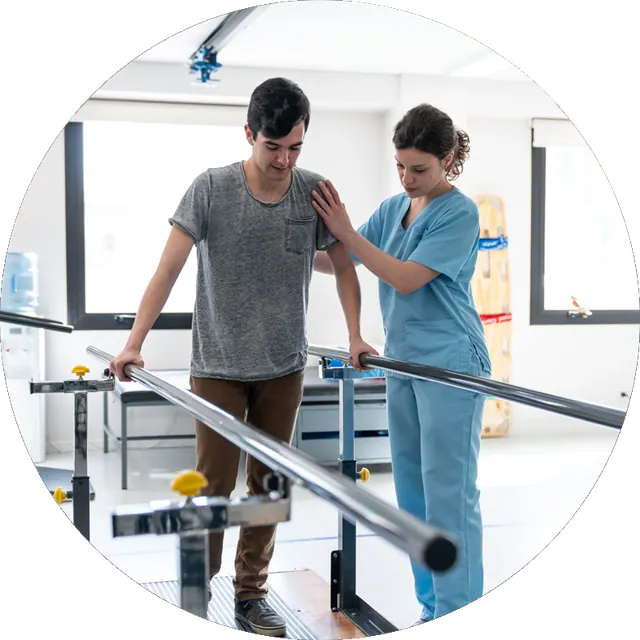
  • Physiotherapy, OT and speech pathology
  • Psychology and counselling practices

Reg Watch

What’s changed, and what’s coming

Regulatory change that affects how you manage fatigue in mental health & allied health: what has changed in the last 12 months, and what is on the way.

Recent changeFrom 1 July 2026

Applies across industries in Australia

From 1 July 2026 NSW requires you to follow approved codes, including the fatigue code, or manage risk to an equal or higher standard. Victoria's psychological health regulations apply from 1 December 2025.

Read the change

Upcoming changeExpected from 1 July 2027Within 12 months

Safe Work Australia's Best Practice Review of the model WHS laws was due to go to WHS ministers in August 2026. It is not yet public and no amendments are proposed, so no change date is set. NSW psychological injury compensation narrows again from 1 July 2027 (26% WPI threshold for ongoing weekly benefits).

Regulatory changes checked as at 1 October 2026.

Regulation

Who regulates it, and what they expect

Allied health here means pharmacy, physiotherapy, occupational therapy, medical radiation practice, podiatry, optometry, dietetics, psychology and social work. No Australian statute or regulation limits their hours. Two things do bind. The Health Professionals and Support Services Award 2020 allows no more than ten ordinary hours a day and sets no minimum break between shifts at all. And the code of conduct shared by twelve National Boards tells registered practitioners not to practise when fatigue makes them unfit. Above both sits the safety duty.

Regulated by
  • Safe Work AustraliaSWA

Logos identify the regulator and don’t imply endorsement.

Who regulates it

Allied health and mental health providers sit under the standard WHS regulators, plus AHPRA and the relevant National Boards for professional registration, and the NDIS Quality and Safeguards Commission for NDIS-registered services.

Your obligations

Manage fatigue as a work health and safety risk under the primary duty. In this workforce the hazards are high caseloads, lone home visits, driving between clients and after-hours on-call. In New South Wales the approved fatigue code of practice becomes enforceable on 1 July 2026, so you comply with it or manage the hazard to an equivalent or higher standard; in Victoria the OHS Psychological Health Regulations 2025 apply instead. Roster inside the award: no more than ten ordinary hours a day, rosters posted a fortnight ahead. Registered practitioners must not practise when unfit through fatigue.

Consequences

A fatigue-related death or serious injury is prosecuted as a work health and safety offence, and every Australian jurisdiction now also has industrial or workplace manslaughter carrying twenty to twenty-five years' imprisonment. A registered practitioner who works while unfit through fatigue breaches their Board's code of conduct and can face conditions, suspension or loss of registration - separate from anything done to the employer. NDIS-registered providers risk suspension or revocation. Award breaches are enforced by the Fair Work Ombudsman, and workers compensation covers the drive home.

Penalties

Work health and safety maxima, levels effective 1 July 2026. Category 1, body corporate: $17,728,000 Commonwealth, $12,321,000 ACT, $11,606,824 NSW, $3,500,000 WA, $3,000,000 Queensland, SA, Tasmania and NT. Individual: $3,546,000 down to $600,000 on the same order. Industrial manslaughter carries twenty to twenty-five years and up to $20,000,000 for a body corporate in NSW.

Sources: The national model work health and safety psychosocial hazard rules; the Health Practitioner Regulation National Law and AHPRA/National Board codes of conduct; the National Disability Insurance Scheme Act 2013 and NDIS Practice Standards; and the Disability Discrimination Act 1992.

Fatigue-critical roles

Where fatigue matters most in mental health & allied health

The roles where a fatigued worker is most likely to cause serious harm, the tasks that carry the risk, and why fatigue builds up in them.

RoleRiskHigh-risk tasksWhy fatigue builds
Mental health nurse (RN; credentialled MHN)
Rules
Regulatory designation
None specific - general duty (WHS Act s 19; Vic OHS Act 2004 s 21); restraint and seclusion governed by state mental health Acts
Hours and rest
No statutory cap: FW Act s 62 (38 h + reasonable additional hours); award or EA rest-between-shift terms
Critical riskConstant and intermittent observation of high-risk patients overnight, restraint and seclusion, rapid tranquillisation, ward environment safety checks, absconding watchRotating nights and 12 h shifts on acute inpatient units, frequent overtime to cover 1:1 observations
Acute/crisis mental health clinician (crisis assessment and treatment team; nurse, social worker, OT, psychologist)
Rules
Regulatory designation
None specific - general duty (WHS Act s 19; Vic OHS Act 2004 s 21)
Hours and rest
No statutory cap: FW Act s 62 (38 h + reasonable additional hours); award or EA rest-between-shift terms
High riskAfter-hours Mental Health Act assessments in homes and EDs, detention and risk decisions, driving alone to call-outs at night, de-escalationEvening and overnight on-call after a day caseload, lone call-outs, long drives in rural areas
Crisis supporter / telephone counsellor (Lifeline 13 11 14)
Rules
Regulatory designation
None specific - general duty; volunteers are 'workers' (WHS Act s 7)
Hours and rest
No statutory cap: FW Act s 62 (38 h + reasonable additional hours); award or EA rest-between-shift terms
High riskOvernight crisis risk assessment on calls and texts, deciding on emergency dispatch, safety planning, sustained vigilance through long quiet periodsOvernight shifts (often 23:00-07:00), volunteer shifts after a day job, remote work from home at night
Rural/remote allied health professional (physiotherapist, OT, social worker)
Rules
Regulatory designation
None specific - general duty (WHS Act s 19; Vic OHS Act 2004 s 21)
Hours and rest
No statutory cap: FW Act s 62 (38 h + reasonable additional hours); award or EA rest-between-shift terms
Elevated riskDriving 200-500 km a day between outreach clinics, lone home visits, manual-handling and equipment assessments, then late-night documentationLong rural drives at dawn and dusk, multi-day circuits, early starts for remote clinics; day work

Stories

When fatigue made the record

Published findings and prosecutions from regulators, courts and investigators in Australia.

  • Apr 2022 · Victoria, Australia

    Youth worker dismissed after CCTV shows sleeping on active night shift; unfair dismissal bid fails

    • Legal

    A youth development worker at a facility for young people was dismissed after a resident complaint, an audit and a review of CCTV found that on numerous night shifts he had been asleep or watching television instead of attending to his duties. He accepted that he was required to work an active night shift, that sleeping on shift was unacceptable and that he may have fallen asleep while lying down. The Fair Work Commission refused his late unfair dismissal application and observed that the employer was likely to be able to show a valid reason for the dismissal.

    Case AU-alliedhealth-01Report an issue

See all mental health & allied health news

How the suite fits

How each product connects to your obligations

Grades describe how strongly a product connects to an obligation. None discharges an obligation, and none carries a compliance warranty.

Sleepfit

Supports your general duty of care

Screening your clinicians for undiagnosed sleep disorders and distress supports the risk identification your safety duty requires in a workforce whose hazards are caseload, lone visits and driving.

About Sleepfit

Fatiguefit4Duty

Supports your general duty of care

The shared code for twelve registered professions says not to practise when unfit through fatigue; psychologists and unregistered staff sit outside it. Fatiguefit4Duty supports it. A fitness-for-duty check, not a fitness-for-duty decision - the duty call stays with you.

About Fatiguefit4Duty

Awareness eLearning

Supports your general duty of care

Your WHS duty to inform and train does not name fatigue; in NSW the approved fatigue code names fatigue training and must be followed or matched. Awareness eLearning supplies fatigue and sleep content with a completion record for your clinicians.

About Awareness eLearning

Was It Fatigue?

Supports your general duty of care

A structured fatigue analysis after a serious incident, including a crash between client visits, evidences that fatigue was examined rather than assumed away. No Australian rule requires you to.

About Was It Fatigue?

SleepWellBaby

Supporting new-parent clinicians through infant sleep is a wellbeing and retention measure. No Australian regulation engages it in allied health, so it is a benefit rather than a safety control.

About SleepWellBaby

Recommended bundle

Where we’d start in mental health & allied health

Every bundle is priced on prevalence: your whole cohort gets access, and you pay for the share predicted to need each product. How pricing works.

Recommended · Levels 2 and 3

Shift Worker Bundle

Sleep screening and a point-of-duty check for the workers who need it most.

Why this pairing in Australia

Your s 19 WHS duty, and the shared code on not practising while unfit through fatigue, name no tool. Sleepfit screens your clinicians for sleep disorders; Fatiguefit4Duty adds a point-of-duty self-check with a record. Prevention adds Awareness eLearning with a completion record.

See what sleep and fatigue mean for your mental health & allied health workforce.

Tell us roughly how many people you employ. Your snapshot models how many are likely sleeping poorly and what it costs, from published research for mental health & allied health. Then choose who you’d cover, and we’ll take you to the right next step.

A sample workforce snapshot on a tablet: modelled sleep problems and the cost of poor sleep for 1,400 people in transport and logistics.