
Mental Health & Allied Health · United States

Supporting other people’s health starts with your own sleep.

Mostly daytime clinic work with heavy caseloads and emotional load; after-hours and crisis on-call add broken sleep. Poor sleep feeds burnout and turnover more than acute safety risk.

Mental Health & Allied Health workforce

Who this page covers

  • Community mental health and crisis services (also see Healthcare & Nursing)
  • Dental and specialist medical rooms
  • GP clinics (general practice)
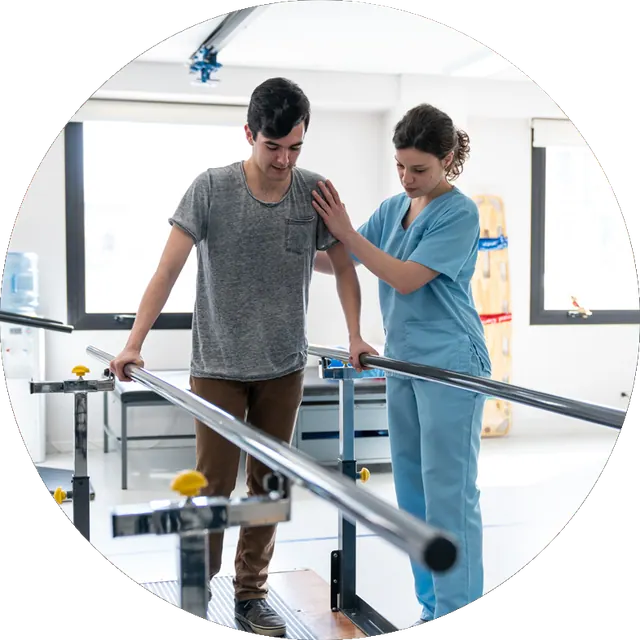
  • Physiotherapy, OT and speech pathology
  • Psychology and counselling practices

Regulation

Who regulates it, and what they expect

Allied health here means pharmacy, physiotherapy, occupational therapy, radiography and nuclear medicine, laboratory science, dietetics, counselling, psychology and social work. No federal law limits their hours - the Fair Labor Standards Act governs overtime pay, not maximum hours. The real limits are state and disciplinary, and pharmacy is the exception that matters: Ohio, Illinois and North Carolina each cap the pharmacy workday by law, and Ohio also requires eight hours off between consecutive shifts. Everywhere else the duty is the general one.

Regulated by
  • Occupational Safety and Health AdministrationOSHA

Logos identify the regulator and don’t imply endorsement.

Who regulates it

Pennsylvania's Act 102 is the clearest state law extending mandatory-overtime protection to allied health staff. State professional licensing boards for psychology, counselling, physical and occupational therapy and social work govern fitness to practice, and accreditors such as The Joint Commission and CARF review staffing and workload after serious adverse events. OSHA, the ADA and the FMLA apply underneath.

Your obligations

In Ohio an outpatient pharmacy must not require pharmacy personnel to work longer than thirteen hours in a workday, must give a thirty-minute uninterrupted break after six continuous hours, and must allow at least eight hours off between consecutive shifts. Illinois caps the pharmacist, student pharmacist and technician workday at twelve hours including breaks. North Carolina caps a pharmacist at twelve continuous hours. Pennsylvania's mandatory-overtime law reaches hourly direct-care and clinical staff generally. Washington's excludes surgical, radiologic and respiratory staff by name.

Consequences

Pharmacy hours rules run through the permit: a state board can discipline or decline to renew the permit of a pharmacy that works its staff past the cap, and Ohio's rule protects the employee who refuses. Pennsylvania's Department of Labor and Industry enforces Act 102 directly and shields refusal from retaliation. Licensing boards can restrict or suspend a clinician who practises while impaired. Under the federal general duty clause an employer whose scheduling creates a recognized hazard can be cited after an injury, and a fatigue-linked crash between client visits is compensable.

Penalties

Pennsylvania Act 102: $100 to $1,000 for each violation, imposed by the Department of Labor and Industry. OSHA general duty: $16,550 serious or other-than-serious, $165,514 wilful or repeat, $16,550 a day for failure to abate - 2025 levels, in force for 2026. Pharmacy hours breaches carry no fixed fine; the exposure is the permit and board discipline.

Sources: Pennsylvania Act 102 of 2008 and Department of Labor and Industry guidance; OSHA General Duty Clause and 2026 penalty schedule; state licensing board fitness-to-practise rules; Americans with Disabilities Act; Family and Medical Leave Act.

Fatigue-critical roles

Where fatigue matters most in mental health & allied health

The roles where a fatigued worker is most likely to cause serious harm, the tasks that carry the risk, and why fatigue builds up in them.

RoleRiskHigh-risk tasksWhy fatigue builds
Psychiatric-mental health nurse (RN) / psychiatric technician
Rules
Regulatory designation
None specific - general duty (OSH Act s 5(a)(1); public employers only in State Plan states); restraint and seclusion under CMS Conditions of Participation (42 CFR 482.13(e))
Hours and rest
No federal hours cap for adults; FLSA prices overtime only
Critical riskConstant and intermittent observation of high-risk patients overnight, restraint and seclusion, rapid tranquillisation, ward environment safety checks, absconding watchRotating nights and 12 h shifts on acute inpatient units, frequent overtime to cover 1:1 observations
Mobile crisis clinician (988 mobile crisis team; LCSW, LPC)
Rules
Regulatory designation
None specific - general duty (OSH Act s 5(a)(1); public employers only in State Plan states)
Hours and rest
No federal hours cap for adults; FLSA prices overtime only
High riskAfter-hours Mental Health Act assessments in homes and EDs, detention and risk decisions, driving alone to call-outs at night, de-escalationEvening and overnight on-call after a day caseload, lone call-outs, long drives in rural areas
988 crisis counselor
Rules
Regulatory designation
None specific - general duty (OSH Act s 5(a)(1); public employers only in State Plan states)
Hours and rest
No federal hours cap for adults; FLSA prices overtime only
High riskOvernight crisis risk assessment on calls and texts, deciding on emergency dispatch, safety planning, sustained vigilance through long quiet periodsOvernight shifts (often 23:00-07:00), volunteer shifts after a day job, remote work from home at night
Home health / rural physical or occupational therapist
Rules
Regulatory designation
None specific - general duty (OSH Act s 5(a)(1); public employers only in State Plan states)
Hours and rest
No federal hours cap for adults; FLSA prices overtime only
Elevated riskDriving 200-500 km a day between outreach clinics, lone home visits, manual-handling and equipment assessments, then late-night documentationLong rural drives at dawn and dusk, multi-day circuits, early starts for remote clinics; day work

Stories

When fatigue made the record

Published findings and prosecutions from regulators, courts and investigators in the United States.

  • Jul 2019 · Massachusetts, United States

    Psychiatric hospital technician who dozed on one-to-one patient watch loses benefits; known drowsiness and no steps to stay awake

    • Legal

    A mental health technician on the 11:00 pm to 7:30 am shift at a psychiatric hospital, already warned earlier that year for sleeping, fell asleep in a chair outside the room of a patient she was assigned to observe one-to-one. Her prescribed medication made her tired, but she had not told the employer, and she took no steps to stay awake. The state unemployment Board of Review reversed an award of unemployment benefits, finding that alertness was central to the job and that falling asleep was deliberate misconduct.

    Case US-alliedhealth-01Report an issue

See all mental health & allied health news

How the suite fits

How each product connects to your obligations

Grades describe how strongly a product connects to an obligation. None discharges an obligation, and none carries a compliance warranty.

Sleepfit

Supports your general duty of care

No US rule requires sleep screening in allied health. Sleepfit supports your general duty case for caseload, home-visit and long-shift work, run as a voluntary, confidential program. It screens; diagnosis stays with your clinicians.

About Sleepfit

Fatiguefit4Duty

Supports your general duty of care

A point-of-work fatigue check gives you an objective control in disciplines the law leaves unregulated: crisis response, home-visit therapy, long pharmacy days. Nothing in US law requires you to run it.

About Fatiguefit4Duty

Awareness eLearning

Supports your general duty of care

No US rule names fatigue training in allied health; for Joint Commission or CARF accredited providers, Sentinel Event Alert 48 advises staff education on fatigue. Awareness eLearning supplies that content with a completion record.

About Awareness eLearning

Was It Fatigue?

Supports your general duty of care

A structured fatigue analysis after a client-safety event or a crash between visits evidences that fatigue was examined, which the Joint Commission's alert recommends for every adverse event review.

About Was It Fatigue?

SleepWellBaby

Supporting new-parent staff through infant sleep is a wellbeing and retention measure. There is no US regulatory hook for it in any allied health discipline, so it is a benefit, not a safety control.

About SleepWellBaby

Recommended bundle

Where we’d start in mental health & allied health

Every bundle is priced on prevalence: your whole cohort gets access, and you pay for the share predicted to need each product. How pricing works.

Recommended · Levels 2 and 3

Shift Worker Bundle

Sleep screening and a point-of-duty check for the workers who need it most.

Why this pairing in the United States

No allied health rule names a fatigue tool, so this supports your General Duty Clause case under s 5(a)(1). Sleepfit screens your clinicians for sleep disorders, confidentially; Fatiguefit4Duty adds a point-of-duty self-check. Prevention adds Awareness eLearning with a completion record.

See what sleep and fatigue mean for your mental health & allied health workforce.

Tell us roughly how many people you employ. Your snapshot models how many are likely sleeping poorly and what it costs, from published research for mental health & allied health. Then choose who you’d cover, and we’ll take you to the right next step.

A sample workforce snapshot on a tablet: modeled sleep problems and the cost of poor sleep for 1,400 people in transport and logistics.