Security Services · Singapore

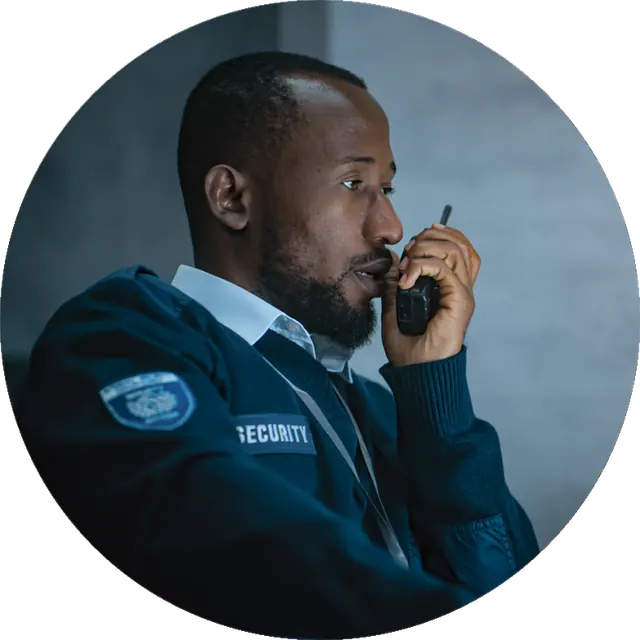
Security works the long night shift. Sleep keeps it watchful.

Long, often 12-hour night shifts worked alone leave guards short of sleep; dozing on post, missed alarms and drowsy patrol or cash-in-transit driving put people, property and the officer at risk.

Change coming 1 Dec 2026

Security Services workforce

Who this page covers

  • Alarm and CCTV monitoring centres
  • Aviation and port security screening
  • Cash-in-transit
  • Crowd control and event security
  • Hospital, retail and casino security (also see Healthcare & Nursing, Retail & Hospitality)
  • Mobile patrol and alarm response
  • Static guarding

Reg Watch

What’s changed, and what’s coming

Regulatory change that affects how you manage fatigue in security services: what has changed in the last 12 months, and what is on the way.

Upcoming changeExpected from 1 December 2026Within 12 months

From 1 Dec 2026 MOM makes four heat-stress measures mandatory for workers exposed to heat, including a training programme. An Employment Act review (incl. Part IV hours) reports in 2H 2026; no change to the 72-hour overtime cap is announced. The Workplace Fairness Act 2025 targets end-2027.


Regulatory changes checked as at 1 October 2026.

Regulation

Who regulates it, and what they expect

Singapore's security hours rules sit in licensing, not safety law. Outsourced officers on Progressive Wage Model pay are above the Employment Act Part IV threshold, so its statutory hours limits no longer reach them; Police Regulatory Department licensing conditions limit officers to 72 extra hours a month instead. The WSH Act duty to assess and control risk reaches fatigue on 12-hour and night shifts; MOM's fatigue guidelines show how, but they are guidance.

Regulated by
  • Singapore Police ForceSPF
  • Ministry of ManpowerMOM

Logos identify the regulator and don’t imply endorsement.

Who regulates it

The Ministry of Manpower enforces workplace safety and employment law. The Police Regulatory Department of the Singapore Police Force licenses security agencies and officers under the Private Security Industry Act 2007 and sets licensing conditions, including the Progressive Wage Model and a cap on extra hours.

Your obligations

Keep officers within 72 extra hours a month under licensing conditions, pay at least the Progressive Wage Model rates, and deploy only licensed officers. Conduct and act on a risk assessment covering night, lone and 12-hour work. For any officers still within Employment Act Part IV, keep to 12 hours a day and 72 hours of overtime a month and give a weekly rest day. MOM's guidelines recommend shifts of no more than 12 hours including overtime; that is guidance.

Consequences

WSH Act offences are criminal: up to S$500,000 for a company and S$200,000 and/or two years' jail for an individual (WSH Act maxima, 2026). Breaching licensing conditions, including the cap on extra hours, puts a security agency's licence at risk with the Police Regulatory Department. Where Part IV applies, hours breaches carry up to S$5,000 per offence, and S$10,000 and/or 12 months' jail on repeat (2026).

Penalties

Work injury compensation limits from 1 November 2025, current in 2026: S$91,000-S$269,000 for death, S$116,000-S$346,000 for permanent incapacity, and medical expenses up to S$53,000. Composition fines are capped at half the maximum or S$5,000, whichever is lower. Licence action is the larger commercial exposure for an agency.

Sources: Private Security Industry Act 2007 and Police Regulatory Department licensing conditions; Progressive Wage Model for the security sector; Employment Act 1968, Part IV; Workplace Safety and Health Act 2006; MOM press release (Oct 2021) and parliamentary reply (Sep 2026).

Fatigue-critical roles

Where fatigue matters most in security services

The roles where a fatigued worker is most likely to cause serious harm, the tasks that carry the risk, and why fatigue builds up in them.

RoleRiskHigh-risk tasksWhy fatigue builds
Mobile patrol officer
Rules
Regulatory designation
Licensed security officer (Private Security Industry Act 2007), PWM grade
Hours and rest
PRD licence condition: max 72 overtime hours a month; outsourced PWM officers outside EA Part 4 since Jan 2024
Critical riskDriving between sites all night; alarm response with lone entry into premises; key-holding call-outsNight shifts of 10-12 h, continuous driving, lone work, call-outs
Cash-in-transit armed officer (auxiliary police officer)
Rules
Regulatory designation
Auxiliary police officer (Police Force Act 2004 Part 9)
Hours and rest
Employer and AP licence conditions
Critical riskArmed cash collection and delivery under attack risk; driving armoured vehicles on long routes; early-morning ATM replenishmentPre-dawn starts, long routes, high-alert vigilance, occasional night ATM runs
Security officer (PWM grade)
Rules
Regulatory designation
Licensed security officer (Private Security Industry Act 2007), PWM grade
Hours and rest
PRD licence condition: max 72 overtime hours a month; outsourced PWM officers outside EA Part 4 since Jan 2024
High riskLone static guarding on 12 h night shifts; site and car-park patrols; access control, fire and intrusion alarm response12 h shifts on 4-day or 6-day patterns, high overtime under the 72 h a month cap, night shifts
Security command centre operator
Rules
Regulatory designation
Licensed security officer (Private Security Industry Act 2007), PWM grade
Hours and rest
PRD licence condition: max 72 overtime hours a month; outsourced PWM officers outside EA Part 4 since Jan 2024
High riskMonitoring alarms and CCTV feeds overnight; dispatching response; verifying alarm activations and lone-worker check-ins12 h night shifts, screen monotony, low event rate overnight
Security officer (events)
Rules
Regulatory designation
Licensed security officer (Private Security Industry Act 2007), PWM grade
Hours and rest
PRD licence condition: max 72 overtime hours a month; outsourced PWM officers outside EA Part 4 since Jan 2024
High riskDoor and crowd control at late-night venues and events; managing intoxicated patrons and physical restraint near closing timeLate-night shifts finishing after 03:00, weekend clustering, second jobs

Stories

When fatigue made the record

Published findings and prosecutions from regulators, courts and investigators in Singapore.

  • Dec 2017 · Singapore

    Guard on 10 straight 12-hour shifts faints on patrol; fatigue held work-related

    • Safety
    • Legal

    In 2017 a security officer who had worked 12-hour shifts for ten straight days without a rest day fainted on patrol, fell and suffered a serious spinal injury. The Assistant Commissioner for Labour found that tiredness from his employment caused or contributed to the fainting, and in 2020 the High Court upheld the work injury compensation award.

    Case SG-security-01Report an issue

See all security services news

How the suite fits

How each product connects to your obligations

Grades describe how strongly a product connects to an obligation. None discharges an obligation, and none carries a compliance warranty.

Sleepfit

Supports your general duty of care

Sleepfit screens sleep health across your officers on 12-hour and night shifts, supporting the risk assessment reg 3 of the WSH (Risk Management) Regulations requires you to conduct. No Singapore rule names a sleep screen. It screens; diagnosis stays with your clinicians.

About Sleepfit

Fatiguefit4Duty

Supports your general duty of care

Fatiguefit4Duty records a point-of-duty fatigue check for officers on 12-hour nights and lone posts, supporting your duty under s 12(1) of the WSH Act. No rule names the check. A fitness-for-duty check, not a fitness-for-duty decision - the duty call stays with you.

About Fatiguefit4Duty

Awareness eLearning

Supports your general duty of care

Awareness eLearning gives your security officers recorded fatigue education, supporting your general duty under s 12(3)(e) of the WSH Act to provide adequate instruction, information and training. MOM's fatigue guidelines recommend it; no rule names it.

About Awareness eLearning

Was It Fatigue?

Supports your general duty of care

Was It Fatigue? structures a fatigue review after an incident, supporting the risk assessment review reg 7 of the Risk Management Regulations requires after an injury. Reporting rules name no cause. A structured judgement aid, not a determination of cause.

About Was It Fatigue?

SleepWellBaby

SleepWellBaby supports parents among your security officers through the most broken months of infant sleep. No Singapore rule reaches sleep in new-parent households; it is offered as a benefit.

About SleepWellBaby

Recommended bundle

Where we’d start in security services

Every bundle is priced on prevalence: your whole cohort gets access, and you pay for the share predicted to need each product. How pricing works.

Recommended · Levels 2 and 3

Shift Worker Bundle

Sleep screening and a point-of-duty check for the workers who need it most.

Why this pairing in Singapore

No Singapore rule names a fatigue tool, so this supports your WSH Act 2006 s 12 duty and reg 3 risk assessment. Sleepfit screens your officers on 12-hour nights for sleep disorders; Fatiguefit4Duty adds a point-of-duty self-check. Prevention adds Awareness eLearning with a completion record.

See what sleep and fatigue mean for your security services workforce.

Tell us roughly how many people you employ. Your snapshot models how many are likely sleeping poorly and what it costs, from published research for security services. Then choose who you’d cover, and we’ll take you to the right next step.

A sample workforce snapshot on a tablet: modelled sleep problems and the cost of poor sleep for 1,400 people in transport and logistics.
