Security Services · New Zealand

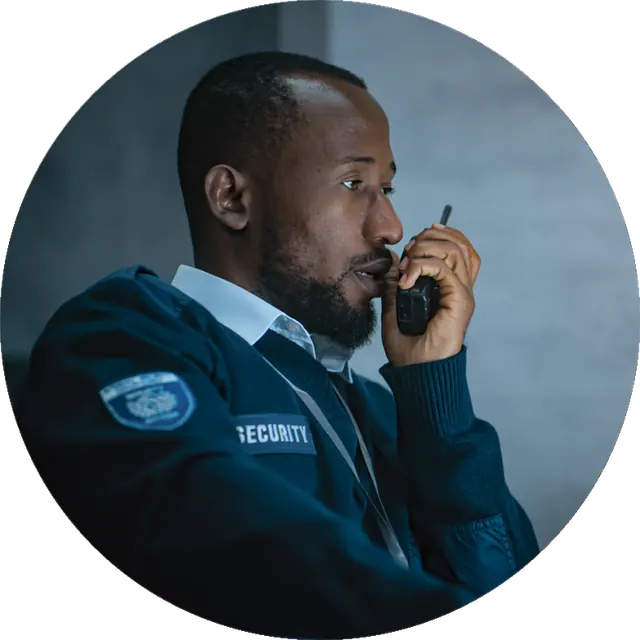
Security works the long night shift. Sleep keeps it watchful.

Long, often 12-hour night shifts worked alone leave guards short of sleep; dozing on post, missed alarms and drowsy patrol or cash-in-transit driving put people, property and the officer at risk.

Regulation changed 9 Jul 2026Change coming 1 Apr 2027

Security Services workforce

Who this page covers

  • Alarm and CCTV monitoring centres
  • Aviation and port security screening
  • Cash-in-transit
  • Crowd control and event security
  • Hospital, retail and casino security (also see Healthcare & Nursing, Retail & Hospitality)
  • Mobile patrol and alarm response
  • Static guarding

Reg Watch

What’s changed, and what’s coming

Regulatory change that affects how you manage fatigue in security services: what has changed in the last 12 months, and what is on the way.

Recent changeFrom 9 July 2026

Applies across industries in New Zealand

The Health and Safety at Work Amendment Act 2026 became law on 9 July 2026. Your duties do not change until most of it commences on 1 April 2027, so use the lead time to evidence fatigue as a serious-harm risk.

Read the change

Upcoming changeExpected from 1 April 2027Within 12 months

From 1 April 2027 HSWA centres on 'critical risks'. Fatigue is not on the Schedule 1A list, so it is critical only where likely to cause death or notifiable harm. Firms of 20 or more must still manage all risks, critical first; smaller firms manage critical risks only. Some approved codes give a safe harbour; officer duties focus on governance.

Regulatory changes checked as at 2 November 2026.

Regulation

Who regulates it, and what they expect

New Zealand has no security-specific hours or fatigue rule. The 2010 licensing Act controls who may work in security, not how long. Your fatigue duty comes from the Health and Safety at Work Act 2015, which counts fatigue as a source of hazard, and the Employment Relations Act sets paid rest and meal breaks. There is no maximum working week, no minimum gap between shifts and no night-work health assessment, so night, lone and long guarding shifts sit under the general duty.

Regulated by
  • WorkSafe New ZealandWorkSafe

Logos identify the regulator and don’t imply endorsement.

Who regulates it

WorkSafe New Zealand enforces your fatigue duty. The Private Security Personnel Licensing Authority licenses security businesses and approves individual security employees under the Private Security Personnel and Private Investigators Act 2010. Employment New Zealand and the Employment Relations Authority enforce breaks, and ACC covers workplace injury.

Your obligations

Eliminate or minimise fatigue risk so far as is reasonably practicable, including for lone night guards and patrol drivers, and monitor worker health and workplace conditions. Your officers and directors must exercise due diligence. Provide the prescribed paid rest and unpaid meal breaks, scaled to shift length. Make sure your business is licensed and every security employee holds a current certificate of approval.

Consequences

WorkSafe can issue improvement and prohibition notices and prosecute in the District Court, and the court orders reparation to the worker or family before it sets any fine. Missed rest and meal breaks are enforceable through the Employment Relations Authority. The licensing authority can suspend or cancel a business licence or an employee's certificate of approval.

Penalties

Maximum fines for an organisation are $500,000, $1.5 million and $3 million across the three offence tiers, set in 2015 and unchanged in 2026. An officer faces $100,000, $300,000 or $600,000, plus up to five years' imprisonment at the top tier. Reparation to the worker or family is ordered on top of any fine.

Sources: Health and Safety at Work Act 2015; Employment Relations Act 2000; Private Security Personnel and Private Investigators Act 2010; WorkSafe New Zealand fatigue guidance and court summaries.

Fatigue-critical roles

Where fatigue matters most in security services

The roles where a fatigued worker is most likely to cause serious harm, the tasks that carry the risk, and why fatigue builds up in them.

RoleRiskHigh-risk tasksWhy fatigue builds
Mobile patrol officer
Rules
Regulatory designation
Security employee holding a certificate of approval (PSPPI Act 2010)
Hours and rest
ERA 2000 rest and meal breaks
Critical riskDriving between sites all night; alarm response with lone entry into premises; key-holding call-outsNight shifts of 10-12 h, continuous driving, lone work, call-outs
Cash-in-transit officer
Rules
Regulatory designation
Security employee holding a certificate of approval (PSPPI Act 2010)
Hours and rest
ERA 2000 rest and meal breaks
Critical riskArmed cash collection and delivery under attack risk; driving armoured vehicles on long routes; early-morning ATM replenishmentPre-dawn starts, long routes, high-alert vigilance, occasional night ATM runs
Security guard
Rules
Regulatory designation
Security employee holding a certificate of approval (PSPPI Act 2010)
Hours and rest
ERA 2000 rest and meal breaks
High riskLone static guarding on 12 h night shifts; site and car-park patrols; access control, fire and intrusion alarm response12 h night shifts, back-to-back shifts across employers, lone work, monotony
Monitoring centre operator
Rules
Regulatory designation
Security employee holding a certificate of approval (PSPPI Act 2010)
Hours and rest
ERA 2000 rest and meal breaks
High riskMonitoring alarms and CCTV feeds overnight; dispatching response; verifying alarm activations and lone-worker check-ins12 h night shifts, screen monotony, low event rate overnight
Crowd controller
Rules
Regulatory designation
Security employee holding a certificate of approval (PSPPI Act 2010)
Hours and rest
ERA 2000 rest and meal breaks
High riskDoor and crowd control at late-night venues and events; managing intoxicated patrons and physical restraint near closing timeLate-night shifts finishing after 03:00, weekend clustering, second jobs

Seasonal fatigue risk

When fatigue risk rises in security services.

Season alone moves fatigue risk modestly. The sharper effects come from specific weeks and workloads. These are the periods that matter for security services in New Zealand in 2027, including the ones that affect every workforce.

  1. Dec to Feb · Measured

    Warmest nights

    Warm nights shorten sleep

  2. 4 Apr · Measured

    Clocks go back

    No net change in crash risk

  3. 26 Sep · Measured

    Clocks spring forward

    Lost hour; injury and crash risk rise the following week

Measured: a published study found a change in sleep, injuries or crashes. Documented: a recorded change in workload or exposure, such as overtime or deployments. Dates are for 2027 and move each year. Our reading of published evidence, refreshed every November.

Stories

When fatigue made the record

Published findings and prosecutions from regulators, courts and investigators in New Zealand.

  • Mar 2004 · Auckland, New Zealand

    Security guard found sound asleep while guarding violent hospital patient; dismissal justified

    • Legal

    A security guard employed by a security company was posted overnight at a hospital in Auckland to guard a patient whose violent behaviour posed a risk to staff and other patients. A night supervisor found the guard asleep, and the nurse on duty reported that he had been sound asleep that night and the previous nights, not responding when she shone a torch in his face. The guard, who said he had been very tired, was dismissed for serious misconduct and the Employment Relations Authority upheld the dismissal.

    Case NZ-security-02Report an issue

See all security services news

How the platform fits

How each product connects to your obligations

Grades describe how strongly a product connects to an obligation. None discharges an obligation, and none carries a compliance warranty.

Sleepfit

Supports your general duty of care

No New Zealand security rule names a sleep-health questionnaire. Section 36(3)(g) of the Health and Safety at Work Act 2015 requires you to monitor worker health, and Sleepfit supports that for guards on night and 12-hour shifts. It identifies employees who may benefit from clinical evaluation; diagnosis stays with your clinicians.

About Sleepfit

Fatiguefit4Duty

Supports your general duty of care

No New Zealand security rule names a pre-duty check. Your s 36 duty under the Health and Safety at Work Act 2015 reaches fatigue, named in s 16 as a source of hazard. A fitness-for-duty check, not a fitness-for-duty decision - the duty call stays with you.

About Fatiguefit4Duty

Awareness eLearning

Supports your general duty of care

Section 36(3)(f) of the Health and Safety at Work Act 2015 requires the training needed to protect workers but does not name fatigue. Awareness eLearning supports it with fatigue and sleep content for officers on night and long shifts.

About Awareness eLearning

Was It Fatigue?

Supports your general duty of care

You must notify WorkSafe of a notifiable event under s 56 of the Health and Safety at Work Act 2015; no New Zealand security rule requires you to assess fatigue. Was It Fatigue? supports your own review. A structured judgement aid, not a determination of cause.

About Was It Fatigue?

SleepWellBaby

No New Zealand security rule reaches sleep in new-parent households. SleepWellBaby is offered to the parents of infants among your officers as a benefit that protects their own sleep, not as a compliance step.

About SleepWellBaby

Level 4: fatigue-related errors

When fatigue gets through, catch the error.

Level 4 controls trap or detect fatigue-related errors before they cause harm. They are designed into equipment, tasks and procedures by others: we don’t supply or endorse them, and we can point you to providers. These are the types that apply in security services.

  • Procedural cross-check

    Two-person checks

    A second qualified person checks critical actions so one tired person's slip is caught.

    What it doesn’t do: Both people may be fatigued on the same roster, so it relies on fatigue-aware rostering behind it.

    Examples: Rail: two-person crews and call-outs. Aviation: two-pilot cross-checks. Utilities: switching verification. Hospitals: double checks.

  • Remove exposure

    Scheduling critical tasks away from the early-morning low

    Moves the highest-risk tasks out of the early-morning hours when errors are most likely.

    What it doesn’t do: It reduces exposure but does not trap the error; it depends on planners knowing when fatigue peaks.

    Examples: Maintenance: critical work scheduled off night shift. Hospitals: elective procedures in daytime.

  • Detect non-response

    Lone-worker alarms

    Raises an alarm when a lone worker falls, stops moving or misses a scheduled check-in.

    What it doesn’t do: It responds after something has gone wrong and is not a fatigue measure.

    Examples: Security patrols, utility field crews and home-care visits.

  • Procedural cross-check

    Electronic welfare and patrol checks

    Each welfare check or patrol point is scanned on site and time-stamped, so missed checks on night shift show up straight away.

    What it doesn’t do: It proves someone was present, not that they looked properly.

    Examples: Prisons and police custody: cell checks. Security: patrol checkpoints. Mental health units: observation logging.

Most of the evidence for fatigue-detection technology comes from the vendors themselves. Ask for independent evaluation before you rely on it.

Across industries, trusted by

See what sleep and fatigue mean for your security services workforce.

Tell us roughly how many people you employ. Your snapshot models how many are likely sleeping poorly and what it costs, from published research for security services. Then tell us what you want to focus on, and we’ll show you how open access would work for you, and what it would cost.

A sample workforce snapshot on a tablet: modelled sleep problems and the cost of poor sleep for 1,400 people in transport and logistics.