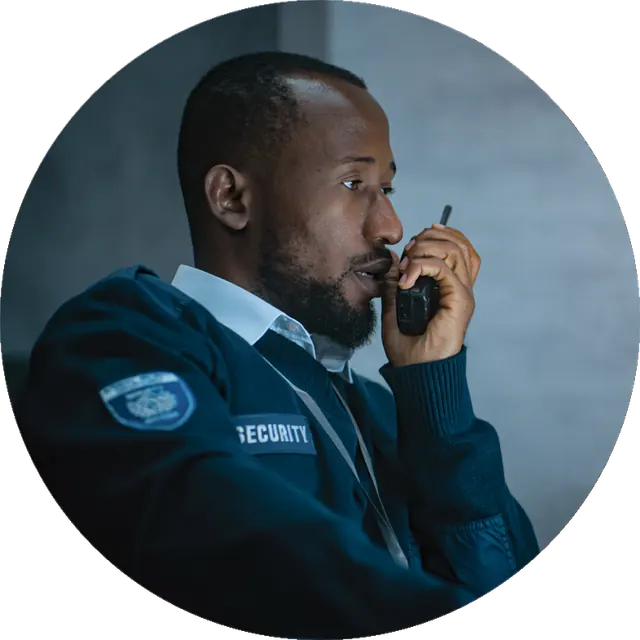
Security Services · Australia

Security works the long night shift. Sleep keeps it watchful.

Long, often 12-hour night shifts worked alone leave guards short of sleep; dozing on post, missed alarms and drowsy patrol or cash-in-transit driving put people, property and the officer at risk.

Regulation changed 1 July 2026

Security Services workforce

Who this page covers

  • Alarm and CCTV monitoring centres
  • Aviation and port security screening
  • Cash-in-transit
  • Crowd control and event security
  • Hospital, retail and casino security (also see Healthcare & Nursing, Retail & Hospitality)
  • Mobile patrol and alarm response
  • Static guarding

Reg Watch

What’s changed, and what’s coming

Regulatory change that affects how you manage fatigue in security services: what has changed in the last 12 months, and what is on the way.

Recent changeFrom 1 July 2026

Applies across industries in Australia

From 1 July 2026 NSW requires you to follow approved codes, including the fatigue code, or manage risk to an equal or higher standard. Victoria's psychological health regulations apply from 1 December 2025.

Read the change

Upcoming changeNo date set yet

Safe Work Australia's Best Practice Review of the model WHS laws was due to go to WHS ministers in August 2026. It is not yet public and no amendments are proposed, so no change date is set.

Regulatory changes checked as at 1 October 2026.

Regulation

Who regulates it, and what they expect

No Australian law sets fatigue rules for security officers. Your duty to manage fatigue comes from WHS law and, in New South Wales and the Northern Territory, the approved fatigue code, which in New South Wales must be met or bettered from 1 July 2026. Shift length and breaks come from the Security Services Industry Award 2020, an industrial instrument rather than safety law. State licensing Acts, such as the Security Industry Act 1997 (NSW), license people and firms; they are not a fatigue regime.

Regulated by
  • Safe Work AustraliaSWA

Logos identify the regulator and don’t imply endorsement.

Who regulates it

Your state or territory WHS regulator enforces the duty to manage fatigue, and the Fair Work Ombudsman enforces the Security Services Industry Award 2020. Security licensing is state-based: in New South Wales the Security Licensing and Enforcement Directorate of the NSW Police Force, in Victoria the Licensing and Regulation Division of Victoria Police, with an equivalent licensing body in each other state and territory.

Your obligations

Manage fatigue as a WHS hazard so far as is reasonably practicable, including roster design for night, lone and long shifts. Under the Award, ordinary shifts are capped at 10 hours; 12-hour ordinary shifts need majority agreement plus proper health monitoring, suitable rosters, supervision, adequate breaks and a trial or review. Give at least 8 hours between shifts, or pay double time until the break is given, plus the Award's rest and meal breaks. Deploy only licensed officers.

Consequences

A fatigue failure is a WHS offence across three categories, and every jurisdiction has an industrial manslaughter offence where negligent conduct causes a death. In New South Wales, departing from the approved fatigue code without an equivalent standard is itself a breach from 1 July 2026. Breaching the Award, including the break between shifts and the 12-hour shift conditions, draws Fair Work civil penalties and back pay. State licensing regulators can suspend or cancel licences.

Penalties

WHS maximums at 1 July 2025 levels, current for 2026: Category 1 for a body corporate up to $17,034,000 (Cth), $11,561,000 (ACT) and $11,150,183 (NSW), and $3,000,000 to $3,500,000 in the other states and territories. Industrial manslaughter for a body corporate reaches $20,000,000 in New South Wales. Award breaches carry Fair Work Act civil penalties per contravention, higher for serious contraventions, plus back pay.

Sources: Model WHS Act and Regulations; Code of Practice: Managing the risk of fatigue at work (2025); Security Services Industry Award 2020; Fair Work Act 2009; Security Industry Act 1997 (NSW) and state and territory equivalents; Fair Work Commission decisions.

Fatigue-critical roles

Where fatigue matters most in security services

The roles where a fatigued worker is most likely to cause serious harm, the tasks that carry the risk, and why fatigue builds up in them.

RoleRiskHigh-risk tasksWhy fatigue builds
Mobile patrol officer
Rules
Regulatory designation
Licensed security officer (state security industry licence, e.g. Security Industry Act 1997 (NSW))
Hours and rest
Security Services Industry Award 2020: 10 ordinary h a shift (12 h with health monitoring, cl 13.3(c)); 8 h between shifts (cl 14.4)
Critical riskDriving between sites all night; alarm response with lone entry into premises; key-holding call-outsNight shifts of 10-12 h, continuous driving, lone work, call-outs
Cash-in-transit guard (armed, licensed)
Rules
Regulatory designation
Licensed security officer (state security industry licence, e.g. Security Industry Act 1997 (NSW))
Hours and rest
Security Services Industry Award 2020: 10 ordinary h a shift (12 h with health monitoring, cl 13.3(c)); 8 h between shifts (cl 14.4)
Critical riskArmed cash collection and delivery under attack risk; driving armoured vehicles on long routes; early-morning ATM replenishmentPre-dawn starts, long routes, high-alert vigilance, occasional night ATM runs
Security officer (static guard)
Rules
Regulatory designation
Licensed security officer (state security industry licence, e.g. Security Industry Act 1997 (NSW))
Hours and rest
Security Services Industry Award 2020: 10 ordinary h a shift (12 h with health monitoring, cl 13.3(c)); 8 h between shifts (cl 14.4)
High riskLone static guarding on 12 h night shifts; site and car-park patrols; access control, fire and intrusion alarm response12 h night shifts, back-to-back shifts across employers, lone work, monotony
Monitoring centre operator (licensed)
Rules
Regulatory designation
Licensed security officer (state security industry licence, e.g. Security Industry Act 1997 (NSW))
Hours and rest
Security Services Industry Award 2020: 10 ordinary h a shift (12 h with health monitoring, cl 13.3(c)); 8 h between shifts (cl 14.4)
High riskMonitoring alarms and CCTV feeds overnight; dispatching response; verifying alarm activations and lone-worker check-ins12 h night shifts, screen monotony, low event rate overnight
Crowd controller (licensed)
Rules
Regulatory designation
Licensed security officer (state security industry licence, e.g. Security Industry Act 1997 (NSW))
Hours and rest
Security Services Industry Award 2020: 10 ordinary h a shift (12 h with health monitoring, cl 13.3(c)); 8 h between shifts (cl 14.4)
High riskDoor and crowd control at late-night venues and events; managing intoxicated patrons and physical restraint near closing timeLate-night shifts finishing after 03:00, weekend clustering, second jobs

Stories

When fatigue made the record

Published findings and prosecutions from regulators, courts and investigators in Australia.

  • Oct 2025 · New South Wales, Australia

    Security officer sacked after falling asleep on 1 am crib break wins unfair dismissal compensation

    • Legal
    • Financial

    A security surveillance officer guarding urban rail sites on night shift was found asleep in his car at about 1 am during an authorised crib break, shortly after dealing with a disruptive incident, and was summarily dismissed nine days later. The Fair Work Commission found there was a valid reason but that dismissal was unfair because the sleep was unintentional, happened during a permitted break, was a one-off, and the officer had an unblemished record. The employer was ordered to pay five weeks' pay plus superannuation.

    Case AU-security-02Report an issue

See all security services news

How the suite fits

How each product connects to your obligations

Grades describe how strongly a product connects to an obligation. None discharges an obligation, and none carries a compliance warranty.

Sleepfit

Supports your general duty of care

No Australian security rule names a sleep screen. If you roster 12-hour ordinary shifts under clause 13.3(c) of the Security Services Industry Award 2020, proper health monitoring is a condition, and Sleepfit supports it. It screens; diagnosis stays with your clinicians.

About Sleepfit

Fatiguefit4Duty

Supports your general duty of care

No Australian security rule names a pre-shift check. For lone guards, patrol drivers and cash-in-transit crews, Fatiguefit4Duty supports your WHS duty to manage fatigue. A fitness-for-duty check, not a fitness-for-duty decision - the duty call stays with you.

About Fatiguefit4Duty

Awareness eLearning

Supports your general duty of care

The New South Wales approved fatigue code expects fatigue information and training for workers on every shift, and must be met or bettered there from 1 July 2026; elsewhere the general WHS training duty applies. Awareness eLearning supports both with a completion record.

About Awareness eLearning

Was It Fatigue?

Supports your general duty of care

Notifying a serious incident to the regulator does not require a fatigue review, and no security rule names one. Was It Fatigue? supports your own review after an assault, missed alarm or patrol vehicle crash. A structured judgement aid, not a determination of cause.

About Was It Fatigue?

SleepWellBaby

No Australian rule reaches sleep in new-parent households. SleepWellBaby supports the parents among your security officers through the most broken months of infant sleep; it is offered as a benefit, not a compliance step.

About SleepWellBaby

Recommended bundle

Where we’d start in security services

Every bundle is priced on prevalence: your whole cohort gets access, and you pay for the share predicted to need each product. How pricing works.

Recommended · Levels 2 and 3

Shift Worker Bundle

Sleep screening and a point-of-duty check for the workers who need it most.

Why this pairing in Australia

Award cl 13.3(c) makes health monitoring a condition of 12-hour shifts; s 19 of the WHS Act names no tool. Sleepfit screens your guards and patrol drivers for sleep disorders; Fatiguefit4Duty adds a point-of-duty self-check with a record. Prevention adds Awareness eLearning with a completion record.

See what sleep and fatigue mean for your security services workforce.

Tell us roughly how many people you employ. Your snapshot models how many are likely sleeping poorly and what it costs, from published research for security services. Then choose who you’d cover, and we’ll take you to the right next step.

A sample workforce snapshot on a tablet: modelled sleep problems and the cost of poor sleep for 1,400 people in transport and logistics.