Retail & Hospitality · Australia

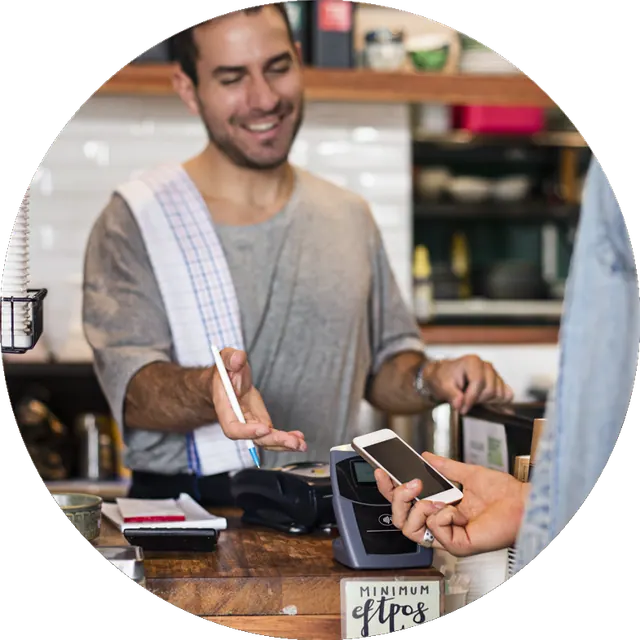
In retail and hospitality, sleep shows up at the counter.

Early starts, late closes, split shifts and night fill leave short turnarounds between shifts. The cost is mostly errors, service and turnover; night work and driving add safety risk.

Regulation changed 1 July 2026

Retail & Hospitality workforce

Who this page covers

Reg Watch

What’s changed, and what’s coming

Regulatory change that affects how you manage fatigue in retail & hospitality: what has changed in the last 12 months, and what is on the way.

Recent changeFrom 1 July 2026

Applies across industries in Australia

From 1 July 2026 NSW requires you to follow approved codes, including the fatigue code, or manage risk to an equal or higher standard. Victoria's psychological health regulations apply from 1 December 2025.

Read the change

Upcoming changeNo date set yet

Safe Work Australia's Best Practice Review of the model WHS laws was due to go to WHS ministers in August 2026. It is not yet public and no amendments are proposed, so no change date is set.

Regulatory changes checked as at 1 October 2026.

Regulation

Who regulates it, and what they expect

Retail has no fatigue statute of its own. It has a general duty to manage fatigue as a workplace risk, and a published standard for what that means: New South Wales approved a code of practice on managing the risk of fatigue at work on 20 February 2026, and since 1 July 2026 an approved code in New South Wales is enforceable rather than merely admissible. The Northern Territory approved it in March 2026; Tasmania publishes it without stating it is approved, and the remaining jurisdictions have not approved it. Your award sets breaks and rostering limits on a separate track.

Regulated by
  • Safe Work AustraliaSWA

Logos identify the regulator and don’t imply endorsement.

Who regulates it

Retail and hospitality employers are governed by the Fair Work Commission and Fair Work Ombudsman through the industry's modern awards, alongside the standard national workplace safety and disability discrimination bodies.

Your obligations

Eliminate or minimise fatigue risk so far as is reasonably practicable, and manage the psychosocial hazards that split shifts, early opens and late trading create. In New South Wales you must now follow the approved fatigue code or manage the hazard to an equal or better standard: at least 12 hours between shifts, a 30-minute break every five hours, no more than three night shifts in a row, no more than five days in a row, one full day off a week, and fatigue training available to staff on every shift. Respect the right to disconnect, which covers shift offers pushed out after hours.

Consequences

In New South Wales, departing from the approved fatigue code without an equally good alternative is now a failure to meet your duty, not something a court merely weighs after the fact. Elsewhere it is evidence of what was known and what was reasonably practicable. Award breaches run on a separate track: the Fair Work Ombudsman recovers back pay and seeks civil penalties, and complying with one does not answer the other. Psychological injury claims from shift work flow through the state compensation scheme regardless of fault.

Penalties

Work health and safety maxima from 1 July 2026, indexed annually in NSW, the ACT and the Commonwealth: for the most serious category, $2,413,809 for an individual and $11,606,824 for a body corporate in NSW, $680,000 and $3,500,000 in WA, and $600,000 and $3,000,000 in Qld, SA, Tas and NT. Every jurisdiction now has industrial or workplace manslaughter carrying 20 to 25 years. Award underpayments are recovered separately as back pay with civil penalties.

Sources: The General Retail Industry Award's break between work periods, minimum engagement and right to disconnect terms; Safe Work Australia's model Code of Practice on managing the risk of fatigue at work with the NSW and SA approved codes; the model WHS regulations on psychosocial hazards.

Fatigue-critical roles

Where fatigue matters most in retail & hospitality

The roles where a fatigued worker is most likely to cause serious harm, the tasks that carry the risk, and why fatigue builds up in them.

RoleRiskHigh-risk tasksWhy fatigue builds
Home delivery driver (supermarket online) / delivery rider
Rules
Regulatory designation
None specific - general duty (light vehicle; HVNL fatigue rules only over 12 t GVM); platform riders may be 'employee-like' workers (Fair Work Act digital labour platform provisions)
Hours and rest
General Retail Industry Award 2020 cl 16.6: 12 h break between shifts (10 h by agreement)
High riskDriving loaded vans or riding scooters to tight delivery windows, reversing in residential streets, 03:00-05:00 starts for first slots, lifting crates at doorstepsPre-dawn starts, 10-12 h days, back-to-back delivery windows; platform riders on several apps late at night
Night fill team member / night filler
Rules
Regulatory designation
High risk work licence holder (WHS Regs Sch 3, class LF) when driving a forklift; otherwise general duty
Hours and rest
General Retail Industry Award 2020 cl 16.6: 12 h break between shifts (10 h by agreement)
High riskForklift and pallet-jack work, unloading delivery trucks, ladder and high-shelf stacking, manual handling alone or in small crews overnightPermanent nights (22:00-06:00), consecutive night shifts, second jobs, dawn commute
Console operator (service station) / night auditor (hotel)
Rules
Regulatory designation
None specific - general duty (WHS Act s 19; Vic OHS Act 2004 s 21)
Hours and rest
No statutory cap: FW Act s 62 (38 h + reasonable additional hours); award or EA rest-between-shift terms
High riskLone overnight console or front desk: fuel emergency stop and spill response, fire alarm and evacuation lead, cash handling, de-escalating intoxicated customersPermanent nights 22:00-06:00, lone work, rotating weekend nights, commute home at dawn
Chef / cook (commis, chef de partie)
Rules
Regulatory designation
None specific - general duty (WHS Act s 19; Vic OHS Act 2004 s 21)
Hours and rest
Hospitality Industry (General) Award 2020 cl 15.5(e): 10 h break between shifts (8 h on roster changeover)
High riskKnife work, deep fryers, hot oil and pressure equipment at speed during service; allergen-control errors that can cause anaphylaxis; late close then early prepSplit shifts, 'clopens' (late close then early open), 50-60 h weeks, finishing after midnight, no breaks in service
Licensee / approved manager / duty manager (licensed venue)
Rules
Regulatory designation
RSA-certified approved manager under state liquor law (e.g. Liquor Act 2007 (NSW)); otherwise general duty
Hours and rest
Hospitality Industry (General) Award 2020 cl 15.5(e): 10 h break between shifts
High riskRefusing service to intoxicated patrons, crowd and capacity control, incident response and ejections, cash-up and lock-up at 02:00-04:00Night shifts finishing 02:00-05:00, consecutive late nights at weekends, early-morning commute or drive home

Stories

When fatigue made the record

Published findings and prosecutions from regulators, courts and investigators in Australia.

  • Oct 2019 · New South Wales, Australia

    Analyst sacked a day after complaining of 16-hour days and sleeping behind the wheel wins adverse action case, but her long-hours claim fails

    • Legal
    • Financial

    A commercial analyst at a fashion company emailed her manager complaining of working up to 16 hours a day plus weekends and of being so tired she was sleeping behind the wheel driving home late at night. She was dismissed during probation the day after a further complaint. The court found the company had not proved the complaints were not a reason for the dismissal and awarded compensation, but it rejected her separate claim under s 62 of the Fair Work Act because she did not prove the extra hours or any unreasonable request to work them.

    Case AU-retail-07Report an issue

See all retail & hospitality news

How the suite fits

How each product connects to your obligations

Grades describe how strongly a product connects to an obligation. None discharges an obligation, and none carries a compliance warranty.

Sleepfit

Supports your general duty of care

No Australian retail rule names a sleep screen. Sleepfit supports your s 19 WHS duty on split shifts and late trading; in NSW the approved fatigue code must be followed or matched. Results come to you only in aggregate. It screens; diagnosis stays with your clinicians.

About Sleepfit

Fatiguefit4Duty

Supports your general duty of care

For safety-sensitive roles - forklifts, night lone working, delivery - Fatiguefit4Duty supports your WHS duty; no rule requires a check, and it does not audit rosters. A fitness-for-duty check, not a fitness-for-duty decision - the duty call stays with you.

About Fatiguefit4Duty

Awareness eLearning

Supports your general duty of care

Your WHS training duty does not name fatigue; the NSW approved fatigue code says fatigue training should reach workers on every shift, from the closing crew to the early openers. Awareness eLearning supplies that content.

About Awareness eLearning

Was It Fatigue?

Supports your general duty of care

WHS law requires notifiable incidents to be reported, and no retail rule requires a fatigue review. Was It Fatigue? supports your own look at whether fatigue contributed to an incident. A structured judgement aid, not a determination of cause.

About Was It Fatigue?

SleepWellBaby

No Australian retail or hospitality rule reaches sleep in new-parent households. SleepWellBaby supports staff on split shifts and late trading whose sleep is broken at home; it is offered as a wellbeing benefit, not a compliance step.

About SleepWellBaby

Recommended bundle

Where we’d start in retail & hospitality

Every bundle is priced on prevalence: your whole cohort gets access, and you pay for the share predicted to need each product. How pricing works.

Recommended · Levels 2 and 3

Shift Worker Bundle

Sleep screening and a point-of-duty check for the workers who need it most.

Why this pairing in Australia

No retail rule names a fatigue tool, so this supports your s 19 WHS duty on late trading. Sleepfit screens your night and forklift staff for sleep disorders; Fatiguefit4Duty adds a point-of-duty self-check with a record. Prevention adds Awareness eLearning with a completion record.

See what sleep and fatigue mean for your retail & hospitality workforce.

Tell us roughly how many people you employ. Your snapshot models how many are likely sleeping poorly and what it costs, from published research for retail & hospitality. Then choose who you’d cover, and we’ll take you to the right next step.

A sample workforce snapshot on a tablet: modelled sleep problems and the cost of poor sleep for 1,400 people in transport and logistics.