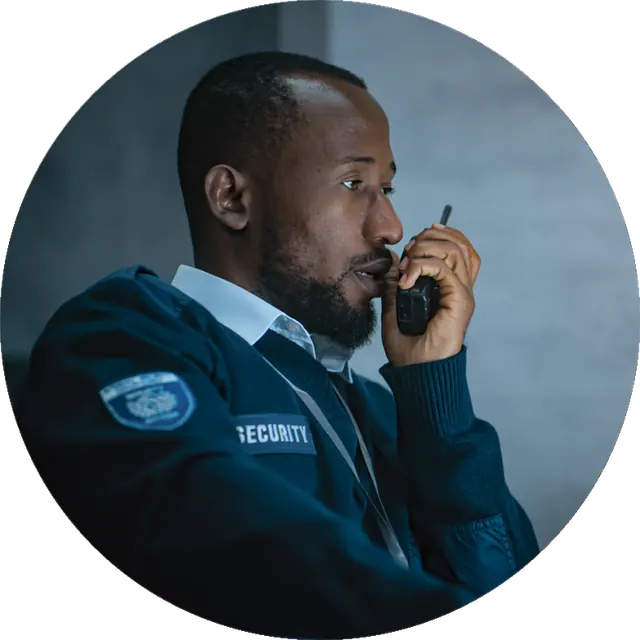
Security works the long night shift. Sleep keeps it watchful.
Long, often 12-hour night shifts worked alone leave guards short of sleep; dozing on post, missed alarms and drowsy patrol or cash-in-transit driving put people, property and the officer at risk.
Regulatory change that affects how you manage fatigue in security services: what has changed in the last 12 months, and what is on the way.
Recent changeFrom 6 April 2026
Applies across industries in the United Kingdom
In Great Britain, from 6 Apr 2026 sick pay is due from the first day of sickness and you must keep holiday records for 6 years; from 1 Oct 2026 most tribunal claims can be brought up to 6 months after the event.
Upcoming changeExpected from 30 October 2026Within 12 months
From October 2026 (expected 30 Oct) you must take all reasonable steps to prevent sexual harassment of staff, including by third parties. Zero-hours guaranteed-hours rights are listed for 2027. Martyn's Law (Royal Assent 3 Apr 2025) adds venue security duties after an implementation period; it is not a fatigue rule.
Regulatory changes checked as at 1 October 2026.
Regulation
Who regulates it, and what they expect
No UK law sets fatigue rules specific to security. Working-time law lets security work that needs a permanent presence depart from the night-work limit, daily and weekly rest and rest breaks, if you give equivalent compensatory rest. It does not relax the free health assessment you must offer night workers, which applies to your night officers in full. SIA licensing covers who may work, not how long.
Regulated by
HSE
Logos identify the regulator and don’t imply endorsement.
Who regulates it
HSE enforces your duty to manage fatigue. The Security Industry Authority licenses security guards, door supervisors, CCTV operators, cash-in-transit staff and close protection officers under the Private Security Industry Act 2001, and runs the voluntary Approved Contractor Scheme. Employment Tribunals enforce working time, including night-worker health assessments.
Your obligations
Assess and control fatigue risk so far as is reasonably practicable, including lone night working. Offer every night officer a free health assessment before night work starts and at regular intervals. Where you rely on the security exception to rest and night-work limits, give equivalent compensatory rest. Keep to the 48-hour average unless an officer has signed a valid opt-out, and deploy only SIA-licensed staff in licensable roles.
Consequences
HSE can serve improvement and prohibition notices, charge for its time and prosecute your company and, where they consented or were negligent, your directors. Officers can bring tribunal claims over rest, compensatory rest and the night-worker health assessment. Working in, or supplying staff for, licensable roles without an SIA licence is a criminal offence, and the SIA can revoke licences.
Penalties
HSE charges GBP 188 an hour from 1 April 2026 once it finds a material breach. Fines follow the 2016 sentencing guideline and scale with turnover: at the worst culpability and harm, a GBP 4 million starting point and a GBP 2.6m-10m range at turnover of GBP 50m or more, with courts going higher for very large organisations. Directors face up to two years' imprisonment.
On the record
No UK court, coroner, investigator or regulator has published a finding linking fatigue to an incident in security work. A 2016 coroner's prevention-of-future-deaths report on a lone night guard in Leigh made no fatigue finding.
Sources: Health and Safety at Work etc. Act 1974; Management of Health and Safety at Work Regulations 1999; Working Time Regulations 1998, regs 7, 21 and 24; Private Security Industry Act 2001; Coroner's Regulation 28 report (2016).
Fatigue-critical roles
Where fatigue matters most in security services
The roles where a fatigued worker is most likely to cause serious harm, the tasks that carry the risk, and why fatigue builds up in them.
Role
Risk
High-risk tasks
Why fatigue builds
Mobile patrol officer / key holderRules
Regulatory designation
SIA licence holder (Private Security Industry Act 2001); night worker (WTR 1998 reg 2)
Hours and rest
WTR 1998: 48 h average unless opted out; reg 21(b) derogation from rest and breaks with compensatory rest; reg 7 still applies
Critical risk
Driving between sites all night; alarm response with lone entry into premises; key-holding call-outs
Night shifts of 10-12 h, continuous driving, lone work, call-outs
Cash and valuables in transit crew (SIA licensed)Rules
Regulatory designation
SIA licence holder (Private Security Industry Act 2001); night worker (WTR 1998 reg 2)
Hours and rest
WTR 1998: 48 h average unless opted out; reg 21(b) derogation from rest and breaks with compensatory rest; reg 7 still applies
Critical risk
Armed cash collection and delivery under attack risk; driving armoured vehicles on long routes; early-morning ATM replenishment
Pre-dawn starts, long routes, high-alert vigilance, occasional night ATM runs
Security officer (SIA licensed)Rules
Regulatory designation
SIA licence holder (Private Security Industry Act 2001); night worker (WTR 1998 reg 2)
Hours and rest
WTR 1998: 48 h average unless opted out; reg 21(b) derogation from rest and breaks with compensatory rest; reg 7 still applies
High risk
Lone static guarding on 12 h night shifts; site and car-park patrols; access control, fire and intrusion alarm response
12 h night shifts, back-to-back shifts across employers, lone work, monotony
Public space surveillance (CCTV) operator (SIA licensed)Rules
Regulatory designation
SIA licence holder (Private Security Industry Act 2001); night worker (WTR 1998 reg 2)
Hours and rest
WTR 1998: 48 h average unless opted out; reg 21(b) derogation from rest and breaks with compensatory rest; reg 7 still applies
High risk
Monitoring alarms and CCTV feeds overnight; dispatching response; verifying alarm activations and lone-worker check-ins
12 h night shifts, screen monotony, low event rate overnight
Door supervisor (SIA licensed)Rules
Regulatory designation
SIA licence holder (Private Security Industry Act 2001); night worker (WTR 1998 reg 2)
Hours and rest
WTR 1998: 48 h average unless opted out; reg 21(b) derogation from rest and breaks with compensatory rest; reg 7 still applies
High risk
Door and crowd control at late-night venues and events; managing intoxicated patrons and physical restraint near closing time
Late-night shifts finishing after 03:00, weekend clustering, second jobs
How the suite fits
How each product connects to your obligations
Grades describe how strongly a product connects to an obligation. None discharges an obligation, and none carries a compliance warranty.
Sleepfit
Supports a named obligation
For your night officers, regulation 7 of the Working Time Regulations 1998 requires a free health assessment before night work and at regular intervals; the security exception in regulation 21 does not remove it. Sleepfit supports it. It screens; diagnosis stays with your clinicians.
No UK rule, including SIA licensing, names a pre-duty fitness check for security officers. Fatiguefit4Duty supports your duty under s 2 of the Health and Safety at Work etc. Act 1974. A fitness-for-duty check, not a fitness-for-duty decision - the duty call stays with you.
Awareness eLearning supports the training you must give under s 2(2)(c) of the Health and Safety at Work etc. Act 1974 and regulation 13 of the 1999 Management Regulations with fatigue and sleep content for officers on nights and long shifts.
RIDDOR 2013 requires you to report and record specified incidents in security work but names no cause, and no fatigue review is required. Was It Fatigue? supports your own investigation. A structured judgement aid, not a determination of cause.
No UK rule reaches sleep in new-parent households in security work. SleepWellBaby supports your working parents through the most disrupted period of their own sleep; it is offered as a wellbeing benefit, not a compliance step.
Working Time Regulations 1998 reg 7 requires a free health assessment for your night officers; Sleepfit screening supports it. Fatiguefit4Duty adds a pre-shift check and Awareness eLearning trains under HSWA 1974 s 2(2)(c). Shift worker is the lighter option.
See what sleep and fatigue mean for your security services workforce.
Tell us roughly how many people you employ. Your snapshot models how many are likely sleeping poorly and what it costs, from published research for security services. Then choose who you’d cover, and we’ll take you to the right next step.