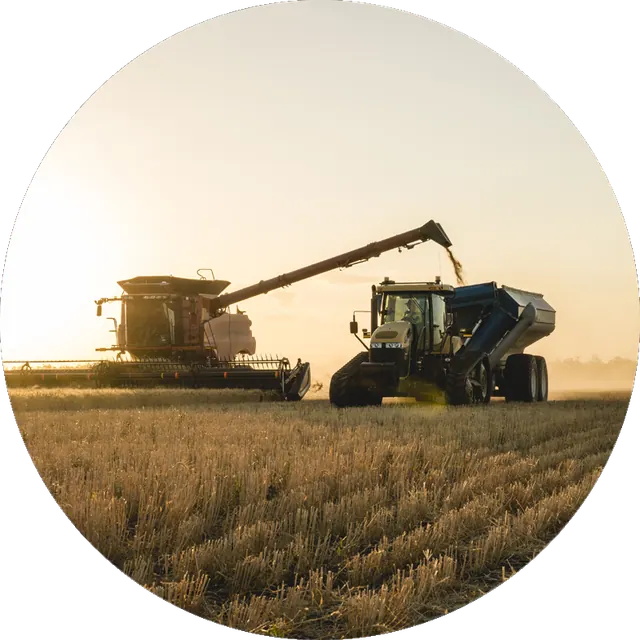
Harvest and milking don’t wait. Sleep keeps farms going.
Seasonal peaks bring very long days, early starts and night harvesting or milking, often alone and far from help. Fatigue at the wheel of vehicles and machinery is a serious injury risk.
Irish law treats farming differently in two concrete ways. The Safety, Health and Welfare at Work Act 2005 applies to a self-employed farmer as if that farmer were both the employer and his or her own employee, so a sole operator carries employer-level safety duties over his or her own work. And working-time law singles agriculture out: the 48-hour average week may be measured over six months rather than four to absorb calving, lambing and harvest peaks, while a relative who lives and works on the family farm falls outside the rest and hours provisions entirely. The safety regulator names fatigue as a farm hazard in its own guidance.
Regulated by
HSA
Logos identify the regulator and don’t imply endorsement.
Who regulates it
The Health and Safety Authority runs a dedicated agriculture and forestry programme and publishes farm hazard guidance that names fatigue alongside vehicles, livestock, slurry and farmer health. The Farm Safety Partnership Advisory Committee, which brings the Authority together with Teagasc and the farm organisations, produces Ireland's Farm Safety Action Plan. Working time is enforced by the Workplace Relations Commission.
Your obligations
A farm employer must manage risk so far as is reasonably practicable, carry out a written risk assessment and hold a safety statement - and a self-employed farmer carries the same duties for his or her own work. Fatigue belongs in that assessment: long solo days, seasonal peaks and lone working are what the regulator's farm guidance flags. Employed staff keep the average 48-hour week, which on a farm may be measured over six months, plus daily rest, breaks and a weekly rest day; where an exemption removes a rest period, equivalent rest is due. A relative on the family farm sits outside those rules.
Consequences
A farm worker denied rest, or worked past the weekly average, can complain to the Workplace Relations Commission, which can order compliance and award compensation. The Health and Safety Authority inspects farms without notice, can serve an improvement or prohibition notice that stops a practice or a machine immediately, and can prosecute - and a self-employed farmer is treated as his or her own employer, so a one-person farm is within reach. The Authority's farm guidance and codes of practice are admissible in evidence, so a hazard the regulator has already named, fatigue included, is hard to call unforeseeable.
Penalties
Safety, Health and Welfare at Work Act 2005 penalties, as set in 2010 and in force in 2026, reach a self-employed farmer like any employer: up to €5,000 and 12 months' imprisonment summarily; up to €3,000,000 and two years on indictment, plus costs. Working-time awards reach two years' pay. Ireland has no no-fault workers' compensation - injury claims are fault-based, via the Injuries Resolution Board and the courts - and employers' liability insurance is not compulsory.
On the record
No Irish court, coroner, investigator or regulator has published a finding linking fatigue to an incident in agriculture. The duty to manage fatigue still sits within the general duties of the Safety, Health and Welfare at Work Act 2005.
Sources: Health and Safety Authority agriculture and forestry guidance, including its farm fatigue page, and the Farm Safety Action Plan; Safety, Health and Welfare at Work Act 2005, sections 7, 19, 20, 61 and 77-78; Organisation of Working Time Act 1997, sections 3, 6 and 15.
Fatigue-critical roles
Where fatigue matters most in agriculture
The roles where a fatigued worker is most likely to cause serious harm, the tasks that carry the risk, and why fatigue builds up in them.
Role
Risk
High-risk tasks
Why fatigue builds
Silage / harvest contractor driverRules
Regulatory designation
None specific - general duty (SHWWA 2005 ss 8, 19)
Hours and rest
OWTA 1997: 6-month averaging available for agriculture
Critical risk
Running headers, chaser bins and forage harvesters through the night, moving wide machinery on public roads, auger and PTO work
Harvest runs of 14-18 h days for weeks, night harvesting when conditions allow, contractors moving between farms
Farm worker (calving and lambing season)Rules
Regulatory designation
None specific - general duty (SHWWA 2005 ss 8, 19)
Hours and rest
OWTA 1997: 48 h avg (no opt-out), 11 h daily rest; night worker avg 8 h in 24 (s 16)
Critical risk
Night checks during calving and lambing, quad bike and side-by-side use on slopes, handling cattle in yards, lone work far from help
Broken sleep for 6-10 weeks of calving or lambing, early starts, lone work
Agricultural haulage driverRules
Regulatory designation
Driver in scope of Reg (EC) 561/2006; mobile worker (S.I. 36/2012); Driver CPC (S.I. 359/2008); agricultural vehicle derogations
Hours and rest
Reg 561/2006: 9 h driving (10 h twice weekly), 45 min after 4.5 h, 11 h daily rest; S.I. 36/2012: 48 h avg, 10 h if night work
Critical risk
Carting grain and produce from paddock to silo through the night at harvest, overloaded-axle risk, long queues at receival sites, rural roads
Harvest-season 14 h+ days, night carting, queuing, short sleep between loads
Farm assistant / relief milkerRules
Regulatory designation
None specific - general duty (SHWWA 2005 ss 8, 19)
Hours and rest
OWTA 1997: 48 h avg (no opt-out), 11 h daily rest; night worker avg 8 h in 24 (s 16)
High risk
04:00 milking in rotary or herringbone sheds, handling cows at close quarters, chemical teat dips and cleaning, then tractor work
Split shifts from 03:30-04:30 plus afternoon milking, 11-12 day rosters, long days
Seasonal horticulture workerRules
Regulatory designation
None specific - general duty (SHWWA 2005 ss 8, 19)
Hours and rest
OWTA 1997: 48 h avg (no opt-out), 11 h daily rest; night worker avg 8 h in 24 (s 16)
High risk
Night packhouse grading lines at peak, ladder and platform picking, driving co-workers in vans at dawn
Peak-season 10-12 h days 6-7 days a week, piece rates, shared accommodation, long van commutes
How the suite fits
How each product connects to your obligations
Grades describe how strongly a product connects to an obligation. None discharges an obligation, and none carries a compliance warranty.
Sleepfit
Supports your general duty of care
For your farm workforce, Sleepfit supports s 19 risk assessment and s 22 health surveillance under the Safety, Health and Welfare at Work Act 2005, and Regulation 157 assessment of any night workers. It screens; diagnosis stays with your clinicians.
For your farm workforce, Fatiguefit4Duty supports your duties under ss 8 and 19 of the Safety, Health and Welfare at Work Act 2005. No Irish rule names a start-of-duty check. A fitness-for-duty check, not a fitness-for-duty decision - the duty call stays with you.
Awareness eLearning supplies fatigue and sleep content with a completion record for your farm workforce, supporting the general training duty in s 8(2)(g) and s 10 of the Safety, Health and Welfare at Work Act 2005. Your training programme stays yours.
Was It Fatigue? supports your review of incidents involving your farm workforce and of your s 19 risk assessment. Irish accident reporting rules require notification to the HSA, not a fatigue assessment. A structured judgement aid, not a determination of cause.
No Irish workplace rule reaches sleep in new-parent households. SleepWellBaby is offered to the working parents among your farm workforce as a wellbeing benefit, not as a step any Irish regulation requires.
No Irish rule names a fatigue tool, so this supports your duties under ss 8 and 19 of the SHWW Act 2005. Sleepfit screens your farm workforce for sleep disorders; Fatiguefit4Duty adds a point-of-duty self-check. Prevention adds Awareness eLearning with a completion record.
See what sleep and fatigue mean for your agriculture workforce.
Tell us roughly how many people you employ. Your snapshot models how many are likely sleeping poorly and what it costs, from published research for agriculture. Then choose who you’d cover, and we’ll take you to the right next step.