
Análisis de incidentes y accidentes

Was It Fatigue?

Análisis estructurado posterior al incidente para determinar si la fatiga contribuyó a un evento, y por qué vía.

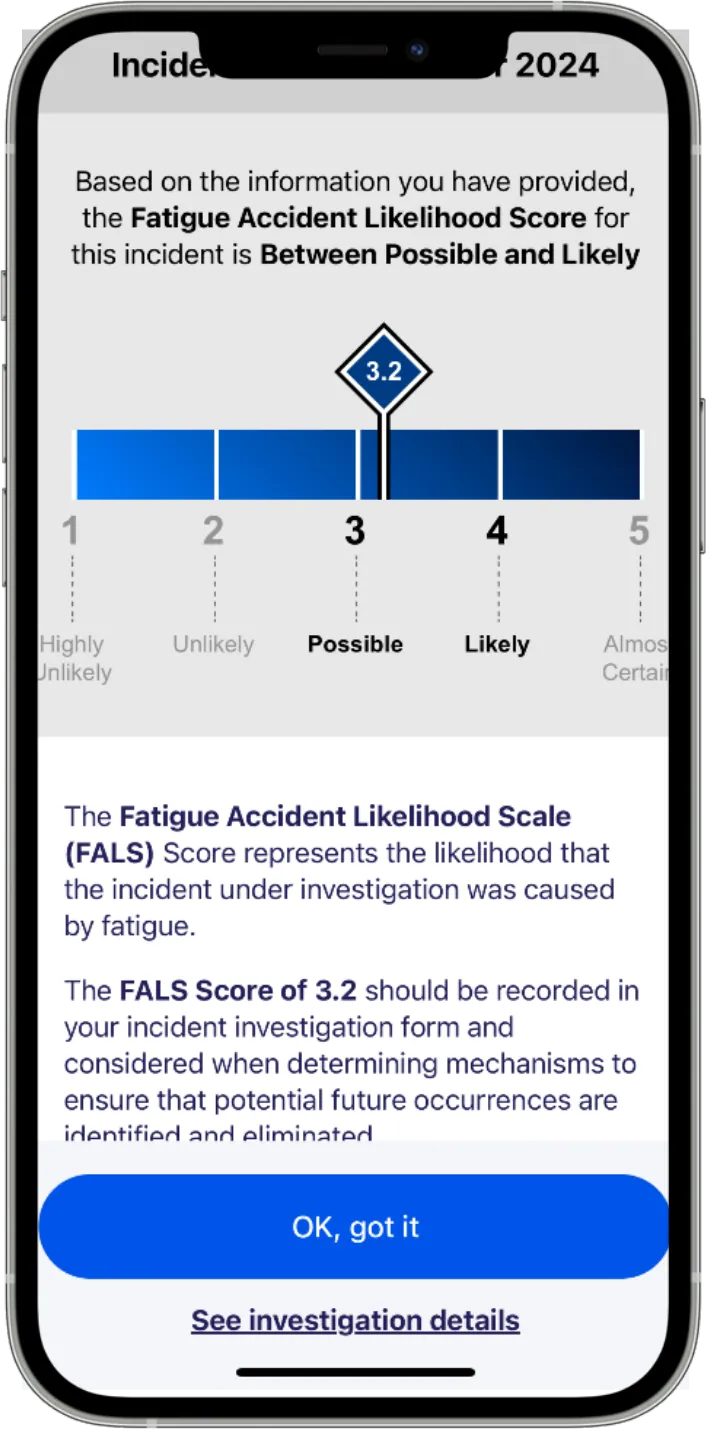
A Was It Fatigue? finding on a phone: a Fatigue Accident Likelihood Score of 3.2, between Possible and Likely, with how to record it.

El problema

Los incidentes graves deben investigarse. Pocas investigaciones preguntan adecuadamente por la fatiga.

La fatiga es fácil de afirmar y difícil de establecer después de los hechos. Las investigaciones tienden a pasarla por alto o a culparla sin poner a prueba las alternativas.

Was It Fatigue? ofrece a sus investigadores una forma coherente y repetible de preguntar, y un registro que demuestra que se pusieron a prueba las alternativas.

See how Was It Fatigue? works Ver el video · 0:33
Presentado por Professor Drew Dawson

La dimensión del problema

Cifras nacionales de Estados Unidos, de investigaciones publicadas. Son modeladas, no medidas en su fuerza laboral.

  • 13%of workplace injuries are linked to sleep problems2014
  • 33.2%get less than 7 hours' sleep2023
  • US$1,970de productividad perdida por empleado afectado al año
Fuentes
  1. Uehli K, Mehta AJ, Miedinger D, et al. Sleep Problems and Work Injuries: A Systematic Review and Meta-Analysis. Sleep Medicine Reviews, 2014;18(1):61-73.
  2. Pankowska MM, Lu H, Wheaton AG, Liu Y, Lee B, Greenlund KJ, Carlson SA. Prevalence and Geographic Patterns of Self-Reported Short Sleep Duration Among US Adults, 2020. Preventing Chronic Disease (CDC), 2023;20:220400.
  3. Rosekind MR, et al. The Cost of Poor Sleep: Workplace Productivity Loss and Associated Costs. Journal of Occupational and Environmental Medicine, 2010;52(1):91-98. N=4,188 US employees; Work Limitations Questionnaire. Weighted incremental cost per affected employee, net of the good-sleeper baseline, in 2007 USD adjusted to July 2026 by CPI-U (207.342 to 333.918).

Casos

The biggest incidents fatigue played a part in

Findings from investigators, coroners and courts in Estados Unidos that fatigue contributed, the most harmful first.

Los casos se muestran en inglés.

  • ago 1997 · Guam, United States (territory)

    Airliner hits terrain on night approach; captain's fatigue contributed

    • Seguridad

    A foreign airline's wide-body jet struck high terrain on a night approach to an island airport in a US territory; 228 of 254 on board died. The NTSB found the captain failed to brief and fly the non-precision approach properly and the other crew failed to cross-check him, with the captain's fatigue named as a contributing factor.

    Caso US-aviation-01Informar de un error
Ver todas las noticias sobre fatiga

Cómo funciona

A structured answer to “was it fatigue?”

After an incident or near miss, investigators work through a structured method: was fatigue present, and was the error the kind fatigue produces once other explanations are tested? It sits at the last level of defence, after something has gone wrong, and feeds each finding back into the levels before it: rosters, sleep and in-shift controls.

  1. Paso 01

    Evento

    Un investigador abre una evaluación vinculada a un incidente específico.

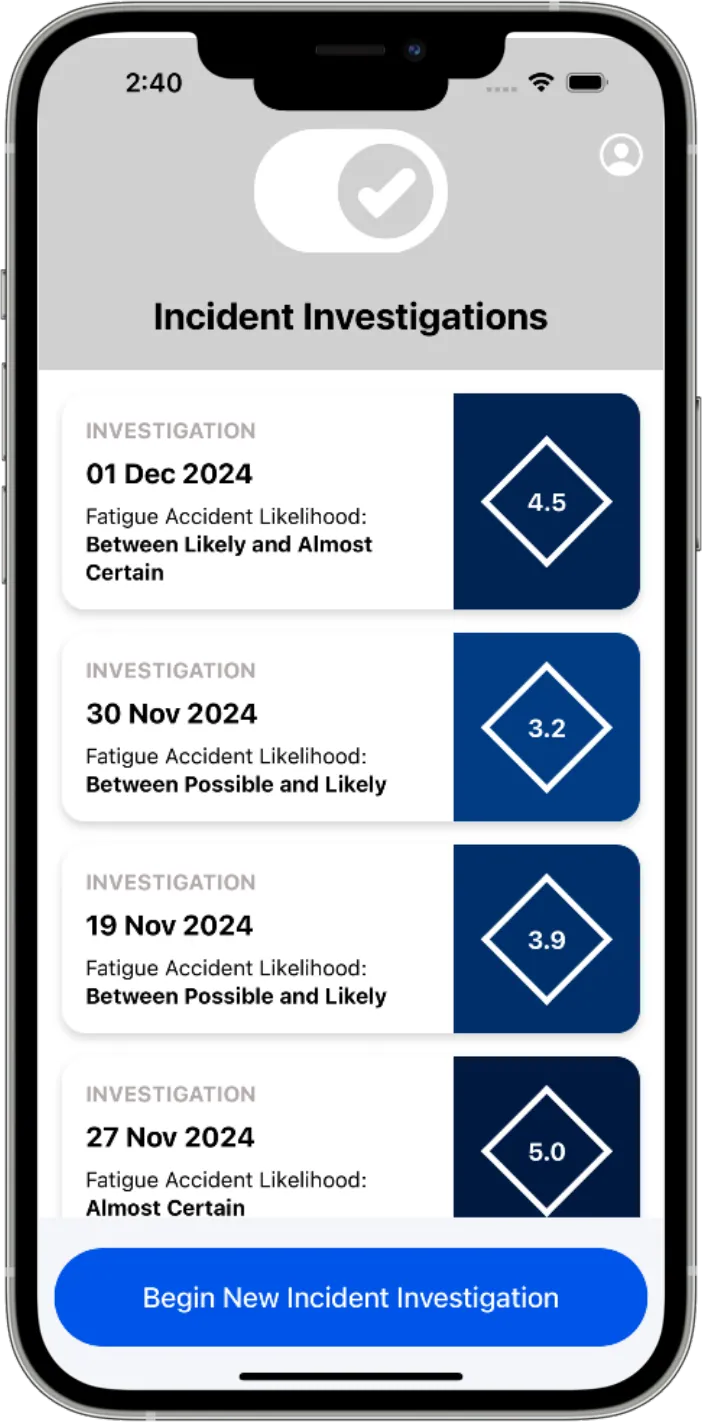
    The Was It Fatigue? investigations list on a phone, each with its Fatigue Accident Likelihood, and a button to begin a new investigation.
  2. Paso 02

    ¿Había fatiga?

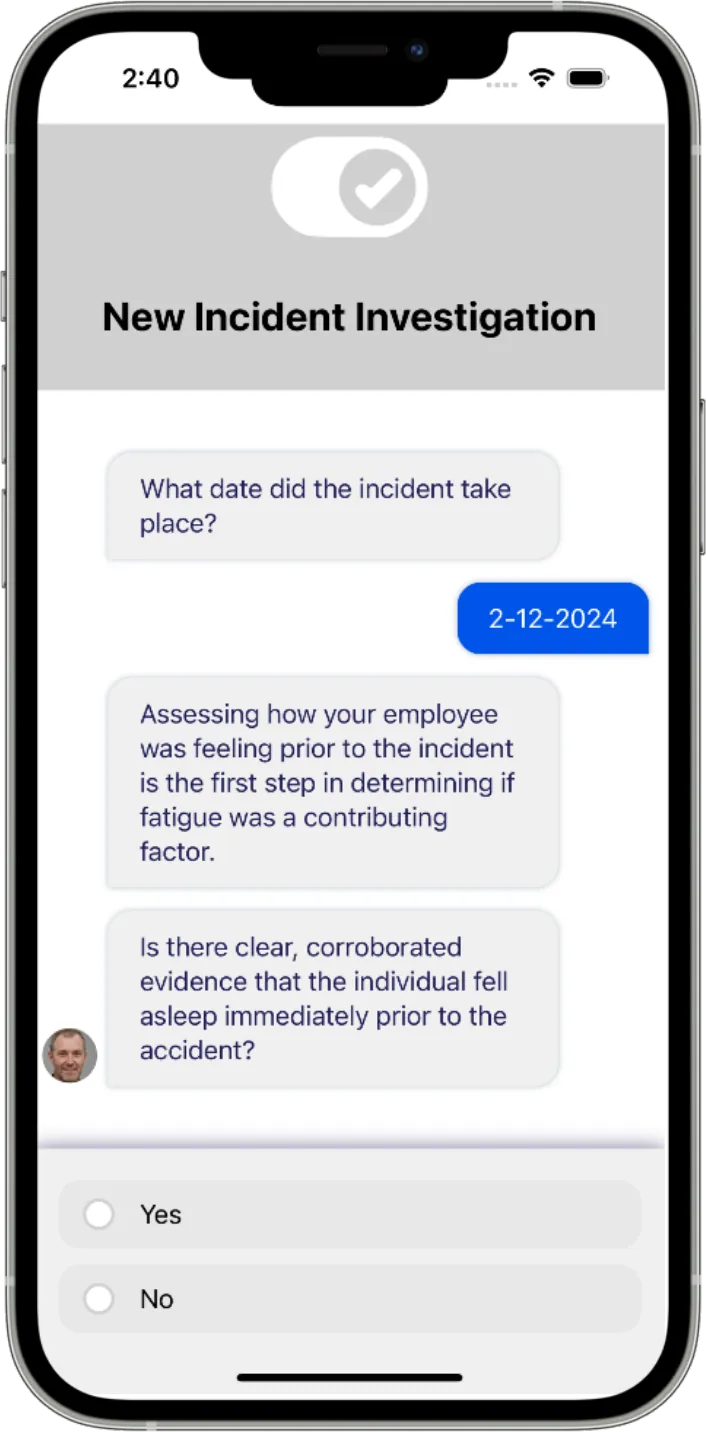
    La Fatigue Likelihood Score (puntuación de probabilidad de fatiga), a partir de cuatro preguntas: quedarse dormido inmediatamente antes, síntomas conductuales en los quince minutos previos, historial previo de sueño y vigilia, y oportunidad de sueño en la programación de turnos.

    A new Was It Fatigue? investigation on a phone: the date of the incident, then whether there is clear evidence the person fell asleep immediately before it.
  3. Paso 03

    ¿Fue un error de tipo fatiga?

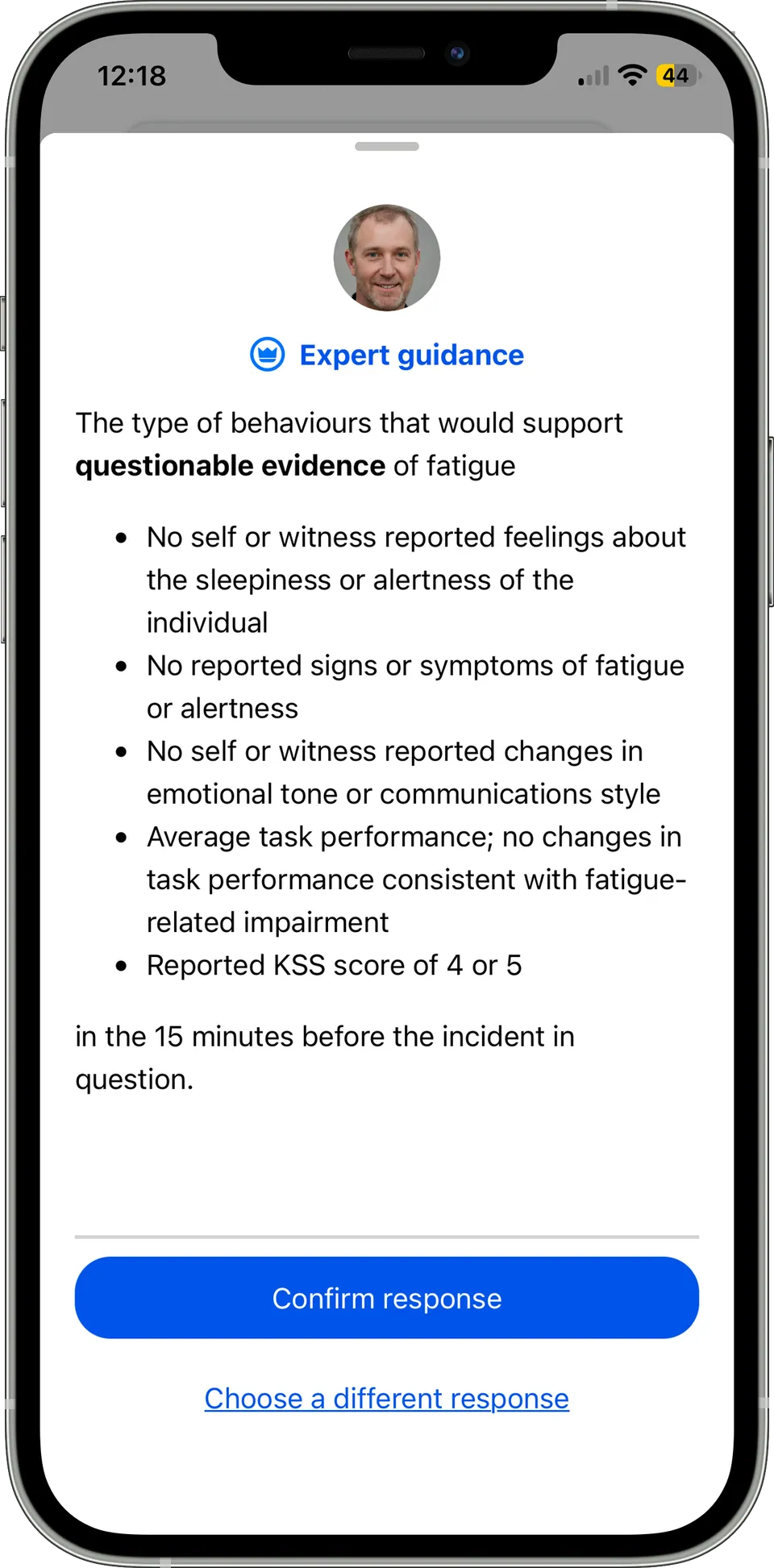
    La Fatigue Error Likelihood Score (puntuación de probabilidad de error por fatiga) pone a prueba explicaciones alternativas en todos los niveles antes de atribuir el error a la fatiga.

    Expert guidance in Was It Fatigue?: the behaviours that would support questionable evidence of fatigue in the 15 minutes before the incident, with a button to confirm the response.
  4. Paso 04

    Conclusión combinada

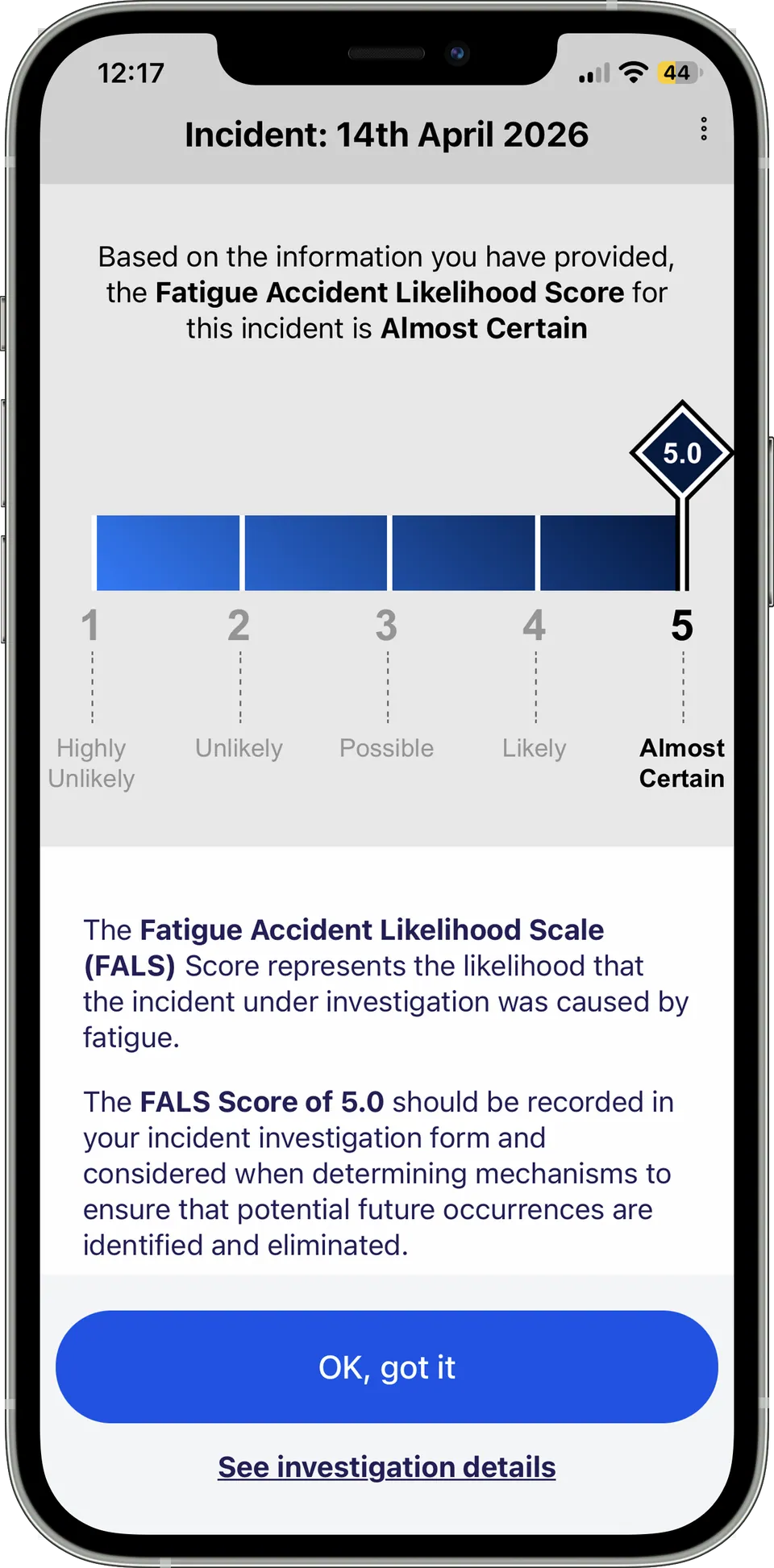
    Una Fatigue Attributable Likelihood Score (puntuación de probabilidad atribuible a la fatiga) en una banda de 1–5 con la vía identificada, que retroalimenta los controles de turnos, de sueño y durante el turno.

    A Was It Fatigue? finding: a Fatigue Accident Likelihood Score of 5.0, Almost Certain, with what the score means and how to record it.

After an incident, fatigue is either missed or blamed without testing the alternatives. Neither helps the people involved, and neither tells you which control failed. I wanted investigators to have a consistent way to ask the question properly, and a record that shows they did.

Daniel PlattCofundador y director ejecutivo

Implementación

Cómo lo implementamos

  1. Scope

    Agree which events call for an assessment, and who investigates.

  2. Set up

    Investigator access, fitted to your existing incident process.

  3. Train

    Investigators learn the method and work a first case together with us.

  4. Review

    Findings feed back into roster, sleep and in-shift controls.

Lo que ve el cliente

Quién ve qué

Cada registro identifica la vía de la fatiga y documenta las alternativas puestas a prueba. Su precio se basa en el volumen de investigaciones, no en el número de empleados: el único producto de la gama con precio por evento.

Con precio según la prevalencia, no según la plantilla. Cómo funcionan los precios.

  • Your investigators

    The full record

    • Every answer and score
    • The alternative explanations tested
    • The fatigue pathway named
  • The employer

    One record per event

    • A structured, repeatable investigation record
    • Findings to feed back into roster, sleep and in-shift controls

Evidencia

Lo que podemos demostrar

Su diseño exige tanto la presencia de fatiga como un error con la firma de la fatiga, y pone a prueba explicaciones alternativas en todo momento. Eso es lo que impide inferir causalidad solo a partir de la fatiga.

Es el único producto de la gama que examina todos los niveles, incluida la suficiencia de los turnos, de forma retrospectiva después de un evento.

Lo que no establece

Es retrospectivo. No predice un evento, no dimensiona una población y una sola investigación no establece un patrón. No es un instrumento validado y no se afirma ninguna validación para él. Los registros producidos pueden ser objeto de exhibición en procesos legales.

En la práctica

Rail · North America

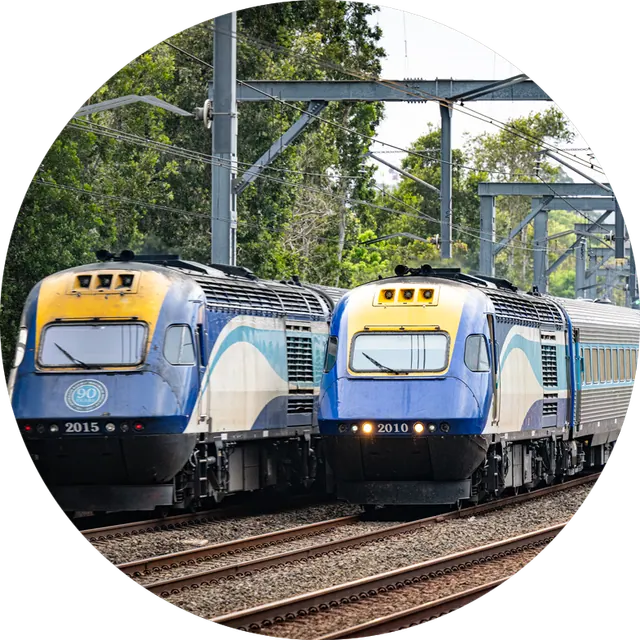
A Class I railroad uses Was It Fatigue? to determine whether fatigue contributed to an incident or near miss.

Its investigators ask the same structured questions after every event, so each record assesses how likely it is that fatigue was present and that the error was the kind fatigue produces, and shows which other explanations were tested.

Preguntas frecuentes

Las preguntas que más nos hacen

Who uses it?

Your investigators, who open an assessment against a specific incident or near miss.

How does it avoid blaming fatigue by default?

It requires both the presence of fatigue and an error of the kind fatigue produces, and tests alternative explanations at every level before attributing an error to fatigue.

What does the finding look like?

A Fatigue Attributable Likelihood Score on a 1–5 band with the fatigue pathway named, which feeds back into roster, sleep and in-shift controls.

Is it a validated instrument?

No, and no validation claim is made for it. It is a structured, repeatable method. It is retrospective: it does not predict an event, and one investigation does not establish a pattern. Records produced are discoverable.

How is it priced?

On investigation volume, not headcount: it is the only event-priced product in the suite.

How is investigation data protected?

Vías de acción

Adónde ir ahora

Was It Fatigue? y la regulación en 33 industrias de Estados Unidos

2 / 33

Apoya una obligación específica

31 / 33

Apoya su deber general de cuidado

Vea cómo encaja Was It Fatigue? en la regulación de su industria y con qué más empezaríamos allí.

Las 33 industrias

Otras soluciones conectadas con Was It Fatigue?

¿Le interesa Was It Fatigue? para su organización?

Cuéntenos un poco sobre su organización y qué soluciones está considerando, y nuestro equipo se pondrá en contacto.

A Was It Fatigue? finding on a phone: a Fatigue Accident Likelihood Score of 3.2, between Possible and Likely, with how to record it.