Aviation · Australia

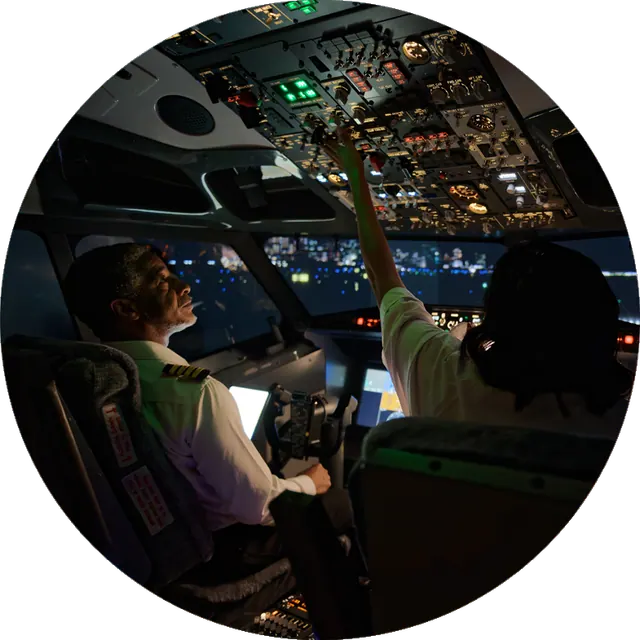
Aviation counts duty hours. Its people run on sleep.

Pilots, cabin crew and controllers work early starts, nights and time-zone changes. Duty limits cap hours, not sleep obtained, and a fatigue lapse in flight or on the ground can be catastrophic.

Regulation changed 1 July 2026

Aviation workforce

Who this page covers

  • Aeromedical retrieval services (also see Healthcare & Nursing)
  • Air freight and express airlines
  • Air traffic control
  • Aircraft maintenance (MRO) and line engineering
  • Airlines - cabin crew
  • Airlines - flight crew (pilots)
  • Airport operators (also see Emergency Services, Retail & Hospitality, Security Services)
  • Charter, regional, helicopter and offshore helicopter operators
  • Ground handling - ramp, baggage, fuel, cargo

Reg Watch

What’s changed, and what’s coming

Regulatory change that affects how you manage fatigue in aviation: what has changed in the last 12 months, and what is on the way.

Recent changeFrom 1 July 2026

Applies across industries in Australia

From 1 July 2026 NSW requires you to follow approved codes, including the fatigue code, or manage risk to an equal or higher standard. Victoria's psychological health regulations apply from 1 December 2025.

Read the change

Upcoming changeNo date set yet

CASA has reviewed its pilot fatigue rules and plans consultation on improvements to CAO 48.1 across 2025-26, with cabin crew rules to follow. No draft changes or dates are published. Separately, Safe Work Australia's review of the model WHS laws is with ministers, with no change date set.

Regulatory changes checked as at 1 October 2026.

Regulation

Who regulates it, and what they expect

Aviation has the most developed fatigue regulation of any Australian industry. Since 2 December 2021, every air operator's certificate holder and every Part 138 and Part 141 certificate holder must manage flight crew fatigue under CAO 48.1 - either by adopting CASA's prescriptive limits, or by running a CASA-approved Fatigue Risk Management System. Each flight crew licence carries a personal condition not to start a task while unfit through fatigue. Air traffic services are separately covered: since 2023 an ATS provider must hold a fatigue risk management system acceptable to CASA.

Regulated by
  • Civil Aviation Safety AuthorityCASA

Logos identify the regulator and don’t imply endorsement.

Who regulates it

Aviation fatigue is regulated directly by the Civil Aviation Safety Authority, with Airservices Australia managing air traffic controller rostering under CASA's broader oversight, and the Australian Transport Safety Bureau independently investigating fatigue-related safety events. Standard workplace safety regulators still apply as well.

Your obligations

Operators choose one of three routes: the basic prescriptive limits in Appendix 1, the enhanced prescriptive appendices, or an approved Fatigue Risk Management System under Appendix 7 covering policy, operating procedures, hazard identification and risk assessment, safety assurance, safety promotion and change management. Operators on the enhanced route must provide initial and recurrent fatigue risk training to every flight crew member. An operator must not assign a duty to a crew member it reasonably believes is unfit through fatigue, and the crew member must not begin the task.

Consequences

CASA can vary, suspend or cancel an air operator's certificate where fatigue is not being managed to the standard the operator has committed to, and can act against an individual flight crew licence, because the fatigue duty sits on the licence as a condition. Grounding an aircraft or an operator is a faster and larger commercial event than a safety notice. Work health and safety duties apply in parallel to airlines and air traffic service providers as employers, with the same maximum penalties as any other industry.

Penalties

CASA's fatigue enforcement runs through certificate and licence action rather than a published fine schedule, so there is no set dollar figure to quote. Work health and safety penalties apply in parallel at each jurisdiction's Category 1 to 3 maximums.

Sources: CASA's Civil Aviation Order 48.1 Instrument 2019 (Fatigue Management) and CAAP 48-01 guidance; and ATSB investigation AO-2022-065 into air traffic controller incapacitation at Brisbane Centre, final report September 2024.

Fatigue-critical roles

Where fatigue matters most in aviation

The roles where a fatigued worker is most likely to cause serious harm, the tasks that carry the risk, and why fatigue builds up in them.

RoleRiskHigh-risk tasksWhy fatigue builds
Pilot (captain / first officer)
Rules
Regulatory designation
Flight crew member under CAO 48.1 Instrument 2019 (fatigue management); Class 1 medical (CASR Part 67)
Hours and rest
CAO 48.1: Appendix 1 basic limits, Appendices 2-6 enhanced, or an approved FRMS (Appendix 7)
Critical riskFlying approaches and landings after extended duty or through the window of circadian low; multi-sector days; managing non-normal events at the end of a dutyEarly report times, overnight flights, time-zone crossing, reserve and standby, short-notice roster changes
Air traffic controller (Airservices Australia; Defence ATC)
Rules
Regulatory designation
ATC licence holder (CASR Part 65); Class 3 medical (CASR Part 67)
Hours and rest
No CASA prescriptive limit: Airservices SMS fatigue rules under CASA oversight
Critical riskSeparating traffic on low-workload overnight positions, sometimes single-person; handling the morning surge at the end of a night shift; coordination and handovers24/7 rotating shifts with quick returns, night shifts, single-person night operations at some units
Licensed aircraft maintenance engineer (LAME, B1/B2)
Rules
Regulatory designation
Licence holder (CASR Part 66); safety-sensitive aviation activity employee (CASR Part 99 DAMP)
Hours and rest
None aviation-specific; award/enterprise agreement rostering
Critical riskNight-shift line and base maintenance; flight-control rigging, torque and duplicate-inspection tasks; certifying release to service at the end of a long shiftNight shifts to meet first-wave departures, AOG overtime, 12 h shifts, rotating rosters
Charter / aeromedical pilot (fixed-wing and helicopter EMS)
Rules
Regulatory designation
Flight crew member under CAO 48.1 Instrument 2019; Class 1 medical (CASR Part 67)
Hours and rest
CAO 48.1 appendix limits or an approved FRMS
Critical riskSingle-pilot night aeromedical or charter flights after an on-call call-out; helicopter landings at unlit sites; IFR approaches at the end of dutyOn-call and standby with night call-outs, single-pilot operations, remote bases
Flight attendant / cabin crew
Rules
Regulatory designation
Cabin crew member (CASR Part 121 operator); fatigue scope under CAO 48.1 per register - verify
Hours and rest
Operator rostering under enterprise agreements; CAO 48.1 coverage of cabin crew to confirm
High riskSafety and emergency duties, evacuation command and in-flight incident response after long or overnight duties; door arming and cross-checksEarly starts, overnight and long-haul duties, multi-sector days, time-zone crossing, standby
Ramp / baggage handler; tug driver (airside)
Rules
Regulatory designation
None specific - general duty (WHS Act s 19); safety-sensitive aviation activity employee (CASR Part 99 DAMP)
Hours and rest
No aviation hours rule; award/enterprise agreement rostering; Fair Work Act s 62 reasonable hours
High riskAircraft pushback and towing; baggage tug driving and loading near engines and stairs; refuelling hook-ups on overnight turnsSplit shifts and starts from 04:00, night freight turns, overtime in peaks, outdoor work

Stories

When fatigue made the record

Published findings and prosecutions from regulators, courts and investigators in Australia.

  • Nov 2025 · Queensland, Australia

    Aircraft engineer's undisclosed second job leaves employer unable to apply its fatigue policy: sacking unfair, but reinstatement refused

    • Legal
    • Financial

    A licensed aircraft maintenance engineer working a four-on, four-off roster capped at 76 hours a fortnight also worked casual shifts of about 11 hours for another airline on his days off, without written approval. The Commission found no evidence the extra work caused actual fatigue or any safety incident, and that the dismissal was unfair. But it refused reinstatement partly because the employer could not apply its fatigue management policy without knowing his other hours, and it reduced compensation for the non-disclosure.

    Case AU-aviation-11Report an issue

See all aviation news

How the suite fits

How each product connects to your obligations

Grades describe how strongly a product connects to an obligation. None discharges an obligation, and none carries a compliance warranty.

Awareness eLearning

The regulation names this step

Awareness eLearning supports the initial and recurrent fatigue risk training CAO 48.1 requires of operators on the enhanced pathway, and the training programs an air traffic service provider's system must include.

About Awareness eLearning

Sleepfit

Supports a named obligation

Sleepfit supports the hazard identification and risk assessment an Appendix 7 fatigue risk management system requires, by measuring the sleep your crews actually obtain rather than the rest they were rostered.

About Sleepfit

Fatiguefit4Duty

Supports a named obligation

Section 16 of CAO 48.1 says crew must not begin a task when fatigue makes them unfit, and s 14 bars you from assigning it. Fatiguefit4Duty supports both. A fitness-for-duty check, not a fitness-for-duty decision - the duty call stays with you.

About Fatiguefit4Duty

Was It Fatigue?

Supports a named obligation

Was It Fatigue? supports the safety assurance side of a fatigue risk management system, turning an occurrence into documented evidence about whether fatigue was involved and what changed.

About Was It Fatigue?

SleepWellBaby

SleepWellBaby is a voluntary benefit. No aviation rule requires it. It supports crew and controllers with infants at home to protect the sleep the CAO 48.1 fitness duty assumes they have had.

About SleepWellBaby

Recommended bundle

Where we’d start in aviation

Every bundle is priced on prevalence: your whole cohort gets access, and you pay for the share predicted to need each product. How pricing works.

Why this pairing in Australia

CAO 48.1 s 15 names initial and recurrent fatigue training; Awareness eLearning supplies it with a record. Fatiguefit4Duty supports the s 16 and s 14 fitness duties; Sleepfit supports Appendix 7 hazard identification. Fatigue Lifecycle adds Was It Fatigue? for FRMS safety assurance.

See what sleep and fatigue mean for your aviation workforce.

Tell us roughly how many people you employ. Your snapshot models how many are likely sleeping poorly and what it costs, from published research for aviation. Then choose who you’d cover, and we’ll take you to the right next step.

A sample workforce snapshot on a tablet: modelled sleep problems and the cost of poor sleep for 1,400 people in transport and logistics.