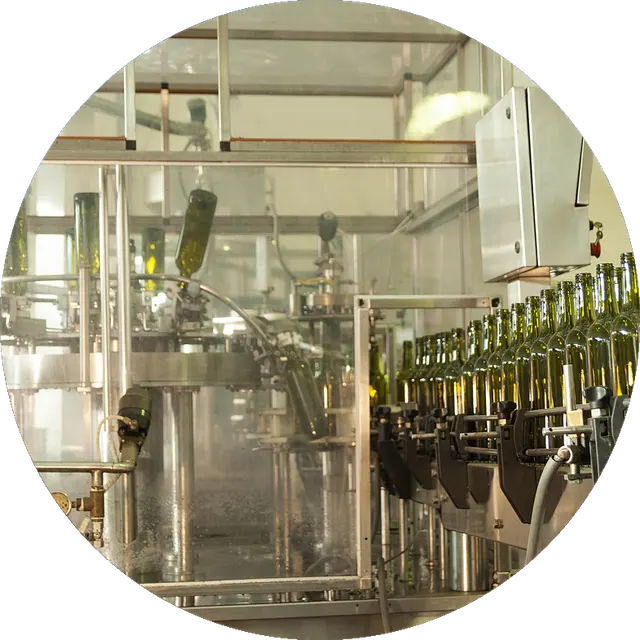
Procesamiento de alimentos y bebidas · Estados Unidos

El sueño y la fatiga en procesamiento de alimentos y bebidas

Processing lines run nights and rotating shifts with repetitive, monotonous tasks near moving machinery. Fatigue raises the risk of machinery injury and food safety lapses.

Cambio normativo: 4 jun 2026Cambio previsto: oct 2027

Fuerza laboral de Procesamiento de alimentos y bebidas

A quién cubre esta página

  • Airline catering
  • Beverages and breweries
  • Dairy processing
  • Flour and grain milling
  • Industrial bakeries
  • Meat processing
  • Poultry processing
  • Seafood processing
  • Sugar milling
  • Wineries (production) (vea también Agricultura)

Cambios normativos

Qué ha cambiado y qué viene

Cambios normativos que afectan la forma en que gestiona la fatiga en procesamiento de alimentos y bebidas: lo que cambió en los últimos 12 meses y lo que está por venir.

El detalle normativo y de investigación de esta página se muestra en inglés.

Cambio recienteDesde el 4 de junio de 2026

Se aplica a todas las industrias en Estados Unidos

If you have workers in Colorado exposed to extreme heat or cold, a law signed 4 June 2026 requires a temperature illness prevention plan and worker training, with your plan due to the state by 1 September 2028.

Ver el cambio

Próximo cambioPrevisto a partir de octubre de 2027En los próximos 12 meses

OSHA's heat injury and illness standard, proposed August 2024, is still a proposal: a supplemental proposal is projected for December 2026 and final action for October 2027, with no compliance date set. Colorado plans are due 1 September 2028; Virginia must adopt heat rules by 1 May 2028.

Cambios normativos revisados al 1 de octubre de 2026.

Regulación

Quién la regula y qué espera

El detalle normativo y de investigación de esta página se muestra en inglés.

Food manufacturing and food service both sit here, and neither has a federal fatigue rule. Federal wage law prices overtime; it caps nothing, and no federal statute limits how long an adult may work. What binds you is local. Five states require a day of rest each week. Oregon caps hours in canneries and packing plants at 10 a day and 55 a week. Six jurisdictions now require a set gap between a closing shift and the next opening, with premium pay if you encroach on it. Over all of it sits the duty to keep your workplace free of recognized hazards.

Regulado por
  • Occupational Safety and Health AdministrationOSHA

Los logotipos identifican al regulador y no implican respaldo.

Quién la regula

OSHA (federal workplace safety law) applies as it does to every US employer; USDA and FDA regulate food product safety, not worker fatigue, so they sit outside this discussion; a handful of states, Oregon chief among them, have fair-workweek scheduling laws that touch large food-service (not manufacturing) employers.

Sus obligaciones

Keep the workplace free of recognized hazards; where long or rotating shifts are a recognized hazard and a control is feasible, that duty reaches fatigue. Then check where you trade. New York, Illinois, California and Massachusetts require a weekly day of rest for factories, shops or restaurants. Oregon caps cannery and packing-plant hours. Six places set a minimum gap between a closing shift and the next opening: nine hours in Philadelphia, ten in Oregon, Seattle and Chicago, and eleven in Berkeley, Emeryville and for New York City fast food. Federal hour limits cover 14 and 15 year olds only.

Consecuencias

Breach an inter-shift rest rule and you owe the premium as wages to every affected worker, uncapped, with the city or state labor agency behind it - in Oregon that is one and a half times pay for every hour inside the rest period. Miss a weekly day of rest in Illinois and each week is a separate offence. A safety inspection that finds fatigue was a recognized hazard you left unaddressed produces a citation and an abatement order, published. Every fatigue-related injury on a line or in a kitchen is also a compensation claim, whatever the cause.

Sanciones

Federal safety maximums, 2025 levels in force through 2026: $16,550 per serious or other-than-serious violation, $165,514 per willful or repeat, $16,550 a day for failure to abate. Illinois day-of-rest breaches run to $250 plus $250 damages per offence under 25 employees, $500 plus $500 at 25 or more. Encroaching on a mandated rest gap costs a premium paid to the worker: a flat $100 in New York City fast food, a flat $40 in Philadelphia, and time-and-a-half or a quarter more elsewhere. That pay is separate, uncapped, and owed to every affected worker.

Fuentes: US OSHA General Duty Clause and penalty schedule; Americans with Disabilities Act; Family and Medical Leave Act; Oregon's fair workweek law (ORS 653.412-653.485); USDA Food Safety and Inspection Service line-speed and worker-safety studies.

Puestos críticos por fatiga

Dónde más importa la fatiga en procesamiento de alimentos y bebidas

Los puestos en los que un trabajador fatigado tiene más probabilidades de causar daños graves, las tareas que conllevan el riesgo y por qué se acumula la fatiga.

El detalle normativo y de investigación de esta página se muestra en inglés.

PuestoRiesgoTareas de alto riesgoPor qué se acumula la fatiga
Sanitation worker (contract sanitation crew)
Reglas
Designación normativa
None specific - general duty (OSH Act s 5(a)(1)); lockout/tagout (29 CFR 1910.147)
Horas y descanso
No federal hours cap for adults; FLSA prices overtime only
Riesgo críticoCleaning inside conveyors, mixers and saws under lock-out, caustic and acid CIP, high-pressure hosing on wet floors, overnight between production runsNight-only shifts (about 23:00-07:00) after production, often contract labor with second jobs
Milk hauler
Reglas
Designación normativa
CDL driver performing safety-sensitive functions (49 CFR 382.107); carrier must not permit fatigued driving (49 CFR 392.3)
Horas y descanso
49 CFR 395.3: 11 h driving after 10 h off, 14 h window, 60/70 h in 7/8 days; short-haul 395.1(e)
Riesgo críticoNight farm-gate milk collection on narrow rural roads and steep tracks, coupling trailers in the dark; dawn bakery and fresh-food deliveriesOvernight collection runs, split or rotating shifts, long rural distances, seasonal peak milk flow
Meatpacking / poultry line worker
Reglas
Designación normativa
None specific - general duty (OSH Act s 5(a)(1))
Horas y descanso
No federal cap; USDA line-speed waivers regulate food safety, not worker hours
Riesgo altoKnife work at chain speed in boning and slicing rooms, kill-floor stunning, band saw and dicer use; repetitive cutting while coldStarts from 04:00-05:00, 10 h shifts on mechanised chains, cold rooms, tally or line-speed pressure
Production worker (bakery / dairy / bottling)
Reglas
Designación normativa
None specific - general duty (OSH Act s 5(a)(1))
Horas y descanso
No federal hours cap for adults; FLSA prices overtime only
Riesgo altoOvernight bakery and dairy production, filling and palletising lines, clearing jams on fillers and wrappers, CIP chemical changeoversNight shifts to meet morning dispatch (bakeries often 22:00-06:00), seasonal peaks, monotony
Freezer forklift operator
Reglas
Designación normativa
Powered industrial truck operator, trained and evaluated (29 CFR 1910.178(l))
Horas y descanso
No federal hours cap for adults; FLSA prices overtime only
Riesgo altoReach truck and forklift work in -25 C freezers and chillers, high-bay racking, loading refrigerated trailers at docks overnightNight and early shifts aligned to dispatch, cold exposure, repetitive cycles
Refrigeration operator (ammonia)
Reglas
Designación normativa
Employee in a PSM-covered process: anhydrous ammonia over 10,000 lb (29 CFR 1910.119 App A)
Horas y descanso
No federal hours cap for adults; FLSA prices overtime only
Riesgo altoPlant checks and valve isolations on anhydrous ammonia systems, oil draining, responding to leak alarms after hoursOn-call nights and lone call-outs, sometimes after a full day shift

Casos

Cuando la fatiga quedó registrada

Hallazgos y procesos publicados por reguladores, tribunales e investigadores en Estados Unidos.

El detalle normativo y de investigación de esta página se muestra en inglés.

nov 2009 · United States

Trawler fish processor on 16-hour shifts, seven days a week, falls in the last hour of a shift; appeals court revives seaman's negligence claim

  • Seguridad
  • Legal

A seaman on a seafood company's factory trawler lifted and flipped 70-pound trays of frozen fish on 16-hour shifts, seven days a week, for months at a time, and had complained that the shifts left him exhausted. In the final hour of a 16-hour shift his legs gave out as the boat rolled and he fell. The U.S. Court of Appeals reversed summary judgment for the employer, holding that a jury could find the 16-hour shifts negligent and the vessel unseaworthy, and that an industry custom of long shifts was no defense as a matter of law.

Caso US-food-02Informar de un error

Ver todas las noticias de procesamiento de alimentos y bebidas

Cómo encaja la suite

Cómo se vincula cada producto con sus obligaciones

Las calificaciones describen con qué fuerza se vincula un producto a una obligación. Ninguno cumple por usted una obligación y ninguno conlleva una garantía de cumplimiento.

El detalle normativo y de investigación de esta página se muestra en inglés.

Sleepfit

Apoya su deber general de cuidado

No US food rule requires sleep screening. Sleepfit supports your general duty case under s 5(a)(1) of the OSH Act for night and rotating lines, run as a voluntary, confidential program. It screens; diagnosis stays with your clinicians.

Acerca de Sleepfit

Fatiguefit4Duty

Apoya su deber general de cuidado

Where extended or rotating shifts are a recognized hazard around machinery, a check at the point of work evidences that you did something about it. It supports the general duty; no rule requires it.

Acerca de Fatiguefit4Duty

Awareness eLearning

Apoya su deber general de cuidado

No US food rule names fatigue training. Awareness eLearning supplies fatigue and sleep content with a completion record, helping your supervisors recognize fatigue and building the record an inspector looks for under the general duty.

Acerca de Awareness eLearning

Was It Fatigue?

Apoya su deber general de cuidado

29 CFR Part 1904 requires you to record a line injury, not to investigate its cause, and no rule names a fatigue review. Was It Fatigue? supports your own analysis. A structured judgment aid, not a determination of cause.

Acerca de Was It Fatigue?

SleepWellBaby

For staff with infants, sleep loss at home compounds an already broken roster. No US food regulation touches this; it is offered because it works, not because it is required.

Acerca de SleepWellBaby

Paquete recomendado

Por dónde empezaríamos en procesamiento de alimentos y bebidas

Cada paquete tiene precio según la prevalencia: toda su cohorte obtiene acceso, y usted paga por la proporción que se prevé que necesite cada producto. Cómo funcionan los precios.

Recomendado · Niveles 2 y 3

Shift Worker Bundle

Tamizaje del sueño y una verificación al inicio del turno para los trabajadores que más lo necesitan.

Por qué esta combinación en Estados Unidos

No food rule names a fatigue tool, so this supports your s 5(a)(1) case on night and rotating lines. Sleepfit screens your line and night staff for sleep disorders, confidentially; Fatiguefit4Duty adds a point-of-duty self-check. Prevention adds Awareness eLearning with a completion record.

Vea lo que el sueño y la fatiga significan para su fuerza laboral en procesamiento de alimentos y bebidas.

Indíquenos aproximadamente cuántas personas emplea. Su panorama estima cuántas probablemente duermen mal y cuánto cuesta, a partir de investigaciones publicadas sobre procesamiento de alimentos y bebidas. Luego elija a quién cubrir y le llevaremos al siguiente paso adecuado.

Un ejemplo de instantánea de la fuerza laboral en una tableta: problemas de sueño modelados y el costo del sueño deficiente para 1.400 personas en transporte y logística.