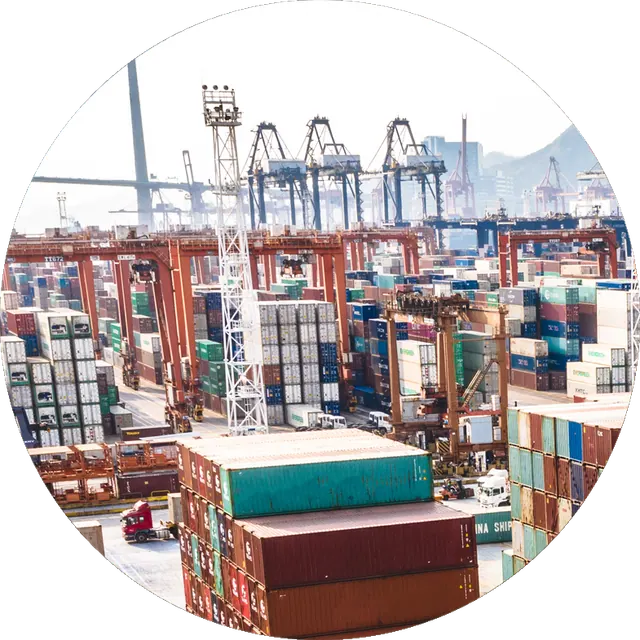
Puertos y estiba · Estados Unidos

El sueño y la fatiga en puertos y estiba

Crane, straddle and lashing crews work round-the-clock rotating and call-in shifts beside heavy moving plant, where a lapse in reaction or judgment can be fatal.

Cambio previsto: oct 2027

Fuerza laboral de Puertos y estiba

A quién cubre esta página

  • Bulk terminals - coal, iron ore, grain
  • Container parks and port logistics (vea también Transporte y logística)
  • Container terminals
  • Inland intermodal terminals
  • Port authorities and harbour operations
  • Ro-ro and automotive terminals
  • Stevedoring labor pools and casual waterfront workforce

Cambios normativos

Qué ha cambiado y qué viene

Cambios normativos que afectan la forma en que gestiona la fatiga en puertos y estiba: lo que cambió en los últimos 12 meses y lo que está por venir.

El detalle normativo y de investigación de esta página se muestra en inglés.

Próximo cambioPrevisto a partir de octubre de 2027En los próximos 12 meses

OSHA's heat injury and illness standard, proposed August 2024 and covering marine terminal and longshoring work, is still a proposal: a supplemental proposal is projected for December 2026 and final action for October 2027, with no compliance date set.


Cambios normativos revisados al 1 de octubre de 2026.

Regulación

Quién la regula y qué espera

El detalle normativo y de investigación de esta página se muestra en inglés.

No US rule sets fatigue or hours limits for longshore or marine terminal work. OSHA's marine terminal and longshoring standards regulate the equipment and the work, and one provision reaches operator health: you may not let a worker known to suffer from an ailment that may suddenly incapacitate them operate a crane, winch, power-operated cargo handling apparatus or power vehicle. OSHA reads that rule consistently with the ADA. Fatigue otherwise sits under the General Duty Clause.

Regulado por
  • Occupational Safety and Health AdministrationOSHA

Los logotipos identifican al regulador y no implican respaldo.

Quién la regula

OSHA enforces the marine terminal standard (29 CFR Part 1917) and the longshoring standard (Part 1918), or a state agency where a state plan covers the work. The EEOC oversees the disability rules that govern how you handle operator medical fitness, and the Department of Labor administers longshore workers' compensation.

Sus obligaciones

Allow only employees competent through training or experience to operate cranes, winches, cargo handling equipment and power vehicles. Do not allow a worker known to have an uncorrected vision or hearing defect, heart disease, epilepsy or a similar suddenly incapacitating ailment to operate them (29 CFR 1917.27(a)(2), 1918.98(a)(2)), and handle any medical inquiry under the ADA. Train cargo supervisors in accident prevention. Keep the terminal free of recognized hazards, including fatigue from long or night shifts.

Consecuencias

OSHA can cite violations of the terminal and longshoring standards and, for fatigue, the General Duty Clause, with abatement orders and published citations; repeat findings move you into the willful or repeat tier. A medical-fitness decision handled outside the ADA process can become an EEOC charge. Most longshore and terminal workers' injuries are compensated under the federal Longshore and Harbor Workers' Compensation Act.

Sanciones

OSHA maximums, 2025 levels in force through 2026: $16,550 per serious or other-than-serious violation, $165,514 per willful or repeat violation, and $16,550 per day for failure to abate. ADA compensatory and punitive damages are capped by headcount from $50,000 to $300,000, with back pay uncapped.

Fuentes: Occupational Safety and Health Act, s 5(a)(1); 29 CFR Part 1917 (Marine Terminals), s 1917.27; 29 CFR Part 1918 (Longshoring), s 1918.98; Americans with Disabilities Act; OSHA penalty levels (2025, in force 2026).

Puestos críticos por fatiga

Dónde más importa la fatiga en puertos y estiba

Los puestos en los que un trabajador fatigado tiene más probabilidades de causar daños graves, las tareas que conllevan el riesgo y por qué se acumula la fatiga.

El detalle normativo y de investigación de esta página se muestra en inglés.

PuestoRiesgoTareas de alto riesgoPor qué se acumula la fatiga
Crane operator (longshore)
Reglas
Designación normativa
Qualified crane operator (29 CFR 1917.27(a), 1918.98(a)) - barred if an ailment may suddenly incapacitate
Horas y descanso
None federal; ILA/ILWU collective agreements
Riesgo críticoLifting containers over lashers and the vessel from a cab about 40 m up on night shifts; repetitive cycle work; hatch-cover and twin liftsRotating day, evening and night shifts, short-notice call-ups and double shifts, isolated cab
UTR (hustler) driver / top-handler operator
Reglas
Designación normativa
Operator of a power-operated vehicle (29 CFR 1917.27(a)(2))
Horas y descanso
None federal; ILA/ILWU collective agreements
Riesgo altoDriving straddle carriers or terminal tractors among people and machines at night; reach-stacker lifts in the stack; truck interchangeRotating shifts with nights, overtime, long periods of repetitive driving
Longshore worker (lasher)
Reglas
Designación normativa
Longshoring employee (29 CFR Parts 1917/1918); LHWCA-covered
Horas y descanso
None federal; ILA/ILWU collective agreements
Riesgo altoLashing and unlashing containers on deck and in bays at night under suspended loads; climbing lashing bridges; twistlock handlingShort-notice shift allocation, nights and weekends, double shifts, outdoor work in weather
Hatch tender / signalman
Reglas
Designación normativa
Longshoring employee (29 CFR Parts 1917/1918); LHWCA-covered
Horas y descanso
None federal; ILA/ILWU collective agreements
Riesgo altoDirecting crane lifts by radio or hand signal where the operator cannot see; hatch-cover lifts; breakbulk slingingRotating shifts with nights, long periods standing at the hatch, weather
Line handler (linesman)
Reglas
Designación normativa
Longshoring employee (29 CFR Parts 1917/1918); LHWCA-covered
Horas y descanso
None federal; ILA/ILWU collective agreements
Riesgo altoHandling mooring lines during berthing and unberthing at night; working in snap-back zones; line-boat workOn-call call-outs to ship movements at any hour, broken sleep between movements, night jobs
VTS watchstander (US Coast Guard)
Reglas
Designación normativa
Coast Guard member or civilian - uniformed members outside OSHA (EO 12196)
Horas y descanso
Coast Guard internal watch standards
Riesgo altoMonitoring vessel traffic and issuing traffic information overnight; coordinating pilot boardings and berth movements; low-stimulus monitoring 02:00-06:0024/7 rotating shifts, night shifts, screen monotony

Casos

Cuando la fatiga quedó registrada

Hallazgos y procesos publicados por reguladores, tribunales e investigadores en Estados Unidos.

El detalle normativo y de investigación de esta página se muestra en inglés.

  • jul 2007 · United States

    Crane operator on weekly rotating 10-12 hour shifts develops disabling sleep disorder after drowsy run-off-road crash

    • Seguridad
    • Legal

    A worker who maintained and operated cranes for a crane contractor for 15 years worked 10 to 12 hour shifts that rotated weekly between day, mid and night shifts. He reported excessive daytime drowsiness and in 2005 ran his car off the road because of sleepiness; in 2007 he was diagnosed with obstructive sleep apnea and shift work sleep disorder, and a specialist warned he was hypersomnolent during working hours and might be a risk to himself and others. A federal administrative law judge found the rotating shift work contributed to the sleep disorder and awarded permanent total disability, and the federal review board affirmed the award.

    Caso US-ports-02Informar de un error

Ver todas las noticias de puertos y estiba

Cómo encaja la suite

Cómo se vincula cada producto con sus obligaciones

Las calificaciones describen con qué fuerza se vincula un producto a una obligación. Ninguno cumple por usted una obligación y ninguno conlleva una garantía de cumplimiento.

El detalle normativo y de investigación de esta página se muestra en inglés.

Sleepfit

Apoya su deber general de cuidado

29 CFR 1917.27(a)(2) bars workers known to have suddenly incapacitating ailments from operating cargo equipment; it names no screen and OSHA reads it through the ADA. Sleepfit supports voluntary, confidential screening. It screens; diagnosis stays with your clinicians.

Acerca de Sleepfit

Fatiguefit4Duty

Apoya su deber general de cuidado

No OSHA marine terminal or longshoring rule names a point-of-duty fatigue check; 1917.27 and 1918.98 address competence and medical ailments. Fatiguefit4Duty supports your general duty. A fitness-for-duty check, not a fitness-for-duty decision - the duty call stays with you.

Acerca de Fatiguefit4Duty

Awareness eLearning

Apoya su deber general de cuidado

29 CFR 1917.27(b) requires accident prevention training for cargo supervisors, and operators must be competent; neither names fatigue. Awareness eLearning supplies fatigue and sleep content with a completion record for crews and supervisors.

Acerca de Awareness eLearning

Was It Fatigue?

Apoya su deber general de cuidado

Federal rules make you record injuries, not work out whether fatigue caused them, and the terminal and longshoring standards name no fatigue review. Was It Fatigue? supports your own investigation. A structured judgment aid, not a determination of cause.

Acerca de Was It Fatigue?

SleepWellBaby

No US rule reaches sleep in new-parent households on the waterfront. SleepWellBaby supports parents in your terminal and longshore workforce as a voluntary benefit, not a compliance step.

Acerca de SleepWellBaby

Paquete recomendado

Por dónde empezaríamos en puertos y estiba

Cada paquete tiene precio según la prevalencia: toda su cohorte obtiene acceso, y usted paga por la proporción que se prevé que necesite cada producto. Cómo funcionan los precios.

Por qué esta combinación en Estados Unidos

29 CFR 1917.27 bars workers with known incapacitating ailments from cargo equipment and names no screen. Sleepfit screens voluntarily and confidentially; Fatiguefit4Duty adds a point-of-duty check; Awareness eLearning trains crews. Fatigue Lifecycle adds incident review.

Vea lo que el sueño y la fatiga significan para su fuerza laboral en puertos y estiba.

Indíquenos aproximadamente cuántas personas emplea. Su panorama estima cuántas probablemente duermen mal y cuánto cuesta, a partir de investigaciones publicadas sobre puertos y estiba. Luego elija a quién cubrir y le llevaremos al siguiente paso adecuado.

Un ejemplo de instantánea de la fuerza laboral en una tableta: problemas de sueño modelados y el costo del sueño deficiente para 1.400 personas en transporte y logística.