Minería y recursos · Estados Unidos

El sueño y la fatiga en minería y recursos

Crews work 12-hour rotating shifts, nights and FIFO or DIDO rosters, then often drive long distances home. Fatigue around heavy mobile plant and processing hazards can be fatal.

Fuerza laboral de Minería y recursos

A quién cubre esta página

  • Coal mining - open cut and underground
  • FIFO camps and site services on a mine (vea también Comercio minorista y hotelería)
  • Gold, copper, nickel and other metal ore mining
  • Iron ore mining
  • Mineral exploration and drilling
  • Mineral processing on a mining lease (vea también Manufactura)
  • Mining contractors - drill and blast, load and haul, underground development
  • Mining tyre and maintenance services on site
  • Quarrying - hard rock, sand and gravel

Regulación

Quién la regula y qué espera

El detalle normativo y de investigación de esta página se muestra en inglés.

Mining answers to MSHA, not OSHA, and MSHA has no hours-of-service rule, no shift-length limit and no rest requirement for miners. Fatigue is not a subject in MSHA's new-miner or annual refresher training either. One state goes further: Arizona caps underground mine employees and hoisting engineers at twelve hours in any twenty-four. Everywhere else, fatigue reaches you through the mandatory standards MSHA can actually cite, through accident investigation, and through the disability and leave laws that apply once a sleep disorder is diagnosed.

Regulado por
  • Mine Safety and Health AdministrationMSHA

Los logotipos identifican al regulador y no implican respaldo.

Quién la regula

Mining is regulated by MSHA (the Mine Safety and Health Administration) - a completely separate federal agency from OSHA, operating under its own law, the Mine Act. Standard workplace-discrimination and leave protections (ADA, FMLA) still apply alongside MSHA.

Sus obligaciones

There is no federal shift-length or rest rule for miners, and no fatigue subject in MSHA's required training. What binds you is narrower than a general duty: MSHA can cite only a violation of the Mine Act or of a mandatory standard, rule, order or regulation, so fatigue reaches you through the hazard it produces. At surface metal and non-metal mines a competent person must examine each working place for hazardous conditions at least once a shift and record it. If you operate underground in Arizona, state law caps the working period at twelve hours in any twenty-four.

Consecuencias

MSHA assesses penalties under Part 100 on six statutory criteria: your size, your history of violations, negligence, gravity, good faith in abating, and the effect of the penalty on your ability to stay in business. Regular assessments run from $168 to $90,649 a violation, flagrant violations to $332,376, and failure to abate to $9,820 a day, at 2025 levels in force for 2026. Inspectors can withdraw miners from an area on the spot, and repeat unwarrantable-failure findings can put a mine into pattern-of-violations status.

Sanciones

30 CFR Part 100, 2025 levels in force for 2026: regular assessment $168 to $90,649 per violation; flagrant violation $332,376; failure to abate $9,820 per day. Arizona's twelve-hour underground limit is a class 2 misdemeanour, with each day a separate offence.

Fuentes: The Mine Safety and Health Administration and the Mine Act; MSHA's workplace-examination rules; MSHA's civil penalty schedule; MSHA fatigue-management guidance materials.

Puestos críticos por fatiga

Dónde más importa la fatiga en minería y recursos

Los puestos en los que un trabajador fatigado tiene más probabilidades de causar daños graves, las tareas que conllevan el riesgo y por qué se acumula la fatiga.

El detalle normativo y de investigación de esta página se muestra en inglés.

PuestoRiesgoTareas de alto riesgoPor qué se acumula la fatiga
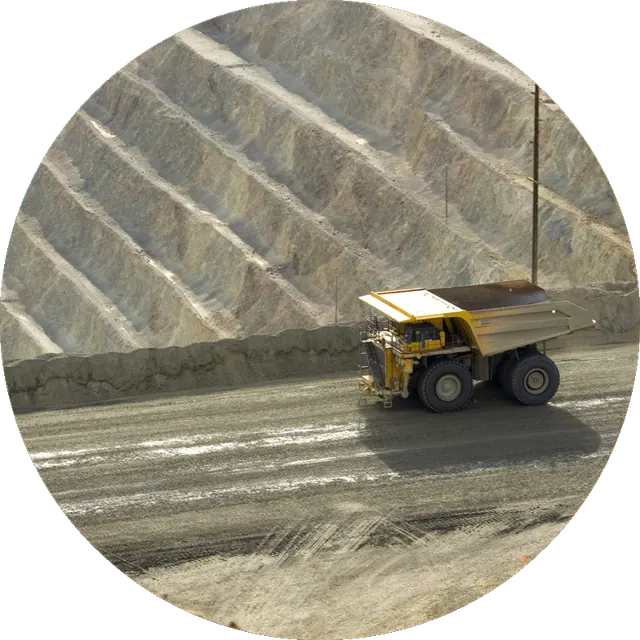
Haul truck driver (surface miner)
Reglas
Designación normativa
Miner (Mine Act s 3(g), 30 U.S.C. 802(g)); Part 46/48 trained miner; no MSHA fatigue rule
Horas y descanso
No MSHA hours-of-service rule; state caps rare (Arizona 12 h mine shift limit recorded in fit row)
Riesgo críticoDriving a 200-300 t haul truck through the 02:00-06:00 window; ramp descents, dumping at crest/edge, intersections with light vehicles; monotony between loads12 h day/night rotations, 4+ consecutive nights, FIFO/DIDO swings (e.g. 8/6, 14/7) and a long drive home after the last night
Underground miner - continuous miner, scoop or shuttle car operator
Reglas
Designación normativa
Miner (Mine Act s 3(g), 30 U.S.C. 802(g)); Part 46/48 trained miner; no MSHA fatigue rule
Horas y descanso
No MSHA hours-of-service rule; state caps rare (Arizona 12 h mine shift limit recorded in fit row)
Riesgo críticoOperating loaders (LHD/bogger), continuous miners or shuttle cars in confined headings; tele-remote bogging at the stope brow; vehicle-pedestrian interaction in low light12 h rotating day/night underground with no daylight cues, heat, FIFO swings, long travel in and out of the decline
Hoist operator
Reglas
Designación normativa
Hoist operator (30 CFR 57 Subpart R / 30 CFR 75.1400 series); miner (30 U.S.C. 802(g))
Horas y descanso
No MSHA hours-of-service rule; state caps rare (Arizona 12 h mine shift limit recorded in fit row)
Riesgo críticoDriving the shaft winder carrying people and rock; signalling, speed and overwind control; long low-stimulus monitoring through the night8-12 h shifts incl. nights, long low-stimulus monitoring, often alone in the winder house
Preshift examiner (certified person)
Reglas
Designación normativa
Certified person designated to make the preshift examination (30 CFR 75.360(a)(1))
Horas y descanso
Examination within 3 h before each 8 h interval in which miners work (75.360(a)(1)); no hours cap
Riesgo críticoPre-shift and in-shift inspection for gas, ground and ventilation; deciding whether crews may enter; gas testing and reporting at the end of a night shift12 h rotating shifts with inspections timed at the start of each shift, including the 04:00-06:00 low
Blaster
Reglas
Designación normativa
Qualified/certified blaster (30 CFR 75.1301 underground coal; state blaster license); miner (30 U.S.C. 802(g))
Horas y descanso
No MSHA hours-of-service rule; state caps rare (Arizona 12 h mine shift limit recorded in fit row)
Riesgo altoCharging and tying-in blast holes, misfire handling, clearing and guarding the blast area, firing near shift change; re-entry decisions after the blastBlasting at shift change or end of night shift, time pressure to fire on schedule, 12 h rotations
Mine dispatcher
Reglas
Designación normativa
Miner (30 U.S.C. 802(g)) where on mine property; otherwise general duty
Horas y descanso
No MSHA hours-of-service rule; state caps rare (Arizona 12 h mine shift limit recorded in fit row)
Riesgo altoMonitoring autonomous haul fleets and gas/ventilation telemetry overnight; isolating and recovering autonomous trucks; coordinating emergency response12 h night shifts on screens in remote operations centers, low stimulation and high vigilance demand
Mine electrician / mechanic
Reglas
Designación normativa
Qualified person for electrical work (30 CFR 75.153; 30 CFR 56/57.12001 series); miner (30 U.S.C. 802(g))
Horas y descanso
No MSHA hours-of-service rule; state caps rare (Arizona 12 h mine shift limit recorded in fit row)
Riesgo altoIsolation and lock-out of HV and mobile plant, work under raised loads, haul truck tyre changes, conveyor repairs during night shutdowns12 h rotating shifts, night shutdowns and call-outs, overtime during planned shutdowns
Miner commuting from a remote mine
Reglas
Designación normativa
None specific - general duty; commuting outside Mine Act jurisdiction
Horas y descanso
No MSHA hours-of-service rule; state caps rare (Arizona 12 h mine shift limit recorded in fit row)
Riesgo altoDriving 1-4 h home or to the airport after the final 12 h night shift; driving light vehicles on unsealed mine roads at shift changeDrive-out on the last day of a swing after consecutive night shifts, often with sleep debt carried over

Casos

Cuando la fatiga quedó registrada

Hallazgos y procesos publicados por reguladores, tribunales e investigadores en Estados Unidos.

El detalle normativo y de investigación de esta página se muestra en inglés.

  • nov 2013 · Georgia, United States

    Quarry haul truck operator found asleep on shift keeps driving; truck rolls into pond and he drowns

    • Seguridad

    A haul truck operator at a quarry operator's granite quarry was found asleep in a chair during his evening shift, was allowed to continue working, and later drove off the haul road, through a berm and into a settling pond, where he drowned. MSHA found the root cause was management's failure to ensure that persons could safely operate mobile equipment. The operator then set rules for handling employees suspected of being impaired on the job.

    Caso US-mining-03Informar de un error

Ver todas las noticias de minería y recursos

Cómo encaja la suite

Cómo se vincula cada producto con sus obligaciones

Las calificaciones describen con qué fuerza se vincula un producto a una obligación. Ninguno cumple por usted una obligación y ninguno conlleva una garantía de cumplimiento.

El detalle normativo y de investigación de esta página se muestra en inglés.

Sleepfit

Apoya su deber general de cuidado

MSHA names no screening instrument and no fatigue standard; Part 60 medical surveillance is respiratory only. Sleepfit supports your general duty case for long and rotating shifts, run as a voluntary, confidential program. It screens; diagnosis stays with your clinicians.

Acerca de Sleepfit

Fatiguefit4Duty

Apoya su deber general de cuidado

MSHA sets no fitness-for-duty rule, so this is a control you choose rather than one the law imposes. It gives you a contemporaneous record beside the once-a-shift workplace examination you already have to make.

Acerca de Fatiguefit4Duty

Awareness eLearning

Apoya su deber general de cuidado

Supports the general employer duty applying to US mining. No obligation names a fatigue curriculum. Evidences the training component; it does not establish competence.

Acerca de Awareness eLearning

Was It Fatigue?

Apoya su deber general de cuidado

MSHA investigates serious accidents, and no rule names fatigue as a cause you must examine. Was It Fatigue? supports your own investigation with a structured account of the worker's sleep. A structured judgment aid, not a determination of cause.

Acerca de Was It Fatigue?

SleepWellBaby

No US mining rule reaches sleep in new-parent households. This is a workforce decision rather than a compliance one, and it supports the same fatigue evidence base as the rest of the program.

Acerca de SleepWellBaby

Paquete recomendado

Por dónde empezaríamos en minería y recursos

Cada paquete tiene precio según la prevalencia: toda su cohorte obtiene acceso, y usted paga por la proporción que se prevé que necesite cada producto. Cómo funcionan los precios.

Por qué esta combinación en Estados Unidos

MSHA sets no fatigue standard and no fitness rule, so this supports your general duty case. Sleepfit screens crews on long and rotating shifts; Fatiguefit4Duty adds a record beside your workplace examination; Awareness eLearning trains. Fatigue Lifecycle adds incident review.

Vea lo que el sueño y la fatiga significan para su fuerza laboral en minería y recursos.

Indíquenos aproximadamente cuántas personas emplea. Su panorama estima cuántas probablemente duermen mal y cuánto cuesta, a partir de investigaciones publicadas sobre minería y recursos. Luego elija a quién cubrir y le llevaremos al siguiente paso adecuado.

Un ejemplo de instantánea de la fuerza laboral en una tableta: problemas de sueño modelados y el costo del sueño deficiente para 1.400 personas en transporte y logística.