Transformation des aliments et des boissons · Canada

Le sommeil et la fatigue : transformation des aliments et des boissons

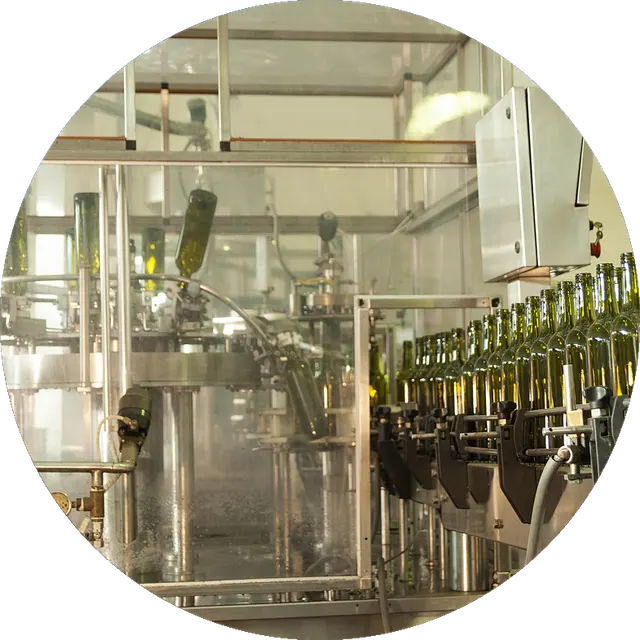
Processing lines run nights and rotating shifts with repetitive, monotonous tasks near moving machinery. Fatigue raises the risk of machinery injury and food safety lapses.

Réglementation modifiée : 6 oct. 2025Changement prévu : 6 oct. 2026

Main-d’œuvre du secteur Transformation des aliments et des boissons

Ce que couvre cette page

  • Airline catering
  • Beverages and breweries
  • Dairy processing
  • Flour and grain milling
  • Industrial bakeries
  • Meat processing
  • Poultry processing
  • Seafood processing
  • Sugar milling
  • Wineries (production) (voir aussi Agriculture)

Veille réglementaire

Ce qui a changé, et ce qui s’en vient

Les changements réglementaires qui touchent votre gestion de la fatigue en transformation des aliments et des boissons : ce qui a changé au cours des 12 derniers mois, et ce qui s’en vient.

Les détails réglementaires et les données de recherche de cette page sont présentés en anglais.

Changement récentDepuis le 6 octobre 2025

S’applique à tous les secteurs (Canada)

In Quebec, since 6 October 2025 every establishment must identify and analyze psychosocial risks, including heavy workload, in a prevention program (20+ workers) or action plan.

Voir le changement

Changement à venirPrévu à compter de 6 octobre 2026D’ici 12 mois

Quebec employers have until 6 October 2026 to have a prevention program (20 or more workers) or action plan in place that addresses psychosocial risks, including heavy workload.

Changements réglementaires vérifiés au 1 octobre 2026.

Réglementation

Qui la réglemente, et ce qui est attendu

Les détails réglementaires et les données de recherche de cette page sont présentés en anglais.

There is no fatigue or hours-of-work rule written for food processing in Canada. Your obligations come from the general provincial framework: your province's occupational health and safety act, its employment standards on hours, rest and overtime, and its workers' compensation scheme. A small number of food-supply operations - grain elevators, feed and flour mills, seed cleaning plants - are federally regulated and follow the Canada Labor Code instead. Nothing in Canadian law caps line speed or sets minimum staffing for worker-safety reasons; line speed is controlled only for food-safety inspection, a different question with a different regulator.

Qui la réglemente

Food processing safety in Canada splits into two tracks that don't overlap: the Canadian Food Inspection Agency regulates food product safety - contamination, labelling - but not employee fatigue or hours. Worker safety runs through the normal provincial workplace safety rules (or federal rules for the small number of food-supply businesses, like grain handling, that fall under federal law).

Vos obligations

Food processors carry the same duties as any other manufacturer in their province: identify and control hazards including fatigue, train workers, keep a written health and safety policy, meet the employment standards on daily and weekly hours, rest between shifts and eating periods, register with the workers' compensation board, and accommodate a disclosed sleep disorder to undue hardship. Federally regulated operations such as grain elevators and feed mills follow the Canada Labor Code equivalents. Food-safety compliance - preventive control plans, traceability, labeling - is a separate track that does not meet fatigue duties.

Conséquences

A fatigue-related injury on a processing line is handled as an ordinary safety matter: the provincial regulator can issue stop-work and compliance orders and prosecute the company, with directors and officers exposed personally, and the outcome turns on what precautions you can show you took. Employment standards breaches on hours, rest and overtime bring orders to pay plus penalties. Every injury becomes a workers' compensation claim and feeds your experience rating. Food-safety enforcement - recalls, license suspension, CFIA administrative penalties - runs entirely separately, is aimed at the product rather than the worker, and offers no protection on the worker-safety side.

Sanctions

In Ontario the 2026 maximums are $2,000,000 per offence for a corporation, $1,500,000 for a director or officer and $500,000 for any other individual, with up to 12 months' imprisonment for individuals and a $500,000 minimum for a corporate repeat offence causing death or serious injury within two years. Federally regulated grain and feed operations face up to $1,000,000 under the Canada Labor Code, or $100,000 on summary conviction.

Sources: Canadian Food Inspection Agency mandate and Safe Food for Canadians Act; Government of Canada's list of federally regulated industries; provincial occupational health and safety and employment standards legislation.

Postes critiques

Là où la fatigue compte le plus en transformation des aliments et des boissons

Les postes où un travailleur fatigué risque le plus de causer un préjudice grave, les tâches qui portent ce risque, et pourquoi la fatigue s’y accumule.

Les détails réglementaires et les données de recherche de cette page sont présentés en anglais.

PosteRisqueTâches à risque élevéPourquoi la fatigue s’accumule
Sanitation worker
Règles
Désignation réglementaire
None specific - general duty (provincial OHS Act; CLC Part II s 124 for federal works)
Heures et repos
Provincial ESA, e.g. Ont. ESA: 11 h daily rest, 8 h between shifts, 48 h/wk unless agreed
Risque critiqueCleaning inside conveyors, mixers and saws under lock-out, caustic and acid CIP, high-pressure hosing on wet floors, overnight between production runsNight-only shifts (about 23:00-07:00) after production, often contract labor with second jobs
Bulk milk transporter
Règles
Désignation réglementaire
Commercial vehicle driver (Commercial Vehicle Drivers Hours of Service Regs SOR/2005-313; provincial HOS, NSC Standard 9)
Heures et repos
SOR/2005-313: 13 h driving and 14 h on duty per day, 8 h off before driving, 10 h off per day; 70 h/7 d or 120 h/14 d
Risque critiqueNight farm-gate milk collection on narrow rural roads and steep tracks, coupling trailers in the dark; dawn bakery and fresh-food deliveriesOvernight collection runs, split or rotating shifts, long rural distances, seasonal peak milk flow
Meat cutter / plant worker
Règles
Désignation réglementaire
None specific - general duty (provincial OHS Act; CLC Part II s 124 for federal works)
Heures et repos
Provincial ESA, e.g. Ont. ESA: 11 h daily rest, 8 h between shifts, 48 h/wk unless agreed
Risque élevéKnife work at chain speed in boning and slicing rooms, kill-floor stunning, band saw and dicer use; repetitive cutting while coldStarts from 04:00-05:00, 10 h shifts on mechanised chains, cold rooms, tally or line-speed pressure
Production worker
Règles
Désignation réglementaire
None specific - general duty (provincial OHS Act; CLC Part II s 124 for federal works)
Heures et repos
Provincial ESA, e.g. Ont. ESA: 11 h daily rest, 8 h between shifts, 48 h/wk unless agreed
Risque élevéOvernight bakery and dairy production, filling and palletising lines, clearing jams on fillers and wrappers, CIP chemical changeoversNight shifts to meet morning dispatch (bakeries often 22:00-06:00), seasonal peaks, monotony
Lift truck operator (cold storage)
Règles
Désignation réglementaire
Lift truck operator trained under provincial rules (e.g. BC OHSR Part 16; Ont. Reg 851)
Heures et repos
Provincial ESA, e.g. Ont. ESA: 11 h daily rest, 8 h between shifts, 48 h/wk unless agreed
Risque élevéReach truck and forklift work in -25 C freezers and chillers, high-bay racking, loading refrigerated trailers at docks overnightNight and early shifts aligned to dispatch, cold exposure, repetitive cycles
Refrigeration operator / power engineer
Règles
Désignation réglementaire
Certified refrigeration operator (provincial, e.g. TSSA / ABSA)
Heures et repos
Provincial ESA, e.g. Ont. ESA: 11 h daily rest, 8 h between shifts, 48 h/wk unless agreed
Risque élevéPlant checks and valve isolations on anhydrous ammonia systems, oil draining, responding to leak alarms after hoursOn-call nights and lone call-outs, sometimes after a full day shift

Cas

Quand la fatigue a laissé une trace

Constatations et poursuites publiées par les organismes de réglementation, les tribunaux et les enquêteurs (Canada).

Les détails réglementaires et les données de recherche de cette page sont présentés en anglais.

mars 2018 · Ontario, Canada

Worker who refused night shifts citing disrupted sleep loses arbitration over dismissal

  • Juridique

A food plant maintenance worker repeatedly refused night-shift assignments, producing medical notes saying rotating shift work disturbed his sleep and caused headaches. The arbitrator found the notes only supported a need for steady shifts with minimal disruption, not a ban on night work, and that he had refused direct orders without first raising medical concerns. His termination under progressive discipline was upheld.

Cas CA-food-01Signaler une erreur

Voir toutes les actualités : transformation des aliments et des boissons

Comment la suite s’inscrit

Comment chaque produit se rattache à vos obligations

Les cotes décrivent dans quelle mesure un produit se rattache à une obligation. Aucun ne vous acquitte d’une obligation, et aucun ne comporte de garantie de conformité.

Les détails réglementaires et les données de recherche de cette page sont présentés en anglais.

Sleepfit

Soutient votre devoir général de diligence

No Canadian food and beverage processing rule requires a sleep health screen for production workers. Sleepfit supports your general duty to protect worker health under provincial OHS law, such as s 25(2)(h) of Ontario's OHS Act. It screens; diagnosis stays with your clinicians.

À propos de Sleepfit

Fatiguefit4Duty

Soutient votre devoir général de diligence

No Canadian food and beverage processing rule names a point-of-duty fatigue check. Fatiguefit4Duty supports your general duty under provincial OHS law. A fitness-for-duty check, not a fitness-for-duty decision - the duty call stays with you.

À propos de Fatiguefit4Duty

Awareness eLearning

Soutient votre devoir général de diligence

Your duty to give production workers the information, instruction and training they need, under provincial OHS law, such as s 25(2)(a) of Ontario's OHS Act, does not name fatigue. Awareness eLearning supplies fatigue and sleep content with a completion record.

À propos de Awareness eLearning

Was It Fatigue?

Soutient votre devoir général de diligence

Your duty to investigate workplace incidents under provincial OHS law does not name fatigue in food and beverage processing work. Was It Fatigue? supports that investigation. A structured judgment aid, not a determination of cause.

À propos de Was It Fatigue?

SleepWellBaby

No Canadian food and beverage processing rule reaches sleep in new-parent households. SleepWellBaby is offered as a benefit to parents on your production shifts; it is not a compliance step and sits outside your health and safety obligations.

À propos de SleepWellBaby

Forfait recommandé

Par où nous commencerions en transformation des aliments et des boissons

Chaque forfait est tarifé selon la prévalence : toute votre cohorte y a accès, et vous payez pour la proportion qui devrait avoir besoin de chaque produit. Comment fonctionne la tarification.

Recommandé · Niveaux 2 et 3

Shift Worker Bundle

Le dépistage des troubles du sommeil et une vérification au début du quart pour les travailleurs qui en ont le plus besoin.

Pourquoi ce choix (Canada)

No rule names a fatigue tool, so this supports your duty under your provincial OHS Act. Sleepfit screens your production workers for sleep disorders; Fatiguefit4Duty adds a point-of-duty self-check with a record. Prevention adds Awareness eLearning with a completion record.

Ce que le sommeil et la fatigue représentent pour votre effectif en transformation des aliments et des boissons.

Indiquez-nous environ combien de personnes vous employez. Votre portrait estime combien dorment probablement mal et ce que cela coûte, à partir de la recherche publiée pour le secteur transformation des aliments et des boissons. Choisissez ensuite qui couvrir, et nous vous mènerons à la bonne étape suivante.

Un exemple d’aperçu de la main-d’œuvre sur une tablette : troubles du sommeil modélisés et coût du mauvais sommeil pour 1 400 personnes dans le transport et la logistique.