Fabrication · Canada

Le sommeil et la fatigue : fabrication

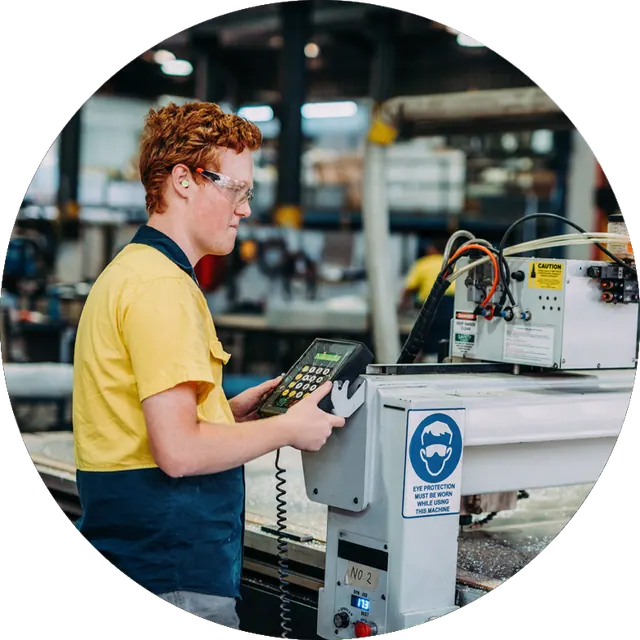
Continuous-process plants run rotating 8- and 12-hour shifts including nights. Fatigue on monotonous tasks near machinery and forklifts raises the risk of injury, defects and process incidents.

Réglementation modifiée : 6 oct. 2025Changement prévu : 6 oct. 2026

Main-d’œuvre du secteur Fabrication

Ce que couvre cette page

  • Aircraft manufacturing
  • Aluminium smelting and alumina refining (standalone)
  • Cement and building products
  • Chemicals and petrochemicals
  • Defense industry primes (non-ship)
  • Explosives and fertiliser manufacturing
  • Motor vehicle manufacturing
  • Paper and packaging
  • Pharmaceuticals and biologics
  • Plastics and rubber products
  • Rolling stock manufacturing
  • Sawmills and timber processing
  • Shipbuilding and naval shipyards
  • Steel making and metal fabrication
  • Truck, bus and trailer body building

Veille réglementaire

Ce qui a changé, et ce qui s’en vient

Les changements réglementaires qui touchent votre gestion de la fatigue en fabrication : ce qui a changé au cours des 12 derniers mois, et ce qui s’en vient.

Les détails réglementaires et les données de recherche de cette page sont présentés en anglais.

Changement récentDepuis le 6 octobre 2025

S’applique à tous les secteurs (Canada)

In Quebec, since 6 October 2025 every establishment must identify and analyze psychosocial risks, including heavy workload, in a prevention program (20+ workers) or action plan.

Voir le changement

Changement à venirPrévu à compter de 6 octobre 2026D’ici 12 mois

Quebec employers have until 6 October 2026 to have a prevention program (20 or more workers) or action plan in place that addresses psychosocial risks, including heavy workload.

Changements réglementaires vérifiés au 1 octobre 2026.

Réglementation

Qui la réglemente, et ce qui est attendu

Les détails réglementaires et les données de recherche de cette page sont présentés en anglais.

Manufacturing has no fatigue-specific rule anywhere in Canada, despite running some of the most demanding schedules in industry - rotating shifts and 12-hour continuous-operation rosters. The industrial safety regulations that do apply, Ontario's Regulation 851 among them, cover physical hazards: machine guarding, materials handling, noise, lighting. Fatigue is managed through the general duty to take every reasonable precaution, which treats it as a recognized hazard, and through your province's rest minimums. Process safety runs the same way - general duty and voluntary standards, not a prescriptive code.

Qui la réglemente

Manufacturing safety is provincial, so your regulator is your province's: in Ontario, the Ministry of Labor under the Occupational Health and Safety Act and the Industrial Establishments regulation covering machine guarding, materials handling, lighting and noise. No province has a manufacturing fatigue or hours rule; rest minimums come from each province's employment standards law and differ.

Vos obligations

You must take every reasonable precaution for worker safety, and fatigue counts as a hazard inside that duty even though no regulation names a maximum shift. You must meet the physical-hazard requirements of your province's industrial regulation - guarded machinery, safe materials handling, lighting, noise control. And you must meet your province's rest minimums: in Ontario, 11 consecutive hours free each day, 8 between shifts unless the two total 13 or less, and a 30-minute break every 5 hours, with averaging agreements available but the 11-hour daily rest not waivable. Other provinces set different floors.

Conséquences

There is no fatigue offence, so a fatigue-related incident is enforced as an ordinary failure to control a known hazard - a machine-operation injury on a night shift is investigated the same way as any other. In Ontario that means prosecution by the Ministry of Labor under the Occupational Health and Safety Act, with each province running its own regime; a federally regulated manufacturer, which is rare, answers to the Labor Program under the Canada Labor Code. Mishandled accommodation of a diagnosed sleep disorder is a separate human rights exposure. Manufacturing draws frequent safety enforcement on its injury profile alone, so the documentation you hold before an incident matters.

Sanctions

Maximum fines are set by each province and are not uniform. Ontario's, in force in 2026: up to $2,000,000 for a corporation (raised from $1.5 million in October 2023), $1,500,000 for a director or officer and $500,000 for any other individual (both set in 2022), plus a $500,000 minimum fine since December 2024 where a repeat offence kills or seriously injures a worker. Federally regulated works: up to $1,000,000 and two years' imprisonment.

Sources: Ontario Occupational Health and Safety Act; Industrial Establishments Regulation (O. Reg. 851); Employment Standards Act, 2000; Canada Labour Code.

Postes critiques

Là où la fatigue compte le plus en fabrication

Les postes où un travailleur fatigué risque le plus de causer un préjudice grave, les tâches qui portent ce risque, et pourquoi la fatigue s’y accumule.

Les détails réglementaires et les données de recherche de cette page sont présentés en anglais.

PosteRisqueTâches à risque élevéPourquoi la fatigue s’accumule
Process operator
Règles
Désignation réglementaire
None specific - general duty (provincial OHS Act; CLC Part II s 124 for federal works)
Heures et repos
Provincial ESA, e.g. Ont. ESA: 11 h daily rest, 8 h between shifts, 48 h/wk unless agreed
Risque critiqueRunning reactors, furnaces, kilns or paper machines via DCS overnight; isolations, sampling, start-up and shutdown; tapping or handling molten metal12 h continuous rotating rosters (e.g. 4-on/4-off day/night), 06:00/18:00 handovers, overtime to cover absences
Machine operator
Règles
Désignation réglementaire
None specific - general duty (provincial OHS Act; CLC Part II s 124 for federal works)
Heures et repos
Provincial ESA, e.g. Ont. ESA: 11 h daily rest, 8 h between shifts, 48 h/wk unless agreed
Risque élevéClearing jams and changeovers on presses, extruders and conveyors; bypass and lock-out decisions at 03:00; inspection at line speedRotating 8 h or 12 h shifts incl. nights, repetitive paced work, overtime
Lift truck operator
Règles
Désignation réglementaire
Lift truck operator trained under provincial rules (e.g. BC OHSR Part 16; Ont. Reg 851)
Heures et repos
Provincial ESA, e.g. Ont. ESA: 11 h daily rest, 8 h between shifts, 48 h/wk unless agreed
Risque élevéMoving coils, pallets and dies with forklifts near pedestrians; loading trailers at docks; working at height on order pickers on night shiftRotating shifts incl. nights, repetitive short cycles, congested aisles
Millwright / industrial electrician
Règles
Désignation réglementaire
None specific - general duty (provincial OHS Act; CLC Part II s 124 for federal works); provincial trade certificate
Heures et repos
Provincial ESA, e.g. Ont. ESA: 11 h daily rest, 8 h between shifts, 48 h/wk unless agreed
Risque élevéIsolation and lock-out, working inside machine guards, electrical fault-finding near live parts, overhead crane repairs; call-outs after a day shiftNight cover rosters, on-call call-outs with broken sleep, shutdown overtime
Shift supervisor
Règles
Désignation réglementaire
None specific - general duty (provincial OHS Act; CLC Part II s 124 for federal works)
Heures et repos
Provincial ESA, e.g. Ont. ESA: 11 h daily rest, 8 h between shifts, 48 h/wk unless agreed
Risque élevéAccepting handover, issuing permits and authorising lock-out bypasses, deciding whether a fatigued operator stays on task, running the night aloneRotating 12 h shifts, the only decision-maker on site overnight, overtime to cover gaps

Cas

Quand la fatigue a laissé une trace

Constatations et poursuites publiées par les organismes de réglementation, les tribunaux et les enquêteurs (Canada).

Les détails réglementaires et les données de recherche de cette page sont présentés en anglais.

  • févr. 2021 · Ontario, Canada

    Machine operator filmed asleep wins wrongful dismissal but is denied his job back

    • Juridique
    • Financier

    A mould operator at a mattress plant was caught on video sleeping during his shift and denied it, saying he was 'just relaxing'. The arbitrator found he was clearly asleep, but that dismissal was an overreaction for a worker with nine years' discipline-free service. Because trust had broken down, reinstatement was refused and the employer was ordered to pay about 11 weeks' notice plus a 15% top-up and benefits instead.

    Cas CA-manufacturing-02Signaler une erreur

Voir toutes les actualités : fabrication

Comment la suite s’inscrit

Comment chaque produit se rattache à vos obligations

Les cotes décrivent dans quelle mesure un produit se rattache à une obligation. Aucun ne vous acquitte d’une obligation, et aucun ne comporte de garantie de conformité.

Les détails réglementaires et les données de recherche de cette page sont présentés en anglais.

Sleepfit

Soutient votre devoir général de diligence

No Canadian manufacturing rule requires a sleep health screen for production workers. Sleepfit supports your general duty to protect worker health under provincial OHS law, such as s 25(2)(h) of Ontario's OHS Act. It screens; diagnosis stays with your clinicians.

À propos de Sleepfit

Fatiguefit4Duty

Soutient votre devoir général de diligence

No Canadian manufacturing rule names a point-of-duty fatigue check. Fatiguefit4Duty supports your general duty under provincial OHS law. A fitness-for-duty check, not a fitness-for-duty decision - the duty call stays with you.

À propos de Fatiguefit4Duty

Awareness eLearning

Soutient votre devoir général de diligence

Your duty to give production workers the information, instruction and training they need, under provincial OHS law, such as s 25(2)(a) of Ontario's OHS Act, does not name fatigue. Awareness eLearning supplies fatigue and sleep content with a completion record.

À propos de Awareness eLearning

Was It Fatigue?

Soutient votre devoir général de diligence

Your duty to investigate workplace incidents under provincial OHS law does not name fatigue in manufacturing work. Was It Fatigue? supports that investigation. A structured judgment aid, not a determination of cause.

À propos de Was It Fatigue?

SleepWellBaby

No Canadian manufacturing rule reaches sleep in new-parent households. SleepWellBaby is offered as a benefit to parents on your production shifts; it is not a compliance step and sits outside your health and safety obligations.

À propos de SleepWellBaby

Forfait recommandé

Par où nous commencerions en fabrication

Chaque forfait est tarifé selon la prévalence : toute votre cohorte y a accès, et vous payez pour la proportion qui devrait avoir besoin de chaque produit. Comment fonctionne la tarification.

Recommandé · Niveaux 2 et 3

Shift Worker Bundle

Le dépistage des troubles du sommeil et une vérification au début du quart pour les travailleurs qui en ont le plus besoin.

Pourquoi ce choix (Canada)

No rule names a fatigue tool, so this supports your duty under your provincial OHS Act. Sleepfit screens your production workers for sleep disorders; Fatiguefit4Duty adds a point-of-duty self-check with a record. Prevention adds Awareness eLearning with a completion record.

Ce que le sommeil et la fatigue représentent pour votre effectif en fabrication.

Indiquez-nous environ combien de personnes vous employez. Votre portrait estime combien dorment probablement mal et ce que cela coûte, à partir de la recherche publiée pour le secteur fabrication. Choisissez ensuite qui couvrir, et nous vous mènerons à la bonne étape suivante.

Un exemple d’aperçu de la main-d’œuvre sur une tablette : troubles du sommeil modélisés et coût du mauvais sommeil pour 1 400 personnes dans le transport et la logistique.