Entreposage et distribution · Canada

Le sommeil et la fatigue : entreposage et distribution

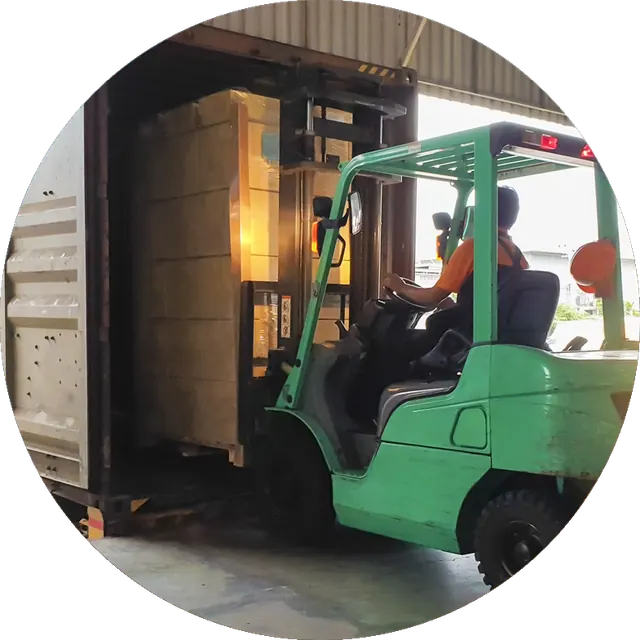
Distribution centers run night and rotating shifts with repetitive picking, packing and forklift work. Fatigue raises the risk of forklift and vehicle incidents, injuries and picking errors.

Réglementation modifiée : 6 oct. 2025Changement prévu : 6 oct. 2026

Main-d’œuvre du secteur Entreposage et distribution

Ce que couvre cette page

  • Cold storage
  • E-commerce fulfilment centers
  • Grain storage and receival
  • Parcel sortation hubs
  • Supermarket and retail distribution centers
  • Third-party logistics warehouses
  • Wholesale distribution - grocery and pharmaceutical

Veille réglementaire

Ce qui a changé, et ce qui s’en vient

Les changements réglementaires qui touchent votre gestion de la fatigue en entreposage et distribution : ce qui a changé au cours des 12 derniers mois, et ce qui s’en vient.

Les détails réglementaires et les données de recherche de cette page sont présentés en anglais.

Changement récentDepuis le 6 octobre 2025

S’applique à tous les secteurs (Canada)

In Quebec, since 6 October 2025 every establishment must identify and analyze psychosocial risks, including heavy workload, in a prevention program (20+ workers) or action plan.

Voir le changement

Changement à venirPrévu à compter de 6 octobre 2026D’ici 12 mois

Quebec employers have until 6 October 2026 to have a prevention program (20 or more workers) or action plan in place that addresses psychosocial risks, including heavy workload.

Changements réglementaires vérifiés au 1 octobre 2026.

Réglementation

Qui la réglemente, et ce qui est attendu

Les détails réglementaires et les données de recherche de cette page sont présentés en anglais.

Nothing in Canadian law regulates warehouse pace, quotas or shift length. Ontario's Working for Workers legislation is the closest thing, and it stops short: the 2021 Act requires employers with 25 or more employees to have a written right-to-disconnect policy, and the 2022 Act a written electronic monitoring policy describing whether and how you track employees. Both are disclosure duties, both apply to every Ontario industry, and neither caps monitoring, pick rates or hours. The four further Working for Workers Acts passed to 2025 do not touch warehouse quotas or scheduling either.

Qui la réglemente

Warehousing has no fatigue or hours regulator of its own in Canada; it answers to the general safety, employment standards and workers' compensation bodies of the province it operates in - or to the federal Labor Program where a warehouse is part of an interprovincial transport business. Ontario alone makes larger employers keep electronic monitoring and right-to-disconnect policies, neither of which sets an hours limit.

Vos obligations

You must take every reasonable precaution for worker safety, and fatigue counts as a recognized hazard within that duty. You must meet your province's rest minimums, which differ - in Ontario, 11 consecutive hours free each day, 8 between shifts, 24 consecutive hours off weekly or 48 in two, and a 30-minute break every 5 hours. You must accommodate a diagnosed sleep disorder to the point of undue hardship and carry workers' compensation. Ontario employers with 25 or more staff must also keep written electronic monitoring and right-to-disconnect policies - documentation duties, not limits on pace.

Conséquences

With no warehousing rule to breach, a fatigue-related incident - a manual handling injury on a night shift, a forklift collision at the end of a long rotation - is enforced as an ordinary failure to control a known hazard by the safety regulator of the province you operate in, or by the federal Labor Program where the warehouse is part of an interprovincial transport business. Missing an Ontario electronic monitoring or right-to-disconnect policy is a separate and much smaller matter: Ministry of Labor compliance orders and employment standards penalties, not a safety prosecution. Human rights exposure follows a mishandled accommodation.

Sanctions

Maximum fines are provincial. Ontario's, in force in 2026: up to $2,000,000 for a corporation (raised from $1.5 million in October 2023), $1,500,000 for a director or officer and $500,000 for any other individual (both set in 2022), plus a $500,000 minimum fine since December 2024 where a repeat offence kills or seriously injures a worker. Federally regulated works: up to $1,000,000 and two years' imprisonment. Employment standards breaches carry smaller fines.

Antécédents

No Canadian court, coroner, investigator or regulator has published a finding linking fatigue to an incident in warehousing. The duty to manage fatigue still sits within the general duty in federal and provincial occupational health and safety law.

Sources: Ontario Employment Standards Act, 2000, ss.21.1.1 (Working for Workers Act, 2021) and 41.1.1 (Working for Workers Act, 2022); Ontario Occupational Health and Safety Act; Canada Labour Code Part II; CCOHS fatigue guidance.

Postes critiques

Là où la fatigue compte le plus en entreposage et distribution

Les postes où un travailleur fatigué risque le plus de causer un préjudice grave, les tâches qui portent ce risque, et pourquoi la fatigue s’y accumule.

Les détails réglementaires et les données de recherche de cette page sont présentés en anglais.

PosteRisqueTâches à risque élevéPourquoi la fatigue s’accumule
Delivery / linehaul driver
Règles
Désignation réglementaire
Commercial vehicle driver (Commercial Vehicle Drivers Hours of Service Regs SOR/2005-313; provincial HOS, NSC Standard 9)
Heures et repos
SOR/2005-313: 13 h driving and 14 h on duty per day, 8 h off before driving, 10 h off per day; 70 h/7 d or 120 h/14 d
Risque critiqueOvernight linehaul between DCs and early-morning store deliveries, reversing into store docks, manual unloading at the end of a long shiftOvernight runs, early starts (03:00-05:00), multi-drop schedules
Lift truck operator
Règles
Désignation réglementaire
Lift truck operator trained under provincial rules (e.g. BC OHSR Part 16; Ont. Reg 851)
Heures et repos
Provincial ESA, e.g. Ont. ESA: 11 h daily rest, 8 h between shifts, 48 h/wk unless agreed
Risque élevéHigh-bay reach truck and order-picker work at height overnight, loading trailers at docks, traveling in aisles shared with pickersNight and rotating shifts in DCs running 24/7, peak-season overtime, rate-based targets
Warehouse worker (picker / packer)
Règles
Désignation réglementaire
None specific - general duty (provincial OHS Act; CLC Part II s 124 for federal works)
Heures et repos
Provincial ESA, e.g. Ont. ESA: 11 h daily rest, 8 h between shifts, 48 h/wk unless agreed
Risque élevéPick-to-light and voice picking at rate, team lifts, working beside powered pallet jacks and conveyors overnightFixed nights or rotating shifts, algorithmic rate targets, peak-season overtime, long commutes
Yard jockey / shunt driver
Règles
Désignation réglementaire
None specific - general duty (provincial OHS Act; CLC Part II s 124 for federal works)
Heures et repos
Provincial ESA, e.g. Ont. ESA: 11 h daily rest, 8 h between shifts, 48 h/wk unless agreed
Risque élevéCoupling and uncoupling trailers, reversing to docks in the dark, trailer creep and drive-away incidents at the dock edge, loading at speedNight and weekend shifts, continuous short shunts, time pressure from linehaul departures
Maintenance technician / millwright
Règles
Désignation réglementaire
None specific - general duty (provincial OHS Act; CLC Part II s 124 for federal works)
Heures et repos
Provincial ESA, e.g. Ont. ESA: 11 h daily rest, 8 h between shifts, 48 h/wk unless agreed
Risque élevéClearing faults inside AS/RS, sorter and conveyor systems under lock-out overnight, working at height on mezzanines, electrical fault-findingNight cover so automation runs 24/7, call-outs and peak-season overtime

Comment la suite s’inscrit

Comment chaque produit se rattache à vos obligations

Les cotes décrivent dans quelle mesure un produit se rattache à une obligation. Aucun ne vous acquitte d’une obligation, et aucun ne comporte de garantie de conformité.

Les détails réglementaires et les données de recherche de cette page sont présentés en anglais.

Sleepfit

Soutient votre devoir général de diligence

No Canadian warehousing rule requires a sleep health screen for warehouse workers. Sleepfit supports your general duty to protect worker health under provincial OHS law, such as s 25(2)(h) of Ontario's OHS Act. It screens; diagnosis stays with your clinicians.

À propos de Sleepfit

Fatiguefit4Duty

Soutient votre devoir général de diligence

No Canadian warehousing rule names a point-of-duty fatigue check. Fatiguefit4Duty supports your general duty under provincial OHS law. A fitness-for-duty check, not a fitness-for-duty decision - the duty call stays with you.

À propos de Fatiguefit4Duty

Awareness eLearning

Soutient votre devoir général de diligence

Your duty to give warehouse workers the information, instruction and training they need, under provincial OHS law, such as s 25(2)(a) of Ontario's OHS Act, does not name fatigue. Awareness eLearning supplies fatigue and sleep content with a completion record.

À propos de Awareness eLearning

Was It Fatigue?

Soutient votre devoir général de diligence

Your duty to investigate workplace incidents under provincial OHS law does not name fatigue in warehousing work. Was It Fatigue? supports that investigation. A structured judgment aid, not a determination of cause.

À propos de Was It Fatigue?

SleepWellBaby

No Canadian warehousing rule reaches sleep in new-parent households. SleepWellBaby is offered as a benefit to parents on your shifts; it is not a compliance step and sits outside your health and safety obligations.

À propos de SleepWellBaby

Forfait recommandé

Par où nous commencerions en entreposage et distribution

Chaque forfait est tarifé selon la prévalence : toute votre cohorte y a accès, et vous payez pour la proportion qui devrait avoir besoin de chaque produit. Comment fonctionne la tarification.

Recommandé · Niveaux 2 et 3

Shift Worker Bundle

Le dépistage des troubles du sommeil et une vérification au début du quart pour les travailleurs qui en ont le plus besoin.

Pourquoi ce choix (Canada)

No rule names a fatigue tool, so this supports your duty under your provincial OHS Act. Sleepfit screens your warehouse workers for sleep disorders; Fatiguefit4Duty adds a point-of-duty self-check with a record. Prevention adds Awareness eLearning with a completion record.

Ce que le sommeil et la fatigue représentent pour votre effectif en entreposage et distribution.

Indiquez-nous environ combien de personnes vous employez. Votre portrait estime combien dorment probablement mal et ce que cela coûte, à partir de la recherche publiée pour le secteur entreposage et distribution. Choisissez ensuite qui couvrir, et nous vous mènerons à la bonne étape suivante.

Un exemple d’aperçu de la main-d’œuvre sur une tablette : troubles du sommeil modélisés et coût du mauvais sommeil pour 1 400 personnes dans le transport et la logistique.
