Aviation · Canada

Le sommeil et la fatigue : aviation

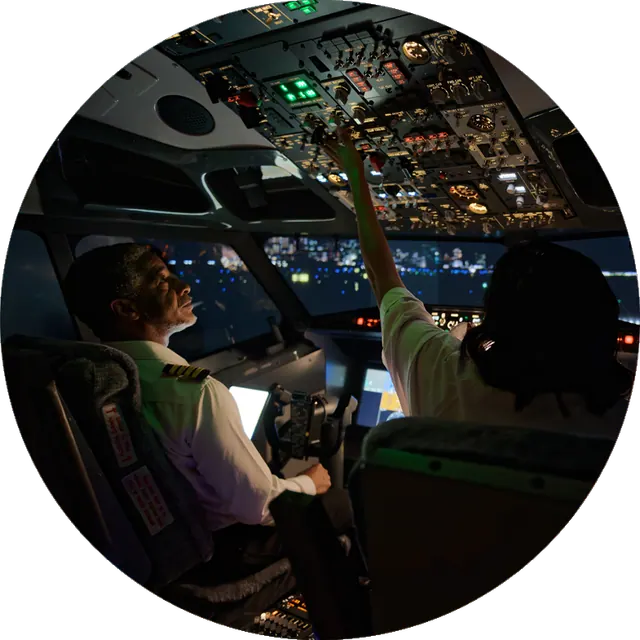
Pilots, cabin crew and controllers work early starts, nights and time-zone changes. Duty limits cap hours, not sleep obtained, and a fatigue lapse in flight or on the ground can be catastrophic.

Réglementation modifiée : 30 janv. 2026Changement prévu : 30 janv. 2027

Main-d’œuvre du secteur Aviation

Ce que couvre cette page

Veille réglementaire

Ce qui a changé, et ce qui s’en vient

Les changements réglementaires qui touchent votre gestion de la fatigue en aviation : ce qui a changé au cours des 12 derniers mois, et ce qui s’en vient.

Les détails réglementaires et les données de recherche de cette page sont présentés en anglais.

Changement récentDepuis le 30 janvier 2026

S’applique à tous les secteurs (Canada)

If you are federally regulated, amendments registered 30 January 2026 add thermal stress duties - controls including work-rest cycles, worker training and committee consultation - in force 30 January 2027.

Voir le changement

Changement à venirPrévu à compter de 30 janvier 2027D’ici 12 mois

Federally regulated employers must apply the thermal stress amendments (SOR/2026-10), including the Aviation OHS Regulations, from 30 January 2027. Transport Canada plans to propose Canadian Aviation Regulations safety management system amendments (Canada Gazette Part I) in Fall 2027.

Changements réglementaires vérifiés au 1 octobre 2026.

Réglementation

Qui la réglemente, et ce qui est attendu

Les détails réglementaires et les données de recherche de cette page sont présentés en anglais.

Aviation has the most detailed, genuinely fatigue-specific regulation of any Canadian industry researched. Transport Canada sets hard duty limits - generally 9 to 13 hours depending on time of day and flight count, extendable to 15.25-18 hours with an augmented crew - plus mandatory rest of 10-12 hours between duty periods. Rules were strengthened in 2020 for major airlines and 2022 for regional carriers. Airlines can alternatively adopt an approved Fatigue Risk Management System covering governance, monitoring, training and auditing.

Réglementé par
  • Transport CanadaTransport Canada

Les logos identifient le régulateur et n’impliquent aucune approbation.

Qui la réglemente

Aviation in Canada is regulated federally, not provincially, by Transport Canada - a different body from the general workplace-safety regulators covering most other industries. Transport Canada has its own detailed rulebook specifically governing flight crew fatigue, duty time and rest periods, made under the Aeronautics Act.

Vos obligations

Airlines must keep every flight crew member's duty time within Transport Canada's hard limits (roughly 9-13 hours, extendable with a larger crew) and give the required rest between duty periods - this is enforceable regulation with real numbers, not guidance. Operators must also track cumulative flight and duty time, not just single shifts. Wanting more flexibility than the fixed limits allow means building and getting approval for a full, audited fatigue-management program instead of just claiming to manage fatigue informally.

Conséquences

Breaking the duty and rest limits is a Transport Canada matter first: inspectors can assess penalties without prosecution and, in serious or repeated cases, suspend or cancel the air operator certificate the business runs on. The same failure can be pursued separately under federal health and safety law, because an air operator is also a federally regulated employer. And a fatigue-related accident or incident brings in the Transportation Safety Board as an independent investigator, publishing its findings and any recommendations - a public record that outlasts the enforcement file.

Sanctions

Transport Canada can assess penalties for breaching the flight and duty time rules at the amounts set in the Canadian Aviation Regulations - up to $5,000 per contravention for an individual and $25,000 for a corporation - and can suspend or cancel an air operator certificate. Since March 2026 the Aeronautics Act lets those amounts rise to $150,000 and $1,500,000. Canada Labor Code fines to $1,000,000 and penalties to $250,000 per violation also apply. 2026 figures.

Sources: Canadian Aviation Regulations, Part VII (flight crew fatigue and duty-time rules); Canada Gazette regulatory amendment process; Transport Canada's own news releases confirming the 2020/2022 effective dates and its explanatory guidance on duty-time and rest-period requirements.

Postes critiques

Là où la fatigue compte le plus en aviation

Les postes où un travailleur fatigué risque le plus de causer un préjudice grave, les tâches qui portent ce risque, et pourquoi la fatigue s’y accumule.

Les détails réglementaires et les données de recherche de cette page sont présentés en anglais.

PosteRisqueTâches à risque élevéPourquoi la fatigue s’accumule
Pilot (captain / first officer)
Règles
Désignation réglementaire
Flight crew member (CARs Part VII; 700.26 fatigued-member bar; 705.124(4) fatigue training); Category 1 medical
Heures et repos
CARs 700.28 FDP limits (9-13 h base, more with augmentation), minimum rest, cumulative limits, or an approved FRMS
Risque critiqueFlying approaches and landings after extended duty or through the window of circadian low; multi-sector days; managing non-normal events at the end of a dutyEarly report times, overnight flights, time-zone crossing, reserve and standby, short-notice roster changes
Air traffic controller (NAV CANADA)
Règles
Désignation réglementaire
ATC license holder (CARs Part IV); Category 2 medical
Heures et repos
CLC Part III hours and collective agreement rostering
Risque critiqueSeparating traffic on low-workload overnight positions, sometimes single-person; handling the morning surge at the end of a night shift; coordination and handovers24/7 rotating shifts with quick returns, night shifts, single-person night operations at some units
Aircraft maintenance engineer (AME, M1/M2/E/S)
Règles
Désignation réglementaire
AME license holder (CARs Part IV, 403)
Heures et repos
CLC Part III: 8 h between shifts
Risque critiqueNight-shift line and base maintenance; flight-control rigging, torque and duplicate-inspection tasks; certifying release to service at the end of a long shiftNight shifts to meet first-wave departures, AOG overtime, 12 h shifts, rotating rosters
Air taxi / medevac pilot
Règles
Désignation réglementaire
Flight crew member (CARs 703/704; 703.98(4) fatigue training)
Heures et repos
CARs Part VII Subpart 700 flight duty limits, or FRMS
Risque critiqueSingle-pilot night aeromedical or charter flights after an on-call call-out; helicopter landings at unlit sites; IFR approaches at the end of dutyOn-call and standby with night call-outs, single-pilot operations, remote bases
Flight attendant
Règles
Désignation réglementaire
Flight attendant (CARs 705.201 minimum cabin crew); Aviation OHS Regulations on board
Heures et repos
CLC Part III hours as modified for flight attendants; collective agreements
Risque élevéSafety and emergency duties, evacuation command and in-flight incident response after long or overnight duties; door arming and cross-checksEarly starts, overnight and long-haul duties, multi-sector days, time-zone crossing, standby
Ramp agent
Règles
Désignation réglementaire
None specific - CLC Part II general duty (s 124)
Heures et repos
CLC Part III: 8 h between shifts
Risque élevéAircraft pushback and towing; baggage tug driving and loading near engines and stairs; refuelling hook-ups on overnight turnsSplit shifts and starts from 04:00, night freight turns, overtime in peaks, outdoor work

Cas

Quand la fatigue a laissé une trace

Constatations et poursuites publiées par les organismes de réglementation, les tribunaux et les enquêteurs (Canada).

Les détails réglementaires et les données de recherche de cette page sont présentés en anglais.

  • nov. 2022 · Ontario, Canada

    Captain with heavy sleep debt and 18 hours awake slips at 70 ft; passenger jet overruns runway

    • Sécurité

    A low-cost airline's narrow-body jet with 134 passengers overran the end of the runway at a regional airport at 6:25 am after the captain inadvertently pressed the go-around switch at about 70 feet, causing one engine to advance to near-maximum thrust during the landing roll. The Transportation Safety Board of Canada found the captain had built up a significant sleep debt over the previous week of night duties and had been awake for nearly 18 hours, at the end of the circadian low, and that this fatigue reduced his attention and made the slip more likely. The Board also found that when pilots do not monitor their own sleep debt, fatigue can go undetected and unmanaged.

    Cas CA-aviation-04Signaler une erreur

Cas 1 sur 14

Voir toutes les actualités : aviation

Comment la suite s’inscrit

Comment chaque produit se rattache à vos obligations

Les cotes décrivent dans quelle mesure un produit se rattache à une obligation. Aucun ne vous acquitte d’une obligation, et aucun ne comporte de garantie de conformité.

Les détails réglementaires et les données de recherche de cette page sont présentés en anglais.

Awareness eLearning

La réglementation nomme cette étape

CARs 705.124(4) requires a fatigue management training program for flight crew covering sleep hygiene, fatigue science, recognizing fatigue, sleep disorders and circadian factors. Awareness eLearning supplies the content named at 705.124(4).

À propos de Awareness eLearning

Fatiguefit4Duty

Soutient une obligation précise

CARs 700.26(1) bars you from starting a crew member on a flight duty period once they advise they are too fatigued to be fit for duty. No method is named; Fatiguefit4Duty supports it. A fitness-for-duty check, not a fitness-for-duty decision - the duty call stays with you.

À propos de Fatiguefit4Duty

Sleepfit

Soutient votre devoir général de diligence

No Canadian aviation rule requires you to screen crew for sleep disorders; medical certification stays with Transport Canada. Sleepfit supports your general duty under s 124 of the Canada Labor Code. It screens; diagnosis stays with your clinicians.

À propos de Sleepfit

Was It Fatigue?

Soutient votre devoir général de diligence

Your incident investigation duties do not name fatigue unless you run a fatigue risk management system, where CARs Division V requires fatigue hazards to be identified from incidents. Was It Fatigue? supports that. A structured judgment aid, not a determination of cause.

À propos de Was It Fatigue?

SleepWellBaby

No Canadian aviation rule reaches sleep in new-parent households. SleepWellBaby is offered as a benefit to parents across your crew and ground workforce, not as a compliance step under the Canadian Aviation Regulations.

À propos de SleepWellBaby

Forfait recommandé

Par où nous commencerions en aviation

Chaque forfait est tarifé selon la prévalence : toute votre cohorte y a accès, et vous payez pour la proportion qui devrait avoir besoin de chaque produit. Comment fonctionne la tarification.

Pourquoi ce choix (Canada)

CARs 705.124(4) names fatigue training content - sleep, circadian factors, sleep disorders - which Awareness eLearning supplies. Fatiguefit4Duty supports CARs 700.26(1) on fatigue advice; Sleepfit screens under Canada Labor Code s 124. Fatigue Lifecycle adds Was It Fatigue? for FRMS operators.

Ce que le sommeil et la fatigue représentent pour votre effectif en aviation.

Indiquez-nous environ combien de personnes vous employez. Votre portrait estime combien dorment probablement mal et ce que cela coûte, à partir de la recherche publiée pour le secteur aviation. Choisissez ensuite qui couvrir, et nous vous mènerons à la bonne étape suivante.

Un exemple d’aperçu de la main-d’œuvre sur une tablette : troubles du sommeil modélisés et coût du mauvais sommeil pour 1 400 personnes dans le transport et la logistique.